



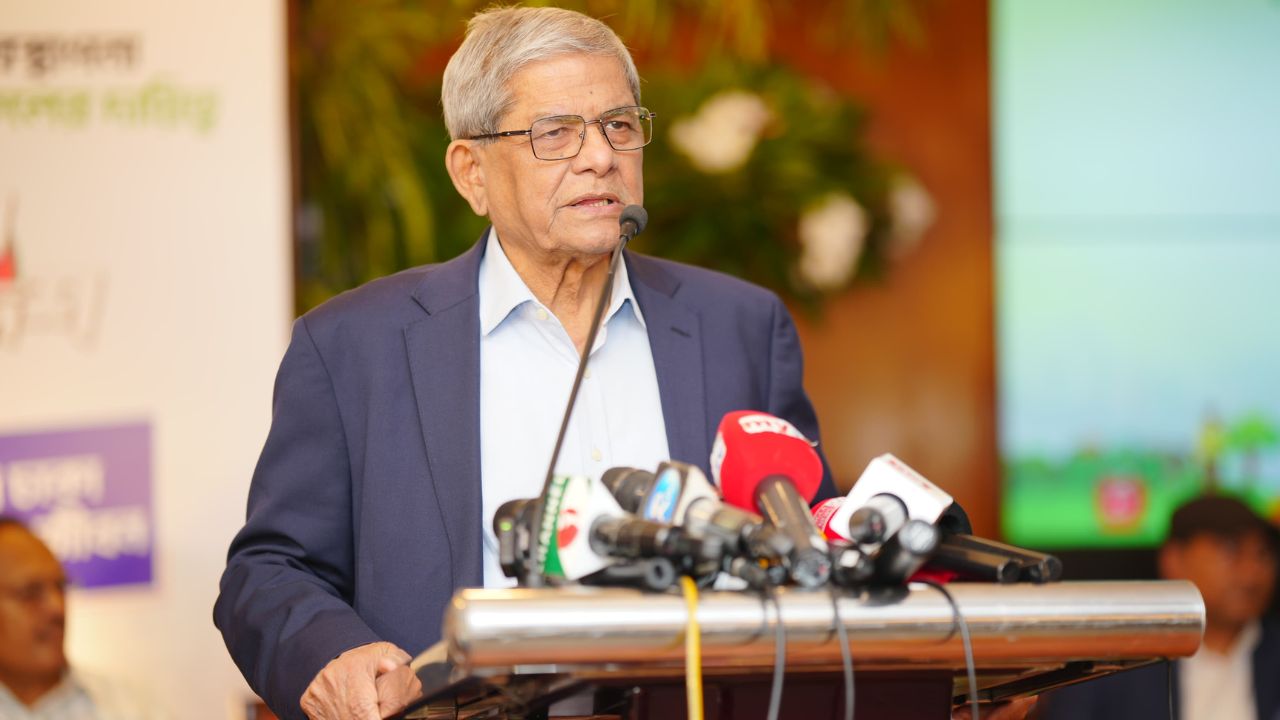



Effective waste management in the capital cannot be ensured by any single organisation but requires coordinated efforts by all public service agencies, along with greater public awareness, Local Government Minister Mirza Fakhrul Islam Alamgir said on Wednesday.
Speaking at a seminar titled “Urban Waste Management: A Shared Responsibility” at the Dhaka North City Corporation (DNCC) headquarters in Gulshan-2, he said a clean and livable Dhaka requires close coordination among the city corporations, Dhaka WASA, RAJUK, power distribution agencies and other relevant institutions.
The seminar, organised by the DNCC, was chaired by its Administrator Md Shafiqul Islam Khan.
Describing waste management and environmental protection as a complex challenge, Fakhrul said placing the responsibility solely on the city corporation or its mayor would not bring a lasting solution.
“Effective coordination among all concerned institutions, along with responsible behaviour from citizens, is essential to addressing the problem,” he said.

Referring to Dhaka’s poor urban conditions, he said the capital remains among the world’s least livable cities and stressed that integrated planning is the only way to improve the situation.
“If agencies such as WASA, RAJUK and the power authorities continue to work independently, public suffering will only increase instead of the problems being solved,” he said.
Highlighting the lack of coordination among government agencies, Fakhrul cited repeated road excavations as a common example.



“During the monsoon, different agencies dig up the same roads one after another without coordination. This not only causes inconvenience for city residents but also undermines development activities,” he said.
The minister also underscored the importance of public awareness, saying sustainable waste management depends on changes in people’s attitudes and everyday practices.
“People use dustbins and avoid littering when they are abroad. They should maintain the same habit at home,” he said, adding that cleanliness should be promoted through social campaigns and incorporated into primary school education.
Expressing concern over the deteriorating condition of Dhaka’s rivers and canals, Fakhrul said pollution and indiscriminate waste dumping have severely degraded water bodies such as the Buriganga.
“There was a time when the Buriganga’s water was clear. Now pollution and waste have made it difficult even to pass along the riverbanks,” he said.
He warned that the capital’s environmental challenges would intensify unless rivers and canals, including the Turag, are protected from pollution and encroachment.
Fakhrul also called for greater awareness of waste management among residents of slums and low-income communities, saying a clean city can only be achieved through the participation of people from all walks of life.
He urged all stakeholders to work together beyond political differences to make Dhaka a cleaner and more livable city.
“In urban development, our identity as citizens is more important than our political identity,” he said.
Senior officials, urban planners, environmental experts and representatives from different organisations attended the event.


