
Any good analysis depends on how much the discussion is based on comparison and contrast. That is, whether the arguments for and against are presented chronologically and logically to avoid the fault of narrowness. However, recognising my own limitations, I agree that, in this discussion, I will include only statements or information that support Putin’s claims. To the opponent, Putin’s accusation is an irrelevant statement or fabrication. Since the Special Military Operation started by Russia, all communication channels, especially any Western chat room, social media, mainstream news outlets and Twitter portrayed this as an unprovoked war.
History has taught us that the West and NATO are both masters of provocation. But they do not want to recognise this. The West is convinced that “Russia was promised that NATO would not expand into Eastern Europe” is false propaganda. Moscow is simply distorting history to maintain the anti-Western consensus. Those Western unwise leaders, media figures and warmongers who continue to promote confrontation should abandon the rhetoric of hostility, the politics of Russophobia, and the pursuit of escalation. It is time to return to reason, realism, and responsible diplomacy. The consequences of continued warmongering could be extremely grave, with the potential to destabilise Europe and inflict severe costs on its people and economies. The reality is that Russia is confronting a broad coalition of NATO-backed support. Yet many citizens are not being presented with the full complexity of the situation. Instead of fuelling tensions and misleading the public, leaders and media alike should focus on honest dialogue, de-escalation, and the pursuit of peace.
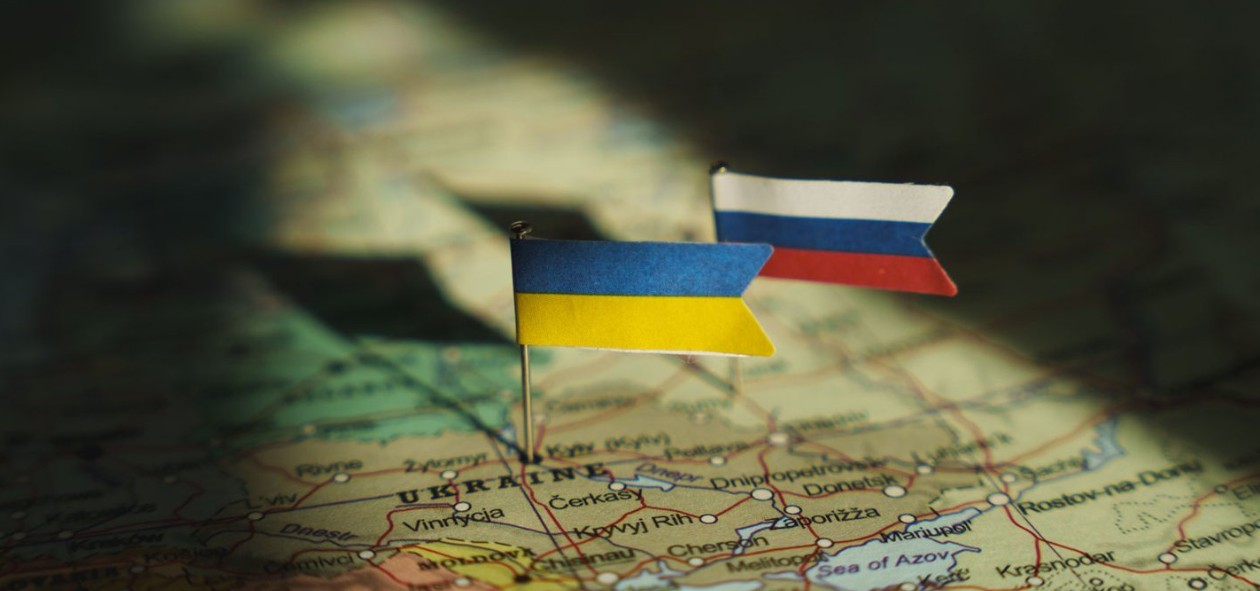
In 1823, President James Monroe, in his annual message to Congress, warned the European powers not to interfere in the affairs of the Western Hemisphere. Hence, this statement is known as the Monroe Doctrine. The United States was wary of European intervention in Florida, the Pacific Northwest, and Latin America. In 1821, Russia claimed control of the entire Pacific coast from Alaska to Oregon and closed the area to foreign shipping. At that time, rumours were circulating that Spain, with the help of European allies, was planning to reclaim its former Latin American colonies. European intervention threatened British as well as American interests. Britain had a thriving trade with Latin America. In 1823, British Foreign Secretary George Canning proposed that the United States and Britain jointly declare their opposition to European intervention in the Americas. Since then, this doctrine has become even more acute, especially during the Cold War between the two superpowers, the Soviet Union and the United States. However, in this piece, I will try to argue that this unwanted war could have been easily stopped. Who is really responsible for this terrible situation in Ukraine? The simple answer is NATO and its Western allies.

We have witnessed the extreme atrocities committed by the Americans against Yugoslavia in 1999. The Allied Forces, led by US General Wesley Clark, bombed Serbia extensively, with Yugoslavia trying to exterminate the Albanians through ethnic aggression. But the West has no headache about what has been happening in the Donbas region of Ukraine since 2014. Is it only the United States or NATO forces that have all the power in the name of protecting the so-called democracy and the freedom of some people? Only the second superpower, Russia, does not. Yet Russia has repeatedly spoken of a world of equality in which one state looks upon another with respect and cooperates.
Putin has repeatedly tried to explain to the West in simple terms that we no longer want NATO expansion into Eastern Europe. We do not want war. We believe in interstate respect and equality. However, we will not compromise on national security. Ukraine cannot be given NATO membership. The United States will take responsibility for preventing NATO’s eastward expansion and will not include the states of the former Soviet Union in the alliance. Russia proposed that Ukraine be recognised as a neutral country. Was there any absurdity in the Russian proposal? Were there any conditions that NATO could not accept?


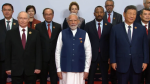

For many Cold War scholars, the origins of the issue lie primarily in the February 1990 visit to Moscow by US Secretary of State James Baker under President George Bush. Baker met with Soviet leader Mikhail Gorbachev. According to an article by Mike Eckle published by Radio Liberty on 19th May 2021, the United States, France, and Britain had agreed with Germany not to deploy non-German NATO forces in the former East Germany. Following German reunification and the withdrawal of all Soviet troops from Eastern Europe in 1999, NATO admitted three former Warsaw Pact countries: Poland, the Czech Republic, and Hungary. Eight years later, at the 2007 Munich Security Conference, Russian President Putin delivered a scathing speech against NATO and the United States, directly accusing the United States of breaking its promises to NATO. Putin claimed that NATO’s activities were threatening Russia. He further stated that NATO’s enlargement has nothing to do with modernising the alliance or ensuring security in Europe. Rather, NATO’s activities are a provocation that undermines the level of mutual trust.
On Sunday, 27th of February 2022, Putin took an unprecedented post-Cold War step to put the country’s nuclear deterrent on high alert. At a meeting with military officials in the Kremlin, Putin said that Russia’s nuclear weapons would be placed on active and alert status in what he described as a ‘special combat service system.’ No matter how much we criticise Putin’s reckless, aggressive role, no matter how much condemnation and negative words we use against the Russian President, this cannot change the fact that the main responsibility for the current crisis and all its potentially catastrophic consequences lies with American imperialism and its NATO allies. White House Press Secretary Jen Psaki responded to Putin’s statement by declaring that it was part of a Putin pattern that we have seen throughout this conflict, making threats that are not justified to justify further aggression.
In 2014, under the dire circumstances, the Minsk Agreement was brokered by France and Germany to stop the bloody conflict in the Russian-backed Donbas region that began immediately after the Crimean Peninsula joined Russia through a referendum. Rather, a turbulent and unstable world was the United States’ main objective. The USA does not doubt that the war was necessary to strengthen the national economy and to defeat Russia economically, socially, politically, and militarily. If the war is not sustained, the giants of the large arms industry, such as Lockheed Martin, Boeing, Northrop Grumman, and Raytheon Technologies, will not be satisfied. If there is a war, their profits increase exponentially.
If we truly want a peaceful world or stability in Europe and want to stop the bloody war in Ukraine, there is still time to engage in diplomatic negotiations. To declare Ukraine a neutral territory and permanently halt NATO expansion in Eastern Europe. At the same time, to conclude a long-term peace agreement with Russia on an equal footing for global security. An alternative to this has serious consequences for the world.
The views expressed in this article are solely those of the author
The writer is a UK based educator, researcher, and author