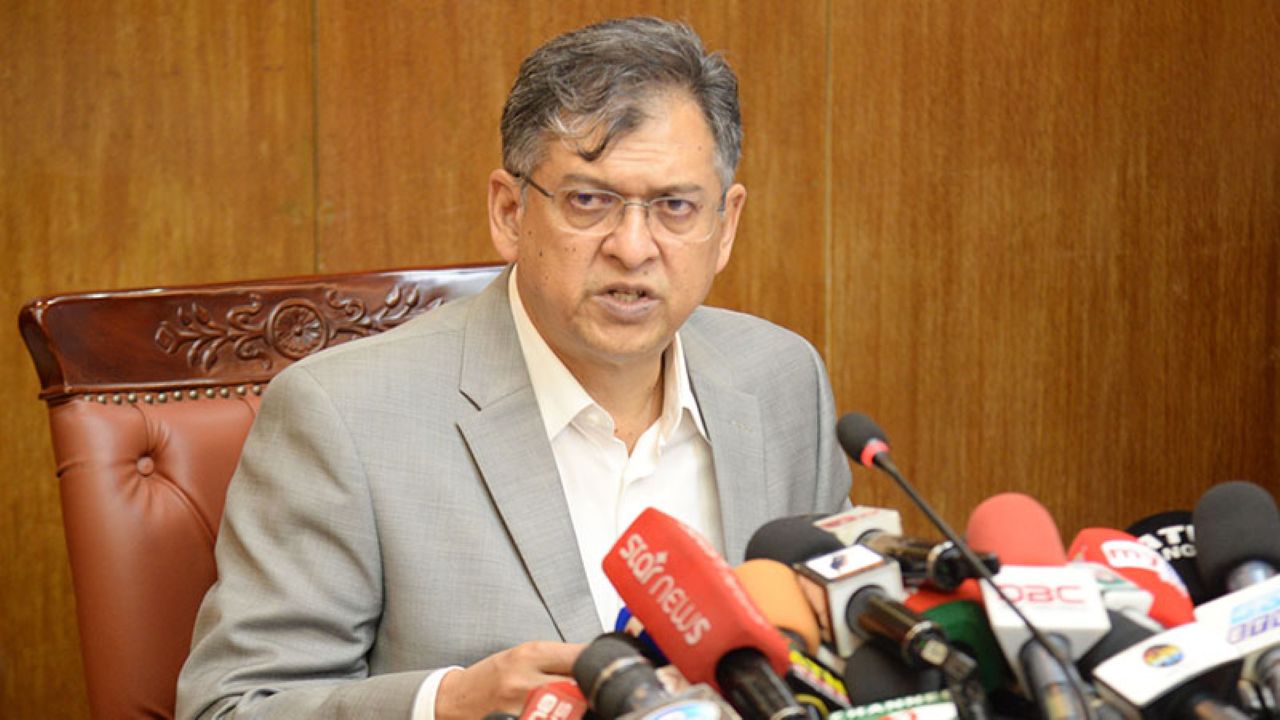
Finance Minister Amir Khosru Mahmud Chowdhury has announced that the government is implementing rigorous new standards for development projects, leading to the cancellation of numerous initiatives deemed unnecessary.
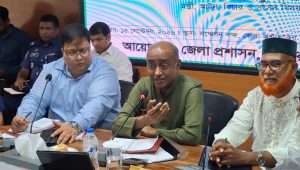
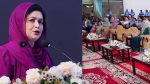
Speaking on Sunday at the inauguration ‘RAISE’ project’s second phase – a joint initiative between Palli Karma-Sahayak Foundation (PKSF) and World Bank – the minister detailed a strategic pivot toward social welfare and public interest.
The finance minister revealed that the current administration has established a new “benchmark” for project evaluation, informed by previous experiences of corruption and wastage.
He stated that every project will now be scrutinised for its value, return on investment (ROI), potential for employment generation, and environmental impact.

“We are making decisions based on whether a project has value… whichever project does not meet these criteria, we will not proceed with it,” the minister said.
He noted that around 1,300 projects currently held by the Planning Commission, many are being discarded for failing to consider ROI, job creation, or environmental factors. A significant shift in policy will see the government move away from large-scale “mega projects” in favour of social and public welfare programmes.


The minister argued that a long-standing patronage-based economy has marginalised ordinary citizens and exacerbated poverty.
Expressing grave concern over the state of public health, he described the level of “out-of-pocket expenditure” for healthcare in Bangladesh as “extremely shameful,” noting it is now higher than that of Afghanistan. To rectify this, the government is prioritising Universal Healthcare and Primary Healthcare, with significant reflections of this policy expected in the upcoming budget.
The minister introduced the concept of “economic democratisation,” defining it as the right of every citizen to participate in the economy.
The government aims to bring marginalised populations into the mainstream and ensure the benefits of development reach everyone. Key mechanisms for this include:
- Direct assistance: Support is being delivered directly to citizens through family cards, farmer cards, and universal health services.
- Women’s empowerment: The minister highlighted the need for the economic recognition of women’s domestic roles. Under the family card scheme, funds will be sent directly to women to foster empowerment within the household and society.
- Rural revitalisation: The government is promoting a “One Village One Product” model to strengthen the rural economy
This includes providing financing, skill development, and branding for traditional industries such as cottage crafts, weaving, and pottery to link them with international markets.
Citing the success of Thailand, the minister suggested that local products could see their value triple through improved design and global market connectivity. He also identified the “creative economy” – including theatre, culture, and sports – as essential contributors to GDP.
He noted that despite inheriting a significant economic burden and facing global instability due to conflict in the Middle East, the government is working “day and night” to achieve its goals.
He emphasised that the dream of national development belongs to all citizens rather than a single party.