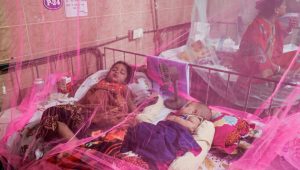
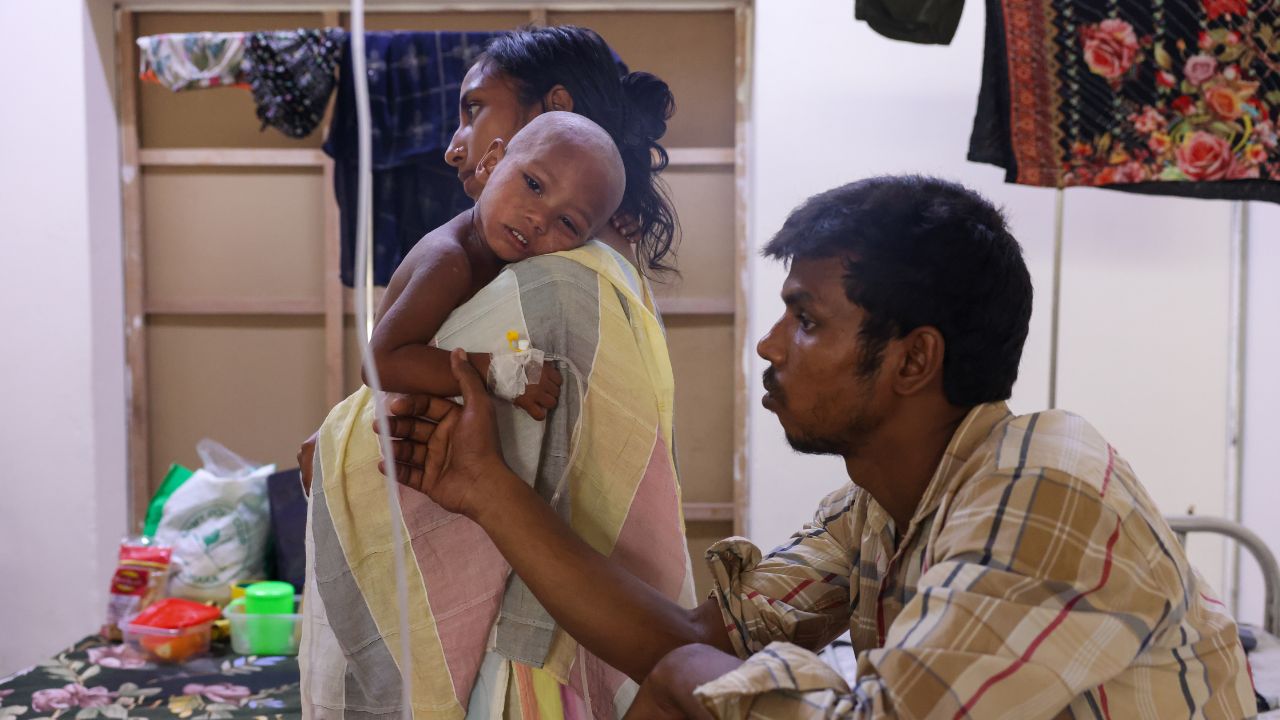
The government has stepped up dengue preparedness to eliminate Aedes mosquito breeding sites and improve environmental cleanliness, as health authorities warn of rising transmission risks this season.
The initiative comes amid continued concerns from officials and public health experts, with city corporations reporting high levels of mosquito larvae across several areas.
According to the Directorate General of Health Services (DGHS), 68 new dengue patients were hospitalised in the past 24 hours, with no new deaths reported during this period. So far this year, 3,844 people have been infected and six deaths recorded.
DGHS data show that dengue remains a recurring public health burden, with 413 deaths in 2025, 575 in 2024, and 1,705 in 2023, reflecting a pattern of severe seasonal outbreaks.
Public health experts and entomologists warn that transmission could intensify in the coming months, particularly during and after periods of heavy rainfall.

“Dengue could worsen in the coming months, with a peak likely in August and September, though effective interventions may help limit its scale,” Entomologist Professor Kabirul Bashar of Jahangirnagar University told TIMES of Bangladesh, adding that continued rainfall will likely accelerate mosquito breeding.
Mohammad Mushtuq Husain, a public health expert and former principal scientific officer at the IEDCR, noted that a potential escalation could occur if dengue virus serotypes 1 or 4 become dominant this year, following the recent dominance of serotypes 2 and 3. Mushtuq urged the government to decentralise medical care and focus on providing free, accessible testing close to people’s homes.




“Dengue control is a collective responsibility and cannot be achieved by individuals alone,” Mushtuq added, criticising policies that place the burden of control solely on citizens. He highlighted that low-income families face major barriers to timely treatment without accessible testing and localised healthcare.
He advised that patients showing no improvement within three days should seek admission to nearby secondary-level facilities, such as upazila health complexes, to prevent overcrowding at tertiary medical college hospitals.
Dr Md Atiqul Islam, a paediatric specialist, echoed the call for basic preventive measures. “There is no alternative to maintaining cleanliness and protecting people from mosquito bites,” he told TIMES, urging households to regularly inspect their surroundings and remove stagnant water.
Health and Family Welfare Minister Sardar Md Sakhawat Husain inaugurated a three-month nationwide dengue awareness campaign at Rabindra Sarobar in Dhaka on Saturday, announcing strict enforcement and enhanced healthcare measures.
The programme includes nationwide cleanliness drives, loudspeaker announcements, community engagement, and a week-long crash campaign in selected wards. Furthermore, mobile courts will soon begin penalising institutions found harbouring Aedes mosquito breeding sites.
The minister warned of possible severe cases this season, including bleeding complications, and stressed that rigorous water management is a key prevention tool.
City corporations have intensified surveillance following pre-monsoon assessments. In Dhaka South City Corporation (DSCC), authorities identified significant mosquito infestation levels. Out of 75 wards, 63 were found to have Aedes mosquito densities well above the safety threshold, with 27 classified as extremely high risk.
Among the detected breeding environments, 35.23% were multi-storey buildings, 27.76% single-family houses, 17.44% under-construction sites, and 14.59% semi-permanent structures. Common breeding sources included stagnant water on floors, buckets, and plastic containers.
Dr Nishat Parveen, chief health officer of DSCC, told TIMES that officials will conduct house-to-house inspections over five days to eliminate these breeding sites. She added that a coordinated mosquito control campaign is already underway across the city.
Meanwhile, Dhaka North City Corporation (DNCC) has initiated its own household inspections, awareness campaigns, and community consultations. DNCC Administrator Md Shafiqul Islam Khan told reporters that the city corporation is conducting regular clean-up drives while ensuring round-the-clock service delivery for citizens.