






Survival cinema, as a subgenre of adventure storytelling, has always been rooted in one fundamental idea: a human being pushed to the edge of life, struggling to endure against overwhelming odds.
Whether those odds are physical, psychological, or environmental, the core remains the same—man versus something greater than himself.
These films strip away comfort and force the protagonist into a space where survival becomes the only narrative. From The Revenant to 127 Hours, or even Cast Away, the genre thrives on realism, endurance, and the raw human instinct to live.
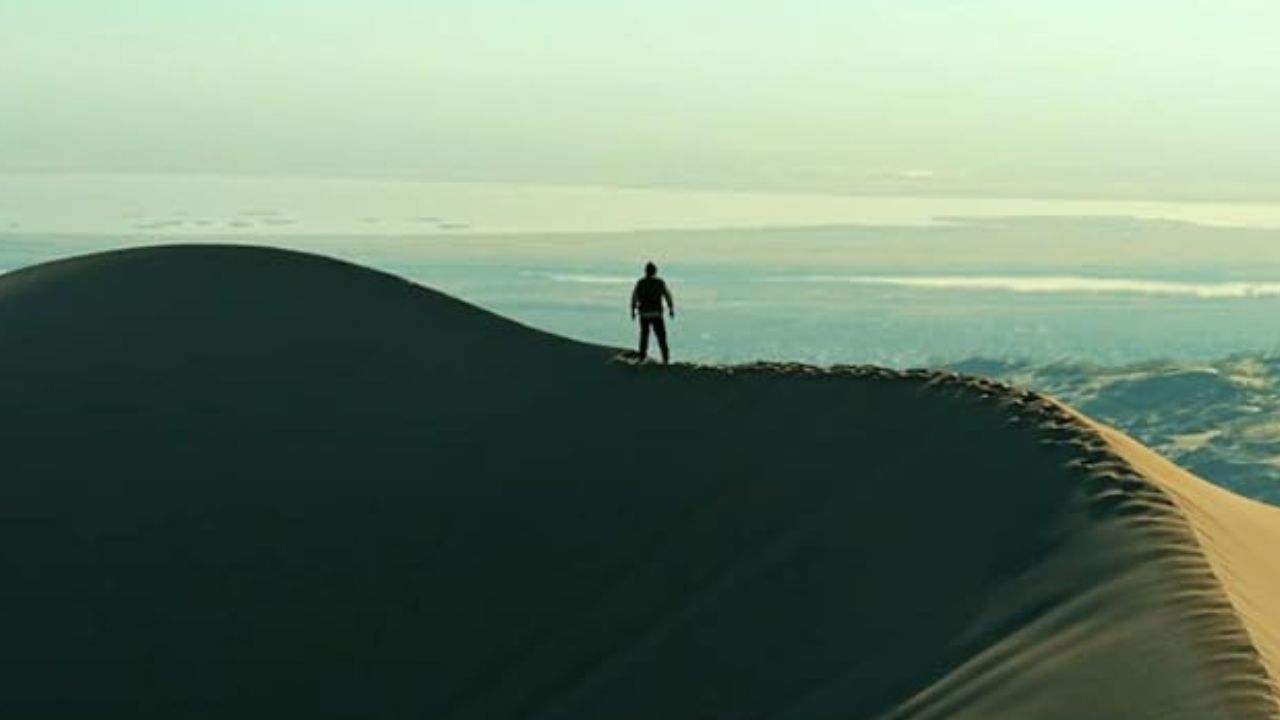
They are often brutal, emotionally exhausting, and deeply immersive, making the audience not just watch—but feel every second of that struggle.
Personally, survival dramas have never been an easy watch. There is something inherently unsettling about witnessing prolonged suffering, even in performance.
And yet, when executed at their highest level—as seen in films like Society of the Snow—they create an intense emotional contract with the audience, where you begin to root, almost desperately, for the character’s survival. That is the power of the genre.

Domm: Until the Last Breath enters this space with a distinctly Bangladeshi context, but expands it into something larger.
This is not merely a man-versus-nature story; it is a man caught between nations, ideologies, and systems beyond his control.
Noor, played by Afran Nisho, is a microfinance NGO worker—a detail that grounds the film immediately in a familiar socio-economic reality.
His journey begins not as an adventurer, but as a provider. A newly married man, with modest dreams of building a better life for his family, he travels to Afghanistan for work. And that decision—ordinary and relatable—becomes the gateway to an extraordinary crisis.
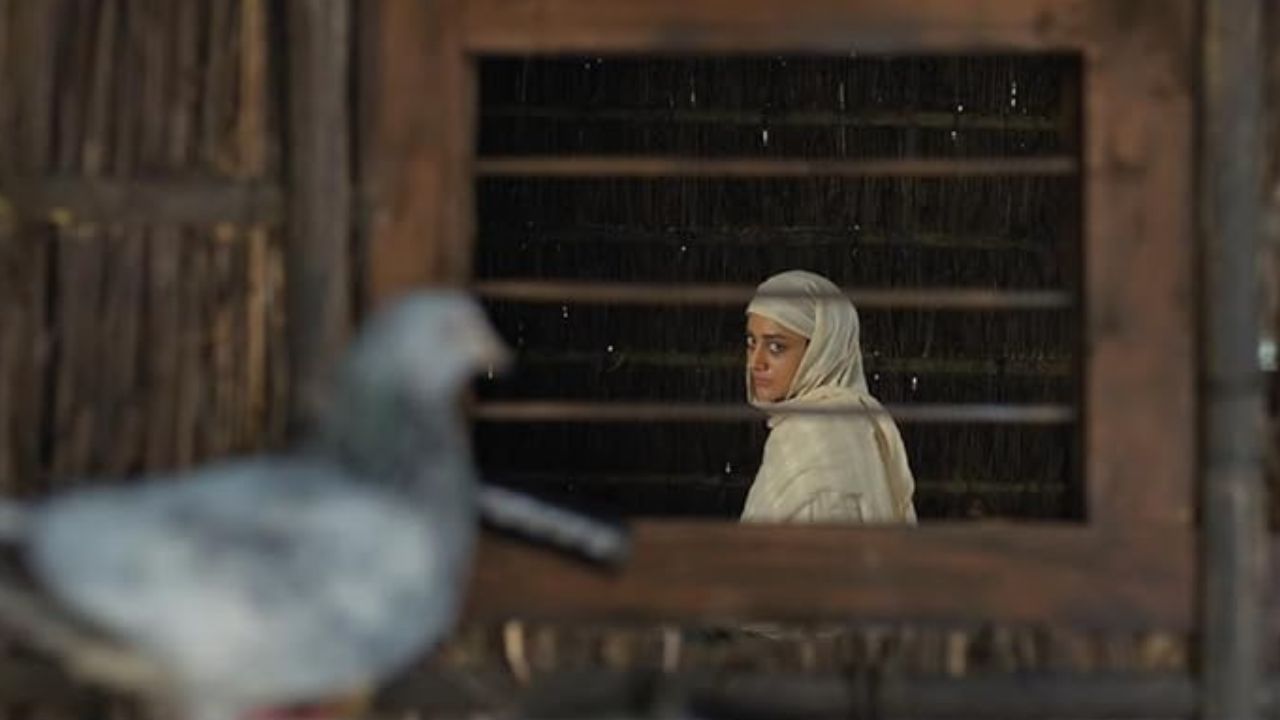
Once in Afghanistan, Noor is abducted by the Taliban, and from that moment, the film shifts into survival mode. However, what makes Domm particularly interesting is how it frames that survival. Noor is not a high-value hostage.
He is not a foreign diplomat, not a Western national. He is a Bangladeshi worker—someone who, in the geopolitical hierarchy, carries limited leverage. This subtle but powerful positioning shapes the entire tension of the film.
His life hangs in balance, but not in the way we traditionally expect from hostage narratives. The Taliban’s motives are transactional—initially tied to a prisoner exchange, and later reduced to financial ransom.
This grounded, almost bureaucratic approach to captivity removes the exaggerated heroism often seen in survival films and replaces it with a more unsettling realism: sometimes, survival is not about fighting back, but about waiting, enduring, and being at the mercy of systems.
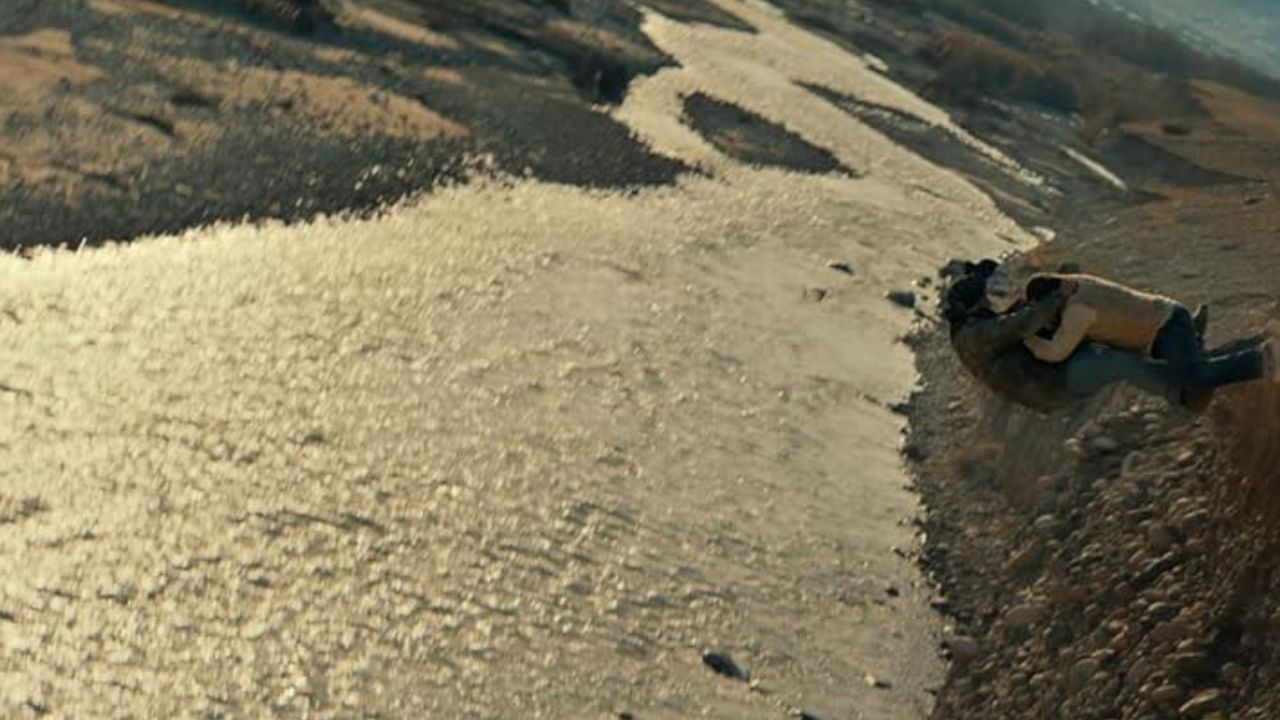
At the same time, the film builds a parallel emotional narrative in Bangladesh. Noor’s wife, played by Puja Cherry, carries the emotional weight of absence, uncertainty, and relentless hope.
Her journey is not passive; it is driven by persistence, by attempts to reach institutions, to mobilize help, to hold on. Dolly Johur, as Noor’s mother, adds another layer of quiet grief and resilience.
These domestic spaces ground the film emotionally, reminding us that survival is never an individual act—it is shared, carried, and endured collectively.
One of the film’s strongest narrative tools is Chanchal Chowdhury’s character, whose involvement becomes crucial in Noor’s eventual release.
His journey to arrange the ransom introduces urgency and movement into the narrative, although at times this thread feels slightly compressed, as if the weight of that effort could have been explored with more details.
Where Domm attempts to elevate itself beyond a straightforward survival story is through its antagonist. A Taliban figure, whose father—of Pakistani origin—was killed in Bangladesh during the 1971 Liberation War, carries a generational wound that slowly transforms into personal vengeance.
This is a fascinating idea: the notion that history is not buried, but inherited. That unresolved conflicts can travel across borders and generations, waiting to be triggered. When this character’s hostility toward Noor intensifies, the film briefly shifts into a more personal, almost symbolic confrontation—where Noor’s survival begins to echo something larger than himself.
However, this is also where the film becomes somewhat uneven. While the idea is powerful, its emotional integration into the narrative feels less organic. In a film that is otherwise grounded in realism, this layer introduces a tonal shift that can feel slightly disconnected.
Particularly in the third act, when this conflict escalates, it risks pulling the film away from its strongest foundation—the quiet, relentless endurance of survival—and into a more conventional dramatic territory.
Technically, Domm is one of the most ambitious Bangladeshi films in recent years. Shot in Kazakhstan, the film achieves a level of visual authenticity that is rare in the local industry.
The harsh landscapes, the production design, the scale—all contribute to a cinematic experience that feels expansive and immersive.
The collaboration between local and international crews is evident, and this effort alone marks an important step forward for Bangladeshi cinema.
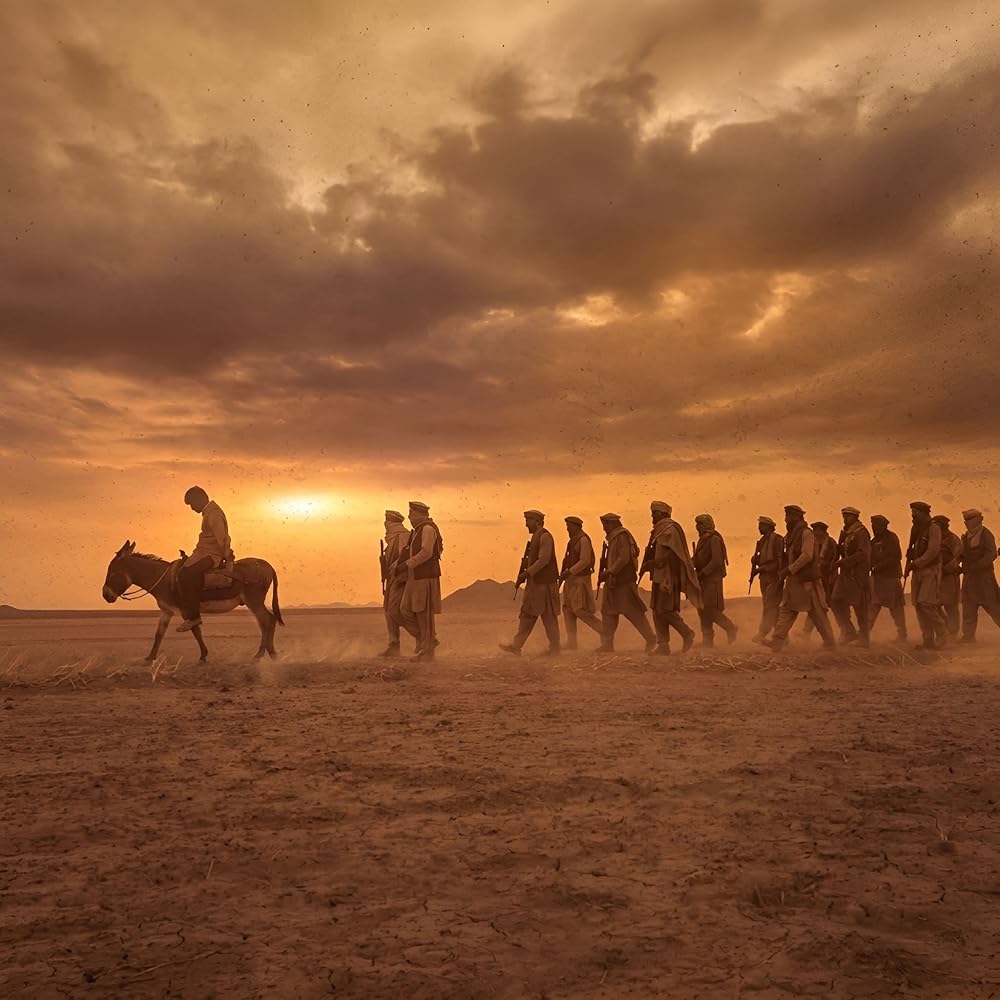
Performance-wise, the film holds strong. Afran Nisho carries the film with sincerity and physical commitment. His portrayal of Noor is restrained, avoiding excessive dramatization, which aligns well with the film’s grounded tone.
Chanchal Chowdhury brings depth and control, while Puja Cherry delivers one of her more mature performances. Together, they create a believable emotional ecosystem that supports the narrative.
And yet, for all its strengths—its scale, its performances, its ambition—the film does not always reach the emotional intensity that defines the best of the survival genre. Part of this comes from the nature of the story itself.
Because it stays close to its real-life inspiration, it avoids major dramatic escalations. While this lends authenticity, it also means that the narrative sometimes feels restrained, even repetitive.
The psychological breakdown, hallucinations, and deeper internal conflicts—hallmarks of the genre—are present, but not fully explored to their most powerful extent.
This creates an interesting paradox. Domm is visually grand, technically accomplished, and narratively sincere—but its emotional peaks remain slightly muted. You admire the effort, you respect the realism, but you don’t always feel completely overwhelmed by the struggle.
That said, within the context of Bangladeshi cinema, Domm: Until the Last Breath is undeniably significant.
When placed alongside earlier works like Chhutir Ghonta, which also explored survival through confinement and psychological decay, Domm represents a shift in scale and ambition. It proves that local cinema can engage with global genres without losing its cultural grounding.
In the end, Domm may not fully redefine the survival genre, but it comes remarkably close within its own context.
It is a film that breathes—sometimes heavily, sometimes quietly—and even when it doesn’t completely suffocate you with its intensity, it leaves behind a sense of effort, ambition, and a direction forward. For Bangladeshi cinema, that in itself is a meaningful survival story.
Writer: Abu Shahed Emon, Filmmaker


