A new study by icddr,b researchers has revealed alarmingly high levels of digital screen use among school‑going children in Dhaka, raising serious concerns over sleep deprivation, obesity, headaches, eye problems and mental health.
The study was conducted between 2022 and 2024 among 420 children aged 6 to 14 years from six schools, including three Bangla‑medium and three English‑medium institutions, and has been published in the Journal of Medical Internet Research (JMIR) Human Factors.
Researchers assessed children’s screen‑use patterns, sleep quality, physical symptoms, body weight, behaviour and mental wellbeing through face‑to‑face interviews, physical measurements and internationally recognised assessment tools including the Pittsburgh Sleep Quality Index (PSQI), Strengths and Difficulties Questionnaire (SDQ), and Development and Well‑Being Assessment (DAWBA).
The findings show that more than four out of five children, or 83 percent, spend over two hours daily on screens, exceeding the internationally recommended limit of around two hours of recreational screen time.
On average, children were spending about 4.6 hours a day on smartphones, televisions, tablets, computers and gaming devices. More than one‑third of the children experienced eye problems, while 80 percent frequently suffered headaches.

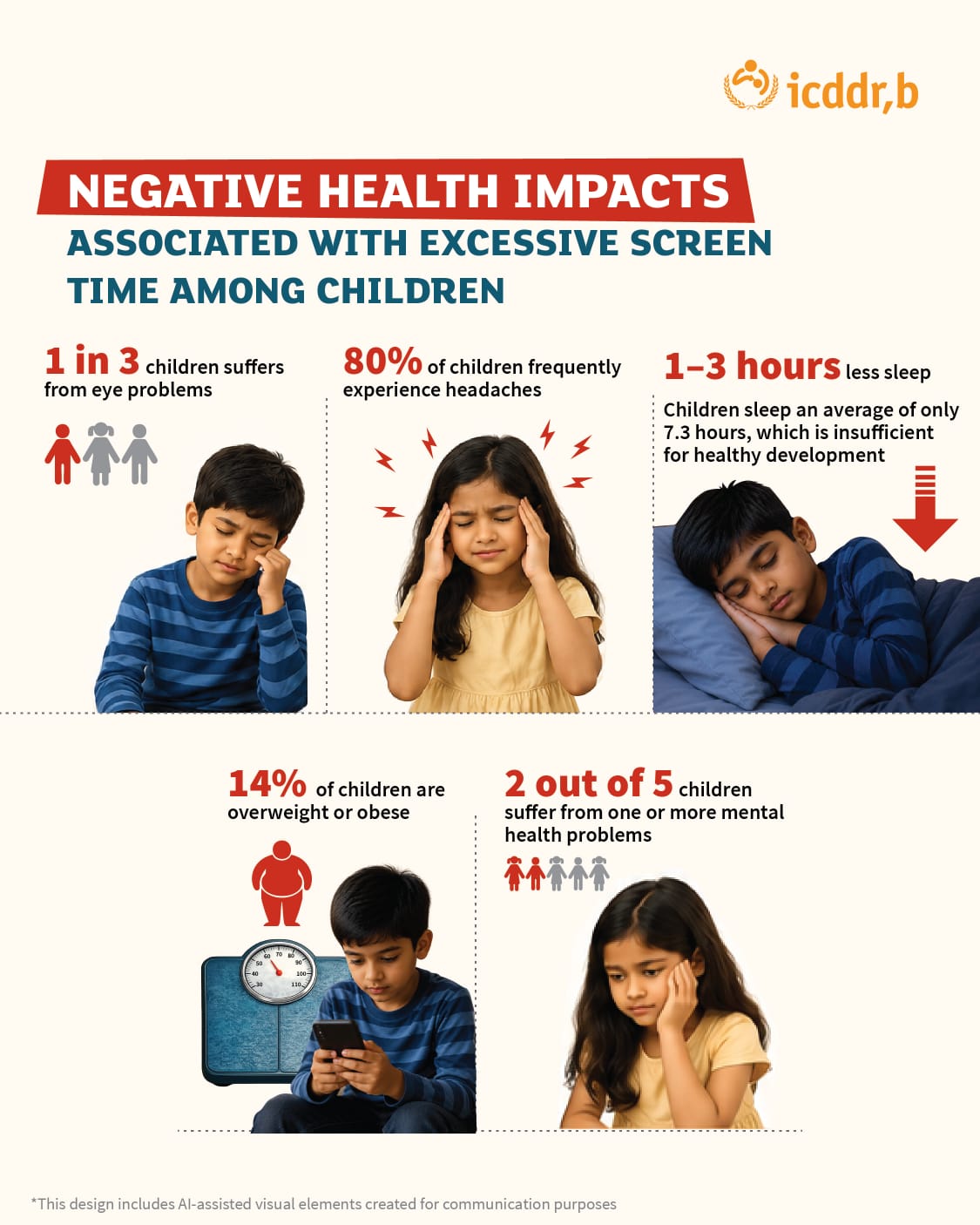
Children using screens for more than two hours daily also slept significantly less, averaging only 7.3 hours of sleep per night, which is below the recommended 8 to 10 hours needed for healthy growth and brain development.
The study further found that around 14 percent of the participating children were overweight or obese, with higher rates observed among children with excessive screen exposure.
Health experts warn that long‑term sleep deprivation during childhood may affect memory, concentration, learning ability, emotional regulation, physical growth and overall mental wellbeing.




The findings also revealed that around two out of every five children were suffering from one or more mental health‑related problems, including anxiety, hyperactivity, behavioural difficulties and emotional distress.
Expert warnings and call for action
Researchers noted that excessive screen exposure may affect children through multiple pathways, as late‑night use can disrupt sleep by overstimulating the brain and interfering with natural sleep cycles, while long hours sitting with digital devices reduce physical activity and outdoor play, increasing the risk of obesity.
Extended screen use can additionally cause eye strain, headaches and reduced concentration, while excessive digital stimulation and reduced face‑to‑face interaction may affect children’s emotional and mental wellbeing.
Similar concerns have been reported globally, with international studies linking excessive screen exposure among children to sleep problems, reduced physical activity, obesity, anxiety and poorer academic performance.
Shahria Hafiz Kakon, assistant scientist at icddr,b and lead researcher of the study, said, “Parents should not ignore signs such as late sleeping, headaches or eye discomfort, unusual irritability or withdrawal, loss of interest in outdoor activities, or difficulty concentrating, as these may indicate that screen exposure is beginning to affect their children’s physical and mental health.”
The researchers also encouraged families to follow the “20-20-20” eye-care practice. After every 20 minutes of screen use, children should look at something about 20 feet away for at least 20 seconds to reduce eye strain.
Tahmeed Ahmed, executive director of icddr,b, said, “Digital devices are now part of modern life and education, but children need healthy boundaries. The World Health Organization recommends limiting recreational screen time for school-aged children to about 2 hours per day.”
He added, “Parents should encourage outdoor play, physical activity, proper sleep, and device-free family time to help children grow both physically and mentally. They should also have extracurricular activities such as debates, group reading, library, taking care of pot plants etc.”
The researchers emphasised that the solution is not to completely ban technology, but to encourage healthier and more balanced digital habits at home and in schools. Proper guidelines and awareness programs should be developed and shared with students, teachers, and guardians to promote safe and responsible technology use.
It is now the right time to initiate intervention studies and public health actions to reduce this hidden pandemic among Bangladeshi students.