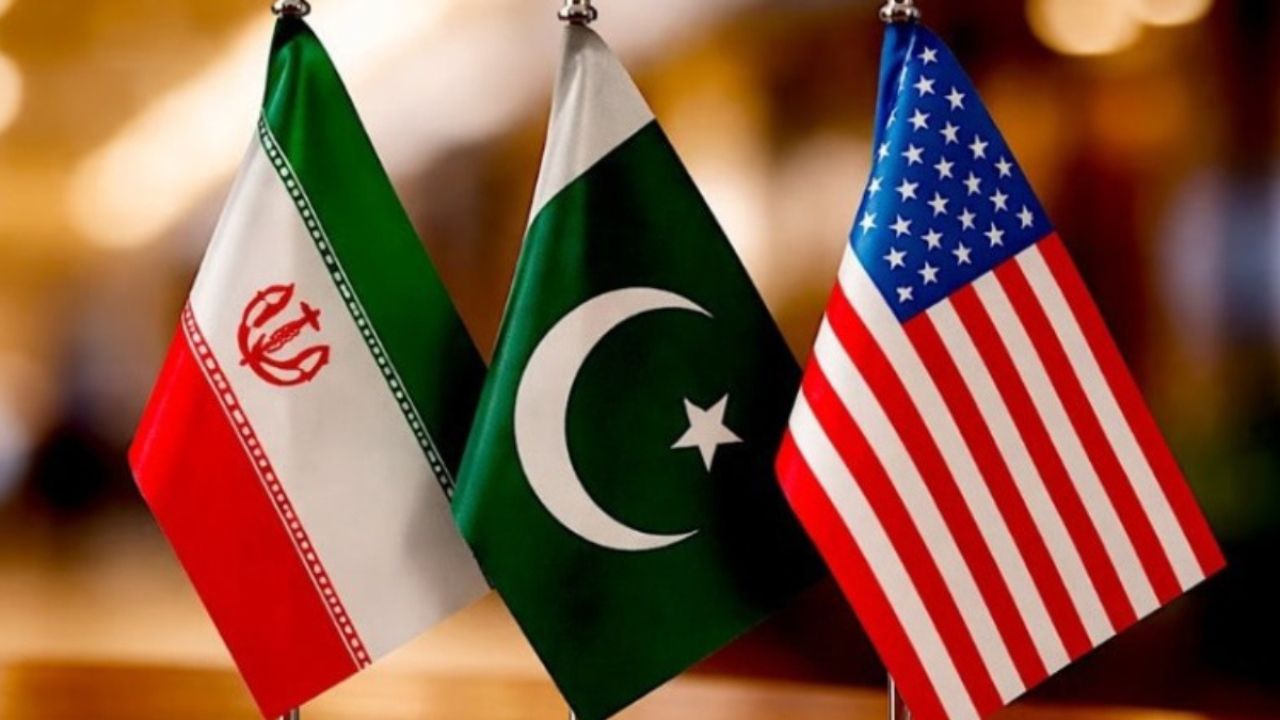

Iran says a framework agreement with the United States could be signed in the coming days, but has dismissed claims that an initial deal will be formalised within 24 hours.
Signs of progress emerged on Friday after both Washington and Tehran indicated that a draft deal to end three months of conflict was close. A US official said both sides had agreed on a text and expected an initial signing soon.
On Saturday, Pakistani Prime Minister Shehbaz Sharif said a framework agreement had been reached and preparations were under way for an electronic signing, followed by technical talks next week, report agencies.
Sharif suggested the deal could be signed on Sunday, but Iranian Foreign Ministry spokesperson Esmaeil Baghaei, quoted by state media, urged caution over the timing.
“We will have to wait and see the exact date of signing of the memorandum of understanding, although it will not be tomorrow,” he said.

“The possibility of it happening in the coming days cannot be ruled out, but we must be careful about the timeline, given the hesitation on the other side.”
Both sides have repeatedly moved close to an interim deal aimed at ending the war without reaching a final peace agreement. Sharif later posted on X that talks were closer than ever.
US President Donald Trump did not comment immediately but reshared Sharif’s post.



The war reportedly began after US-Israeli strikes on Iran on 28 February. Iran responded with attacks on US positions in the Gulf, while Hezbollah strikes in Lebanon escalated the conflict.
The war has killed thousands, mostly in Iran and Lebanon, and pushed global energy prices higher. Iran has disrupted shipping through the Strait of Hormuz, a key oil route, while the US has restricted Iranian port access.
Iran’s supreme leader, Ayatollah Ali Khamenei, was killed on the first day of the war and later succeeded by his son Mojtaba, according to state media. His funeral is scheduled in Tehran on 4 July, ending in Mashhad on 9 July.
Foreign Minister Abbas Araqchi said the draft reflected Iran’s stronger position after the conflict.
“Iran is the winner of the war with the US,” he said on state television.
Shortly afterwards, US forces intercepted Iranian drones heading towards the Strait of Hormuz, described as a threat to commercial shipping. US Central Command confirmed the interceptions and said the waterway remained open.
The draft deal reportedly includes reopening the Strait and lifting the US naval blockade on Iranian ports, according to sources. Iran’s nuclear programme, cited by US President Donald Trump as a key cause of the war, would be addressed in later talks.
A US official said the deal aligns with Trump’s objectives and places negotiations “in a very, very good place”.
Under the draft, Washington would release billions in frozen Iranian assets and ease oil sanctions in return for reopening the Strait of Hormuz.
Iran’s nuclear programme would then be discussed over a 60-day period, with the US seeking eventual dismantlement and removal of enriched uranium stockpiles.
Araqchi said Iran has not accepted dismantlement and prefers to retain diluted uranium.
The proposals also include discussion of possible war reparations and missile limits, though a US official disputed this.