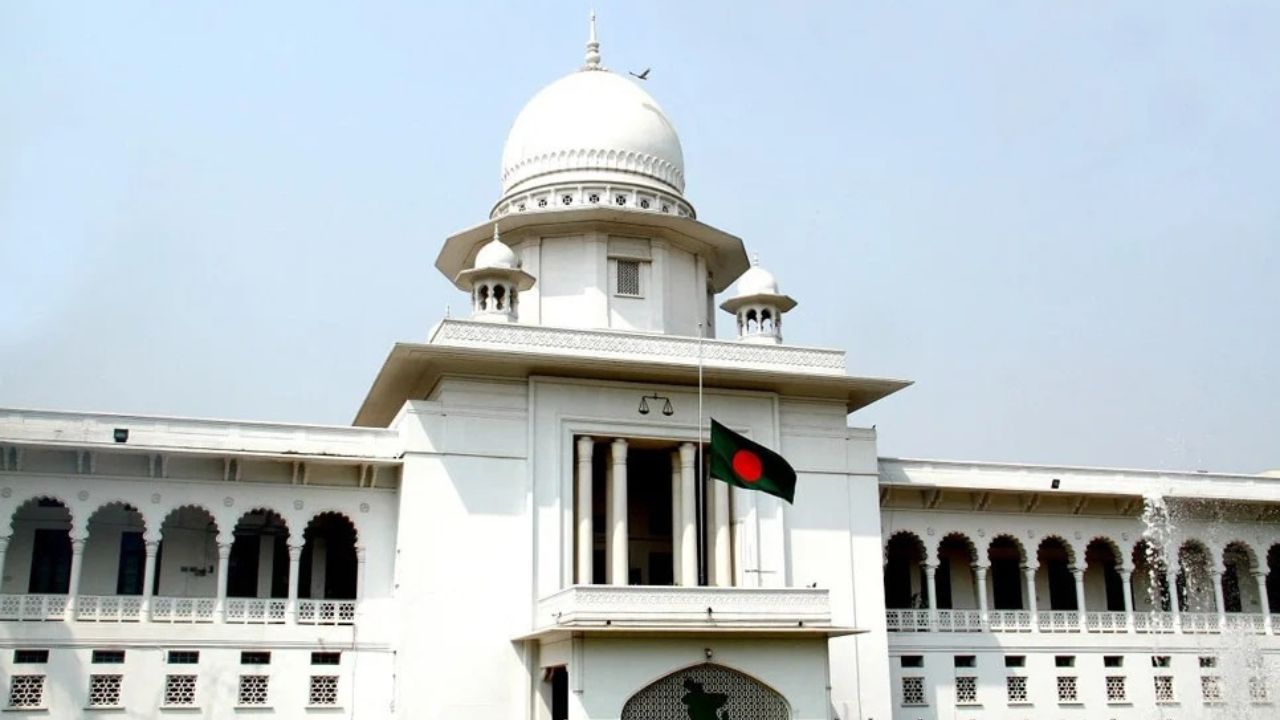

The aspiration of the people of Bangladesh for an independent judiciary is longstanding.
Indeed, it predates the country’s independence and constituted a central demand during the Pakistan period, both in the effort to frame a new constitution for Pakistan and as part of the broader political movement for the self-governance of East Pakistan.
It was therefore unsurprising that the Constitution of Bangladesh, adopted in 1972, guaranteed judicial independence in robust terms by vesting control over the entire judiciary in the Supreme Court rather than in the executive.
This constitutional commitment was reversed in 1975, when a one-party system was established through the Fourth Amendment to the Constitution, which transferred control of the judiciary to the President.
Like many other aspirations of the nation, the demand for an independent judiciary gained renewed prominence following the July uprising. The uprising gave rise to momentous discussions on reform, and within the broader debates on legal and constitutional reform, the independence of the judiciary has been a central concern.
Given the significance of this issue, one of the first steps taken by the post-uprising interim government was the setting up of six reform commissions, including the Judiciary Reform Commission and the Constitution Reform Commission.
Eventually, identical recommendations from both reform commissions to free the judiciary from executive control found their way into the July Charter agreed upon by the political parties.
Yet, Bangladesh once again is on the verge of losing, for political expediency, a historic opportunity to strengthen judicial independence.
For an independent judiciary, the constitutional architecture governing the relationship between the executive and the judiciary matters just as much as the individual independence and integrity of judges themselves. This institutional question lies at the heart of Article 116 of the Constitution.
In Article 116 of the original Constitution of 1972, control over the subordinate judiciary – including posting, promotion, leave, and discipline – was vested in the Supreme Court.

The Fourth Amendment undid that arrangement by transferring those powers to the President. The Fifth and Fifteenth Amendments retained the President’s authority over the subordinate judiciary while requiring consultation with the Supreme Court.
For decades, this constitutional arrangement has generated debate. Although the celebrated Masdar Hossain judgment significantly advanced judicial independence, it did so within the limits imposed by the amended Article 116.
In that case, the Appellate Division of the Supreme Court sought, through judicial interpretation, to assert a degree of judicial independence, yet remained cognisant of the limits of such interpretation because of the language of Article 116.
Indeed, the Appellate Division itself later acknowledged the structural problem. In the Sixteenth Amendment case, it observed that so long as control and discipline over members of the subordinate judiciary remained with the executive, genuine judicial independence would remain elusive.
Following the uprising, and in the spirit of pursuing essential reform through judicial means, the successive amendments to Article 116 were, for the first time, brought before the Supreme Court for its consideration. On 18 August 2024, a public interest litigation, Mohammad Saddam Hossen v. Bangladesh (Article 116 case), was filed challenging those amendments.
The significance of the Article 116 case is far greater than that of the Masdar Hossain case because, unlike the latter, it directly addressed the underlying constitutional problem.
The judgment of the High Court in the Article 116 case, delivered on 2 September 2025 – the full written version of which was made public on 7 April 2026 – annulled the amendments to Article 116 and directed the restoration of Article 116 to its 1972 position.




In substance, control over the subordinate judiciary was once again placed under the Supreme Court.
In the same judgment, to ensure the effective independence of the judiciary, the Court also directed the Ministry of Law to take steps to establish a judicial secretariat within three months.
Following the judgment, an ordinance for a separate judicial secretariat was promulgated on 30 November 2025.
Through various formal and practical measures, the previous interim government had established the secretariat, which remained operational for several months before being abolished by the current government on 10 April 2026.
In the Article 116 case judgment, the Court was not creating a new constitutional vision – it was acting against the backdrop of a broad political commitment to judicial independence. The party currently in government, the Bangladesh Nationalist Party (BNP), articulated this commitment clearly and repeatedly.
During its years in opposition, the BNP repeatedly argued that the judiciary had been used as an instrument of political persecution.
The conviction and imprisonment of Begum Khaleda Zia, restrictions on her ability to seek medical treatment, and numerous prosecutions of party leaders and activists were cited by the BNP as evidence of the lack of judicial independence.
The current Prime Minister also faced politically motivated cases. He had to stay outside the country for a long period due to such cases and a conviction against him.
It was therefore natural that judicial reform occupied a prominent place in the BNP’s constitutional agenda. Its 31-point reform programme, announced in July 2023, pledged to ensure effective judicial independence, vest control over the subordinate judiciary in the Supreme Court, and establish a separate judicial secretariat.
Those commitments were reaffirmed by the BNP before the National Consensus Commission and were incorporated into the July Charter without any dissent from the BNP.
None of the party’s reservations concerning the July Charter related to judicial independence, the transfer of control over the subordinate judiciary to the Supreme Court, or the establishment of a judicial secretariat. The same commitments were made by the party in its election manifesto for the February 2026 general election.
The manifesto expressly provided that control of the subordinate courts would rest with the Supreme Court, and that the judicial secretariat established in 2025 would be strengthened.
Against this background, Parliament’s decision on 10 April 2026 to repeal the ordinance establishing the judicial secretariat and to abolish the secretariat itself was rather shocking.
This was not only a grave departure from commitments repeatedly made by the party now in government, but also constituted a violation of the judgment in the Article 116 case. Until the High Court’s judgment was stayed or set aside, the obligation to establish a separate judicial secretariat was part of the law.
The government took the aforesaid steps without even bothering to file an appeal against the High Court judgment.
However, Dr. Badiul Alam Majumdar filed an appeal on 20 April 2026, together with an application for interim orders staying the operation of the provisions of the repeal ordinance that abolished the secretariat and maintaining the status quo with respect to its continued operation.
The government eventually filed an appeal on 21 May 2026, together with an application for a stay of the High Court judgment. The applications accompanying the appeals were taken up by the Appellate Division on 9 June 2026, when it stayed the operation of the High Court judgment.
In any event, the government acted in violation of the High Court judgment from 10 April until 9 June 2026.
A most critical and unavoidable question that arises is whether the government’s decision to challenge the judgment is consistent with its own long-standing political commitment and repeated promises to the people of the country.
As noted above, those promises were incorporated into the 31-point programme, reaffirmed before the National Consensus Commission, reflected in the July Charter, repeated in the election manifesto, and reiterated during both the referendum and the general election campaigns.
Sadly, it seems that a reform once championed by the BNP as essential to the rule of law has now become politically inconvenient for the party. One would have expected that promises made would not be broken as soon as a party moves from the opposition to the treasury.
More than fifty years after independence and two years after the uprising, despite repeated promises to secure judicial independence, Bangladesh still finds itself at a crossroads.
It is possible for the country to take the right path if the BNP decides to keep its promises and supports the High Court judgment in the pending appeals before the Appellate Division.
If it continues to take the view that it can depart from its own promises, it will be for the Appellate Division to decide whether to uphold or set aside the High Court judgment.
The High Court’s judgment is based on sound legal principles and a proper and correct interpretation of the law. Upon consideration, the Appellate Division may find it appropriate to uphold this landmark judgment.
The whole nation will be looking forward to the outcome of the appeals with eagerness and hope, so that, after more than half a century of independence, the country can finally realise the aspiration of an independent judiciary – an aspiration whose denial has caused so much suffering to its people.
A judgment upholding the High Court’s decision would be a watershed moment, not only for the judiciary but for the nation as a whole.
The author is a Former visiting fellow, University of Cambridge, and senior advocate at the Supreme Court of Bangladesh.