Following the July–August mass uprising, 24 cases involving allegations of crimes against humanity have come under trial at the reconstituted International Crimes Tribunal.
While more than 450 accused individuals have been brought under prosecution, 293 of them remain beyond the reach of law enforcement, and proceedings are continuing in their absence.
According to prosecution sources, 161 accused have been arrested and are currently in custody. As of 9 February, formal charges have been submitted in 24 cases across two tribunals. Of these, three cases have already been disposed of through verdicts, while two are awaiting judgment.
Chief Prosecutor Md Aminul Islam said the prosecution team is committed to completing the trials of crimes against humanity. Efforts are ongoing to arrest those who remain absconding, with law enforcement agencies and relevant authorities working to trace them. However, trials will continue in absentia until arrests are made. He expressed hope that proceedings would conclude swiftly in line with the spirit of the law.
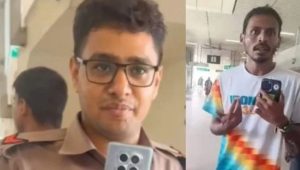
Among the cases awaiting verdict are the killing of Abu Sayed, a student of Begum Rokeya University in Rangpur, and the shooting of Amir Hossain—who was seen hanging from the cornice of a building in Rampura—as well as the killing of two others in the same incident.

A total of 35 individuals are accused in these two cases. Prosecutor Gazi MH Tamim said he expects the verdicts in both cases to be delivered soon.
The cases stem from allegations of enforced disappearance, murder and other crimes against humanity committed during the Awami League’s tenure in office, including incidents during the July–August uprising.
The chief prosecutor has filed the cases on behalf of victims or affected parties.
Following the uprising, amendments were introduced to the International Crimes Tribunal Act. The revised law allows for the prosecution not only of crimes committed during the 1971 Liberation War but also those allegedly committed during the recent uprising.



Provisions for trying enforced disappearances have been incorporated, and the amended law also permits live broadcasting of proceedings and allows organisations or political parties, in addition to individuals, to be prosecuted.
Of the 161 individuals currently in custody, 74 are former ministers, advisers, members of parliament and other civilian figures from the ousted Awami League government.
Members of law enforcement agencies are also among the accused: 65 police officers, 20 current and former members of the army, and one member of the Ansar force.
In addition to the core cases under trial, 34 miscellaneous cases remain under investigation—32 before Tribunal-1 and two before Tribunal-2. These involve 207 accused, of whom 96 have been arrested and 125 remain absconding.
A prosecutor, speaking on condition of anonymity, said investigations into additional cases are ongoing and that formal charges will be submitted once inquiries are complete.
However, he declined to provide further details at this stage due to the continuing investigations.
Prominent figures named as accused include Awami League General Secretary Obaidul Quader; former prime minister’s adviser Salman F Rahman; former minister Muhammad Faruk Khan; Shahjahan Khan; Kamal Uddin Ahmed; and Dipu Moni.
Others include retired Supreme Court justice AHM Shamsuddin Chowdhury Manik; former prime minister’s son Sajeeb Wazed Joy; former state minister for information and communication technology Zunaid Ahmed Palak; Awami League Joint General Secretary AFM Bahauddin Nasim; former state minister for information and broadcasting Mohammad Ali Arafat; Jubo League Chairman Sheikh Fazle Shams Parash and General Secretary Mainul Hossain Khan Nikhil; and Bangladesh Chhatra League president Saddam Hossain and general Secretary Wali Asif Inan.
On 17 November last year, the tribunal delivered its first verdict, sentencing former Prime Minister Sheikh Hasina and former home minister Asaduzzaman Khan Kamal to death.
Former inspector general of police Chowdhury Abdullah Al-Mamun received a five-year prison sentence after turning state witness and assisting the prosecution.
On 26 January, three individuals, including former Dhaka Metropolitan police commissioner Habibur Rahman, were sentenced to death over the killing of six people in Chankharpul.
On 5 February, in a third verdict, six individuals including former MP Md Saiful Islam were sentenced to death in a case involving the burning of bodies in Ashulia. While a state witness in that case was pardoned, nine other accused received prison sentences of varying terms.