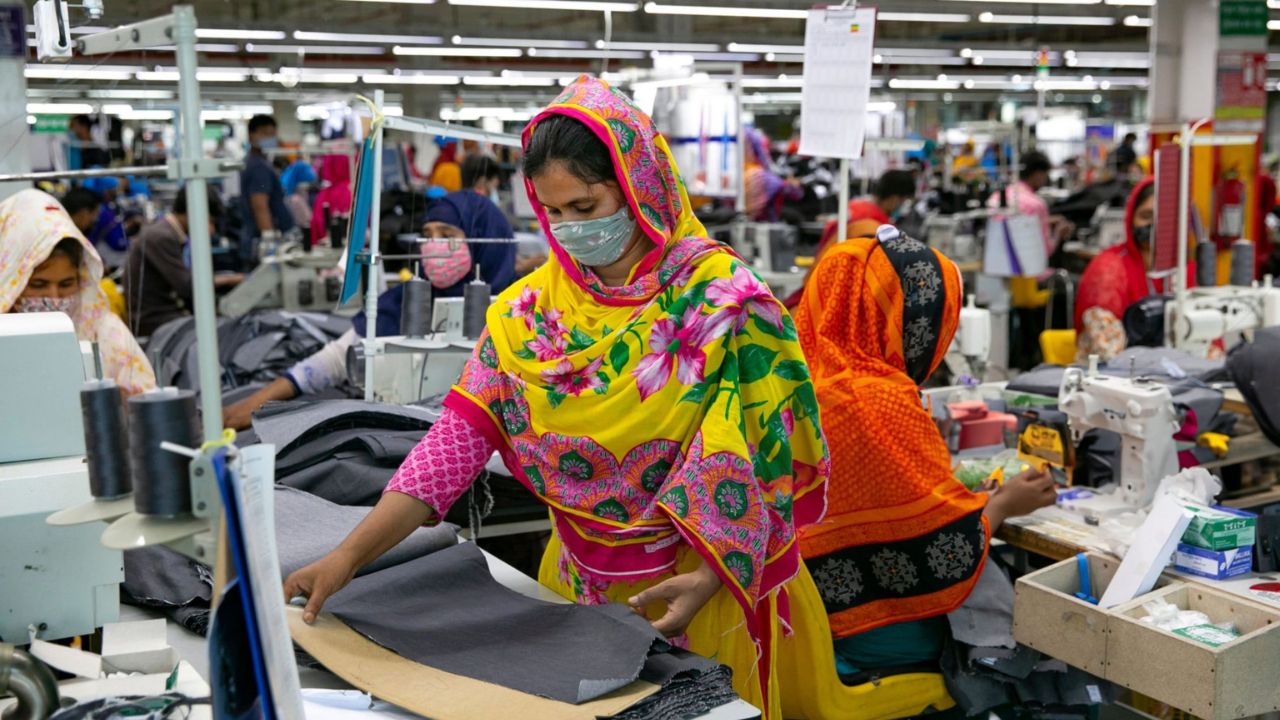
Chinese investors are keen to invest in Bangladesh’s green technology, jute, textiles and pharmaceuticals as part of the country’s broader push for manufacturing transformation, Vice-President of the Export-Import Bank of China Yang Dongning said on Thursday.
She made the remarks during a meeting with Chief Adviser Professor Muhammad Yunus at the State Guest House Jamuna. Dr Ma Jun, President of the Institute of Finance and Sustainability, accompanied her.
Yang said that while China has long financed Bangladesh’s major infrastructure projects, its investors are now shifting focus to direct manufacturing. The priority sectors include rooftop solar panels and large-scale jute-based industries—particularly energy production, bio-fertiliser and plastic alternatives.
She said Chinese enterprises and the Exim Bank, which previously financed several large infrastructure schemes, are ready to support these manufacturing ventures.
Dr Ma said Bangladesh’s traditional jute industry is a major draw for Chinese investors, who want to establish joint ventures with local partners. He said Chinese firms are prepared to use up to one million tonnes of jute to produce green energy, fertilisers and plastic substitutes.

“There are opportunities for joint ventures in jute with Chinese financing,” Dr Ma said.
The Chief Adviser welcomed China’s renewed interest, saying Chinese investors could help transform Bangladesh into a manufacturing hub capable of exporting to developed markets, including China.



“We can go full speed in these areas,” Professor Yunus said. He also identified pharmaceuticals and healthcare as strong potential sectors for Chinese investment.
He added that China—the world’s largest producer of solar energy—could play a critical role in supporting Bangladesh’s transition to green energy, including solar panel and rooftop solar investments.
The Chief Adviser invited China to relocate manufacturing plants to Bangladesh, highlighting the country’s large pool of young workers. He said the government could repurpose closed state-run jute mills for joint ventures.


“This is a very important dimension. We welcome this. We want to translate these into actions,” he said, referring to Chinese interest in jute-based manufacturing.
Yang said Chinese companies are also exploring investments in AI and e-commerce—sectors where China holds global leadership.
In response, the Chief Adviser urged Chinese firms to relocate factories to southeastern Bangladesh, home to the country’s largest seaports and close to Myanmar, Thailand and other Southeast Asian markets.
“This part of the country has enormous access to the sea. Chinese industries could be relocated here—they can produce goods and export them to rich nations as well as to China,” he said.
Professor Yunus also called on Chinese infrastructure companies to build railway links between Bangladesh and southern China to support exports from relocated factories and strengthen regional connectivity.
At the start of the meeting, the Chief Adviser expressed deep condolences over the deaths caused by a deadly fire in a Hong Kong apartment block.
Senior Secretary and SDG Coordinator Lamiya Morshed and Chinese Ambassador Yao Wen also attended the meeting.