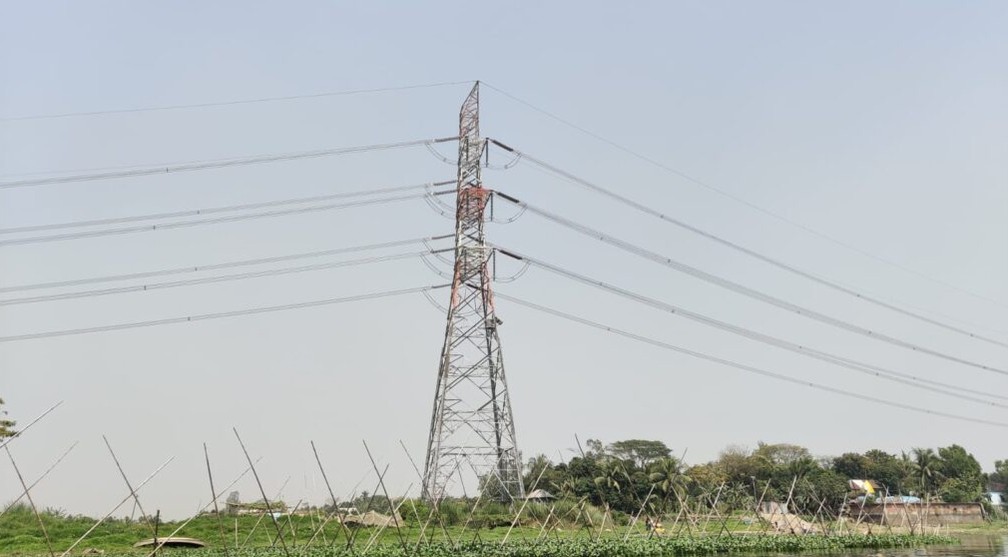

Bangladesh’s capacity charge regime represents perhaps one of the most expensive examples of this phenomenon. Recent reports have once again brought the issue of capacity charges into public focus, revealing how payments for idle power capacity have continued to rise despite persistent excess generation capacity.
The public debate usually portrays capacity charges as a controversial mechanism through which private power producers receive payments even when electricity is not generated. Critics describe it as a legalised form of rent extraction. Supporters once argued that it was necessary to encourage private investment and prevent electricity shortages. Yet both sides often overlook a more fundamental question – why did Bangladesh build an electricity system that became dependent on paying for power it did not need? The answer goes beyond electricity. It reveals how governance failures can transform a legitimate policy tool into a long-term financial burden.
When Bangladesh faced severe power shortages during the late 2000s, the rapid expansion of generation capacity appeared unavoidable. Industries suffered from frequent outages, businesses relied heavily on generators, and households endured regular load shedding. Increasing generation capacity became both an economic necessity and a political priority. In that context, capacity payments were not entirely irrational. Investors needed guarantees before committing large sums of money to power plants. Since electricity demand fluctuates and governments control dispatch decisions, private investors sought protection against revenue uncertainty. Capacity charges emerged as that guarantee.
The problem was not the existence of capacity payments. The problem was what happened afterward. Instead of treating capacity charges as a temporary instrument to address a specific shortage, Bangladesh gradually transformed them into a permanent feature of an increasingly oversized power sector.
Today, the country possesses an electricity generation capacity of 28,919 megawatts, including imports and both public and private plants. Yet peak demand struggles to exceed 18,000 megawatts. Average daily generation hovers around 12,000 megawatts. This means Bangladesh has created more than double the generation capacity it regularly uses.

Such a gap cannot be explained by prudent planning alone. Every modern economy requires reserve capacity to ensure reliability. However, there is a significant difference between maintaining a reasonable reserve margin and constructing an electricity system where vast amounts of installed capacity remain underutilised while consumers continue paying for it. The financial consequences are becoming increasingly difficult to ignore.
According to figures presented in parliament in 2023, the government paid Tk1,04,926.81 crore in capacity charges to private and rental power plants over fourteen years. In FY2011-12, capacity charges amounted to Tk5,445.89 crore. By FY2024-25, annual capacity charge payments had climbed to Tk45,494 crore. Within roughly a decade and a half, the annual burden multiplied nearly nine times. Equally revealing is the rising cost embedded in every unit of electricity purchased from private producers. Capacity charges stood at Tk2.35 per unit in FY2011-12. The figure is projected to reach Tk5.46 per unit in FY2026-27. These numbers expose a reality often absent from discussions about electricity tariffs. Consumers are not simply paying for the electricity they use. Increasingly, they are paying for infrastructure that remains idle.




This creates a paradox. Bangladesh achieved one of its major development objectives by expanding electricity access across the country. Yet the success itself raises difficult questions. If universal access has been achieved and demand growth remains modest, why does generation capacity continue to far exceed consumption? The answer appears to lie in incentives.
Once contracts guarantee fixed payments, the economic discipline normally imposed by market demand begins to weaken. Decisions become less dependent on whether additional capacity is genuinely required and more dependent on contractual commitments already embedded within the system. Over time, surplus capacity ceases to be an emergency buffer and becomes a recurring financial obligation. The consequences extend beyond electricity bills. Every taka spent on unnecessary capacity payments is a resource unavailable for schools, hospitals, transportation networks, climate adaptation, or social protection programmes. In a developing country where public resources remain limited, opportunity costs matter.
The controversy also highlights a deeper institutional weakness in policymaking. Governments often receive praise for launching large projects, announcing ambitious targets, and expanding infrastructure. Far less attention is devoted to evaluating whether those projects remain justified after circumstances change.
The legal complications surrounding existing contracts further demonstrate the long-term risks associated with poorly designed agreements. Current policymakers argue that contractual obligations limit their ability to modify capacity payment arrangements. Whether or not legal remedies ultimately emerge, the situation illustrates a broader lesson. Contracts signed in one political era can constrain public policy choices for years afterward. Future governments inherit not only assets but also obligations.
This reality makes transparency during contract negotiation even more important. Citizens bear the financial consequences long after the original decision makers leave office. The capacity charge controversy also offers an opportunity for a more mature national conversation about infrastructure planning. Development should not be measured solely by how much capacity a country builds. It should also be measured by how efficiently that capacity is utilised.
Bangladesh undoubtedly needed more electricity generation capacity. The evidence suggests it may not have needed as much as it ultimately built. The challenge now is not merely assigning blame for past decisions. It is creating institutions capable of preventing similar outcomes in the future. Better demand forecasting, stronger regulatory oversight, transparent procurement processes, independent contract reviews, and regular policy evaluations are all essential. Most importantly, policymakers must recognise that the true purpose of infrastructure is not construction itself. It is service delivery. Citizens do not benefit from megawatts listed in official reports. They benefit from affordable, reliable electricity that supports economic growth and improves living standards.
The tragedy of the capacity charge system is not simply that billions of taka have been spent. It is that the country now finds itself paying a growing price for capacity it does not need, while many other development priorities continue competing for scarce public resources.
Ultimately, the debate is about more than electricity. It is about whether public policy serves citizens or contracts, whether planning follows evidence or momentum, and whether governments possess the courage to distinguish between genuine national assets and expensive monuments to past miscalculations. For Bangladesh, that distinction may prove far more important than any individual power plant ever built.
The views expressed in this article are solely those of the author
The writer is an academic, journalist, and political analyst. E-mail: [email protected]