
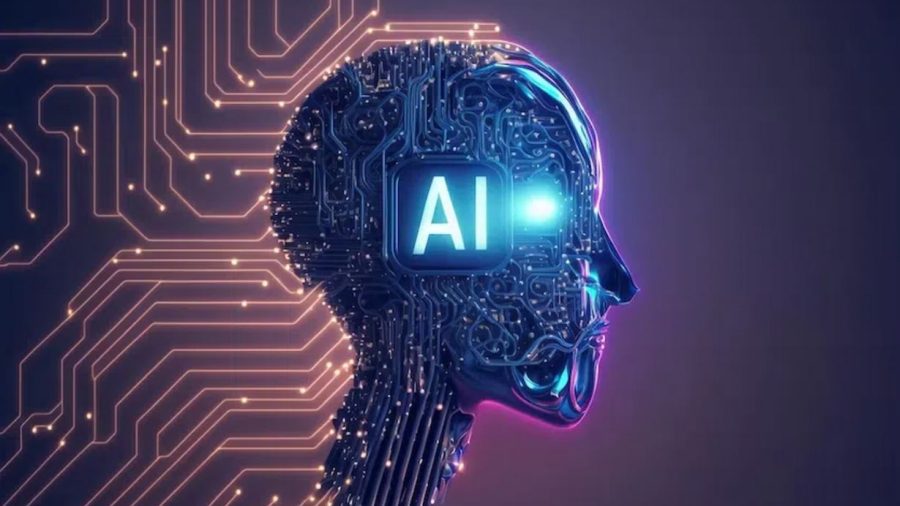

Let’s start with a film we watched many years ago as a movie-of-the-week presentation by BTV. The plot was about an astronaut stranded on an uncharted planet where an invisible force is the nemesis. Throughout the film, it’s believed the adversary is some form of intelligent alien life. But in the end, it’s found that the enemy is nothing but a highly intelligent computer system gone rogue.
The memories of that movie never left me, and this week, with the world abuzz with the possibility of AI technology becoming a future threat to the human race, the plot of that sci-fi movie seemed like a prescient warning. With such a lot of brouhaha, the world is currently divided in their opinion as to what the future harm may be if AI, at its current development pace, is allowed to evolve. Those who are in the AI business feel it’s time to slow down because they assert that unless there is a regulatory system and a ‘kill switch’, the technology will be our doom.
Forty years ago, such a notion was the premise of the blockbuster film Terminator, and so much was the success that there were several sequels. Back then, we loved it because it was a movie; now we need to sit back and reflect because the threat may be upon us sooner than we think. Some are prophesying that AI will make the human race extinct. One feels that such an apocalyptic ending is still quite far off.
What we are seeing now is the thin end of the wedge – act now and a disaster can be averted; sit on the fence and the consequences will be far too massive for us to handle. Actually, as conventional morality goes: crossing the limit in anything may bring a catastrophic result, which applies to most situations in life. All work and no play makes Jack a dull boy, and all study and entertainment turns someone into an anti-social nerd. No further elaboration is needed.

We actually have two groups here: one which is determined to go to the apex of AI expertise as fast as possible and the other, which wants to take it easy and assess all the potential risks before firing on all cylinders. The race between China and the USA in the AI realm seems to be a motivating force for the former group, who are locked in what we can call a new global race, reminiscent of the space race of the 50s and 60s. The sole difference is that the space race included technology controlled by humans. Here, human control stands at a very real risk of losing to some super-intelligent mechanism.
Jack Clark, co-founder of Anthropic, added to the rising apprehension, asking how humans would deal with systems which are smarter than the smartest person on the planet. Many of the answers are already there in that line: we are possibly standing at a point in time when the AI at our disposal may well have the capacity to render humans ineffective. As Jack added while speaking to the BBC: things smarter than people can be really, really dangerous! Unfortunately, the US president does not think so and is determined for the AI boom to move ahead.




We are making machines better than humans, was the message and in five years, those machines may be even better and, as some military experts feel, will be given weapons to act as high-tech soldiers.
While the world looks at the race between China and the USA, hoping that sense will prevail, the fear is that somewhere, in some other nation, not under the spotlight, AI technology is already developing fast. The shock factor is that such a country, which is not anywhere in the news at the moment, may emerge as the first place from where technology begins to overtake the human civilisation.
The thing is, the genie is out of the bottle; there’s no way to put it back, and so, in addition to a global AI regulatory body, an AI development detection system is required. Much like the Cold War period when spy planes were flown at high altitude to spot nuclear missile sites. Only this time, planes won’t do the work; a concerted effort by all developed nations, involving leading scientific research institutes, will be needed.
Even then, one feels that in some corner, unknown to us all, AI will stealthily move on, making our obsession to achieve something bigger the cause of our ultimate subjugation and, possibly, termination.
An ending from a sci-fi fiction comes to mind where the diary of a human, chronicling his life, success and travails, is read hundreds of years into the future. In the end, the book is put down by the reader, which is an artificial intelligence.
The views expressed in this article are solely those of the author
The author is a freelance writer