The march began in Santiago under a grey winter sky. Thousands of students, teachers and activists gathered to protest planned cuts to the education budget.
It was one of the first major challenges for President José Antonio Kast’s new government.
The cuts are part of a wider austerity plan. The government says it needs to reduce spending and stabilise the economy.
But protesters say education will pay the price. They fear larger classrooms, fewer teachers and shrinking public resources.

Banners filled the streets with sharp messages. Many accused the government of ignoring young people’s future.
Teachers joined in large numbers, widening the protest beyond campuses. What began as a student rally quickly became a broader social movement.




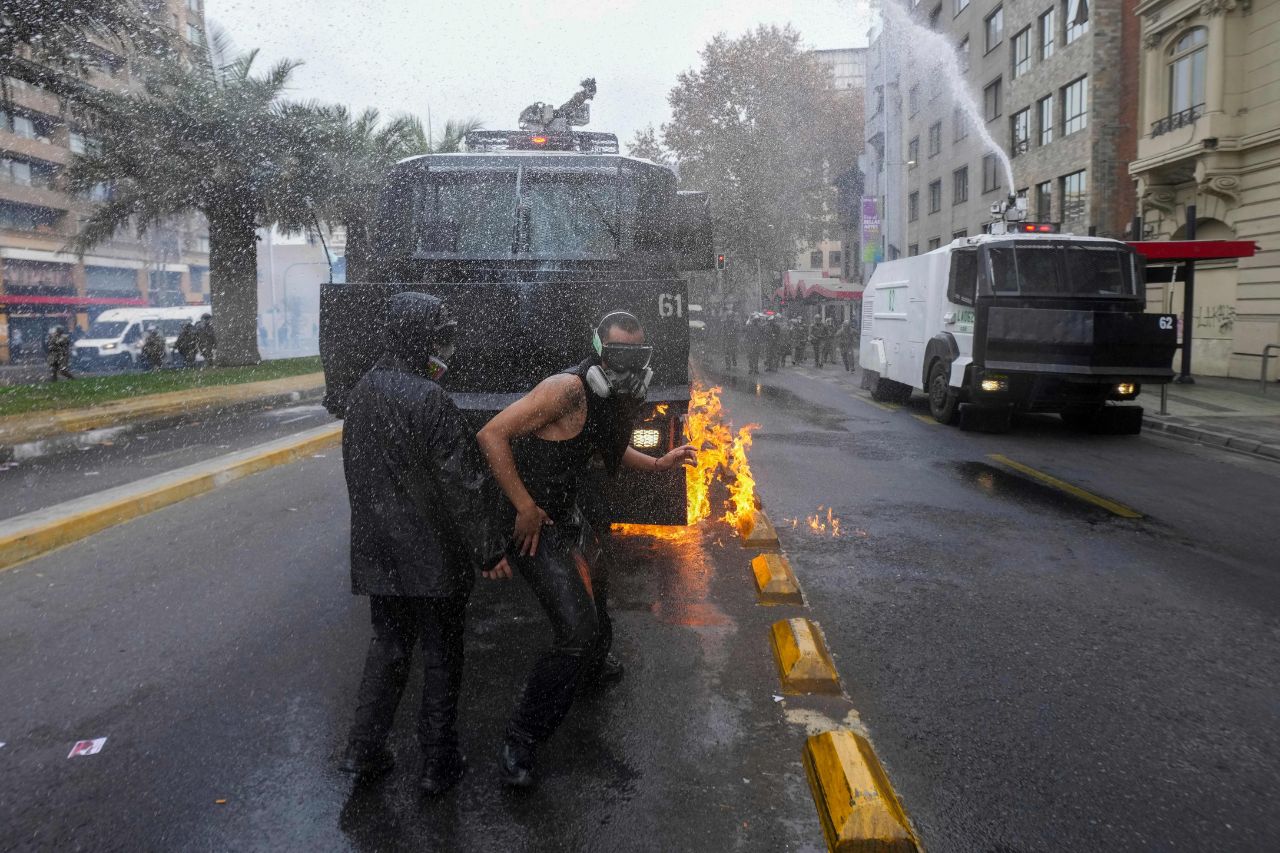
Tensions rose as the march moved through the capital. Police used tear gas and water cannons to disperse crowds.
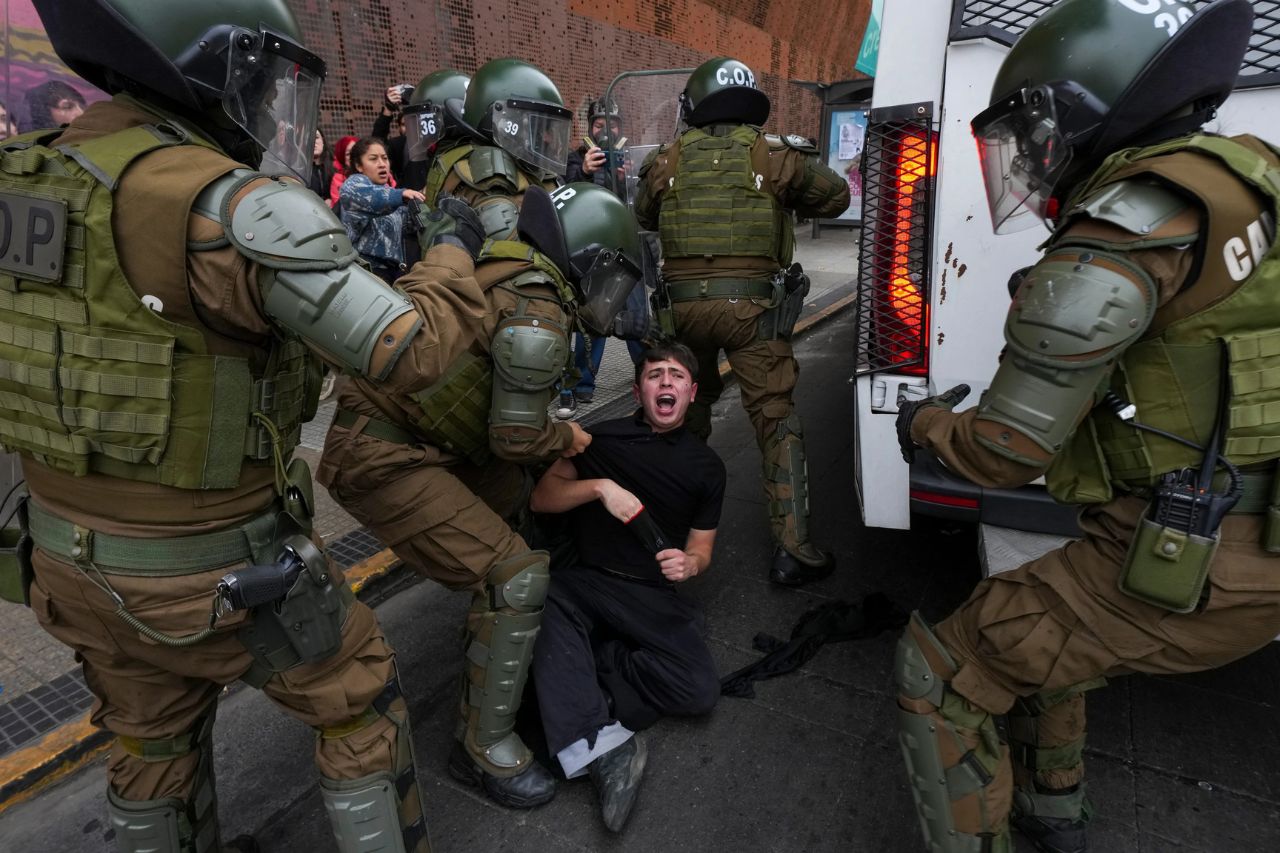
Some protesters threw stones, while others built makeshift barricades. Several people were detained. Transport in parts of the city was disrupted.
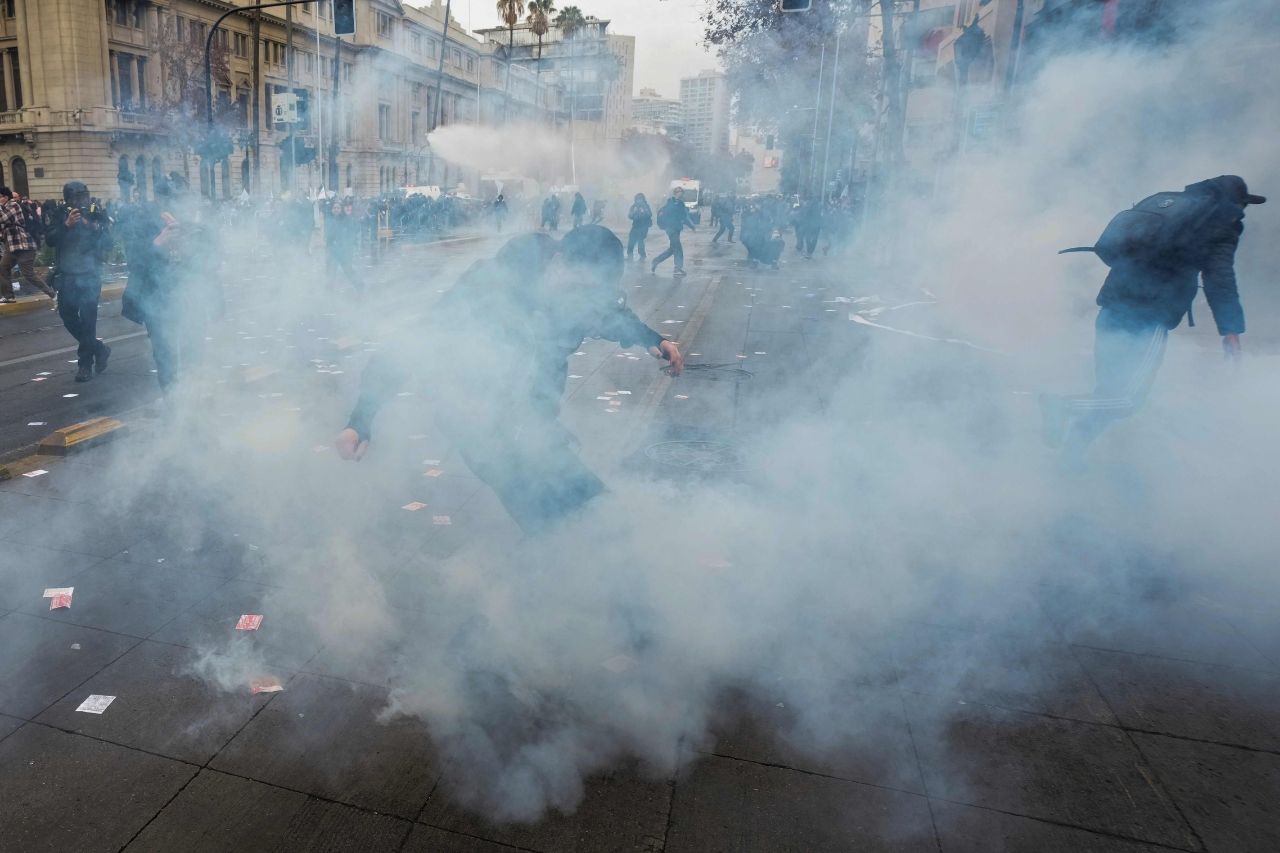
Scenes of students running through smoke echoed earlier waves of unrest in Chile. The country has a long history of student-led protests over inequality and public services.


The protests come only months after Kast’s election, which was built on promises of economic discipline, security, and a smaller state.
His government is now facing early resistance from groups who fear that austerity will deepen existing social divides.
For many on the streets, the message remains consistent. Education, they say, is not a burden on the budget.
It is an investment in the country’s future.
The confrontation signals a familiar fault line in Chilean politics. Between fiscal restraint on one side and social protection on the other, the debate is once again playing out in the streets.