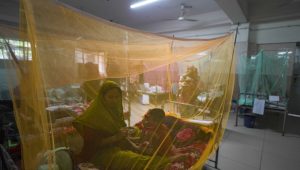
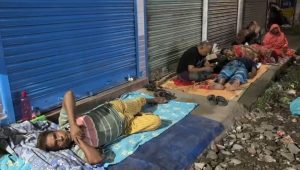
Even after more than 200 hours, there is still no permanent solution to the hotel crisis faced by Bangladeshis visiting Kolkata for medical treatment. Patients and their attendants are moving from one hotel to another yet failing to secure a place to stay.
Consequently, many are forced to spend their time on the streets, while some have decided to return home ahead of schedule due to the unavailability of accommodation.
Many people are arriving in Kolkata with pre-scheduled medical appointments from Bangladesh. They state that despite being aware of the ongoing situation, avoiding travel was not an option as their treatment dates had been fixed in advance.
Meanwhile, buses from Bangladesh continue to arrive daily in Kolkata’s Marquis Street area. As soon as they disembark, passengers rush to find hotels. Many patients’ relatives and family members can be seen waiting for hours on the footpaths.

Siraj, a resident of Kushtia, arrived in Kolkata on Wednesday with his family members after undergoing medical treatment in Bengaluru. However, failing to get a hotel room, he ended up having to sit on the footpath.
“Would we be sitting on the footpath if we had found a hotel room? I am returning home today by hiring a car for Rs5,000. If we had found a hotel here, we could have taken a train tomorrow morning from Sealdah to Bongaon for just Rs30 and returned home. But having no other choice, we must leave today,” he said.

On the other hand, Shamim, a resident of Dhaka, had a somewhat different experience. After visiting five to six hotels, he finally found accommodation.
“I faced immense trouble, but after a lot of struggle, I found a hotel. I believe whatever is happening is for our own safety. Therefore, we can tolerate this temporary inconvenience,” he shared.
Local hoteliers in the Marquis Street area are also simmering with frustration over the current situation. Md Intejar, a hotelier, stated that Bangladeshi tourists and patients had gradually begun returning to Kolkata after the pandemic.





Following that, business was repeatedly disrupted by the political unrest of 5 August and subsequent visa complications. Just as conditions were beginning to normalise, the fire disaster took place.
He argued that action must certainly be taken against those responsible for the incident but questioned the logic of penalising all business owners across the entire area over a single occurrence.
Citing an Air India plane crash as an example, he asked that if flight operations for the entire airline are not halted after one crash, why should nearly all hotels across the region remain closed over an incident in one hotel?
Shakil, another hotelier, did not entirely dismiss the administration’s initiative. “Whatever the government is doing is for security, and it is a commendable step. But they must also consider our plight. They could have shut down the hotels in the immediate vicinity of the incident, but shutting down nearly 250 hotels makes no sense,” he said.
He further questioned where the passengers arriving daily on four to five buses from Bangladesh are supposed to stay. “If hotels are closed, then the buses and passenger inflow should also be suspended. We are not just talking about business; the plight of the people arriving from Bangladesh must also be considered,” he added.

As a result, both hotel owners and visiting Bangladeshis in Kolkata’s Marquis Street area are currently in deep distress.
However, the scenario is distinctly different in Kolkata’s Mukundapur area. Known as the city’s “hospital hub”, this locality houses several super-speciality hospitals. Apart from Bangladesh, numerous patients from various districts of West Bengal and Kolkata travel to Mukundapur for medical treatment.
Notices have been served by the administration to over a hundred hotels there as well for operating without proper compliance, reportedly directing them not to accommodate guests. In reality, however, many hotels are continuing to board guests, virtually defying administrative directives.
A section of local hotel owners claims that the administration merely inspected documents and issued notices without providing any clear directive prohibiting the boarding of guests. Others argue that since people are traveling from afar for medical care, their accommodation is essential.

One hotelier remarked, “People are coming here for medical treatment. Where will they stay? Either their arrival must be halted or the cross-border bus services must be stopped. As long as people keep coming, we have to accommodate them.”
Even after more than 200 hours, a permanent resolution to the hotel crisis in Kolkata’s New Market and Marquis Street areas remains elusive. Despite facing acute hardship, several Bangladeshis are eventually managing to find lodging after persistent searches.
Last Tuesday, a devastating fire at Hotel Shikha Inn in the New Market area claimed the lives of seven Bangladeshi and two Indian nationals. Following the incident, the administration took strict action and shut down over 250 hotels in New Market and adjoining areas.
Bangladeshi citizens visiting Kolkata for medical care have been the hardest hit by this decision, and the crisis remains unresolved even after a week.