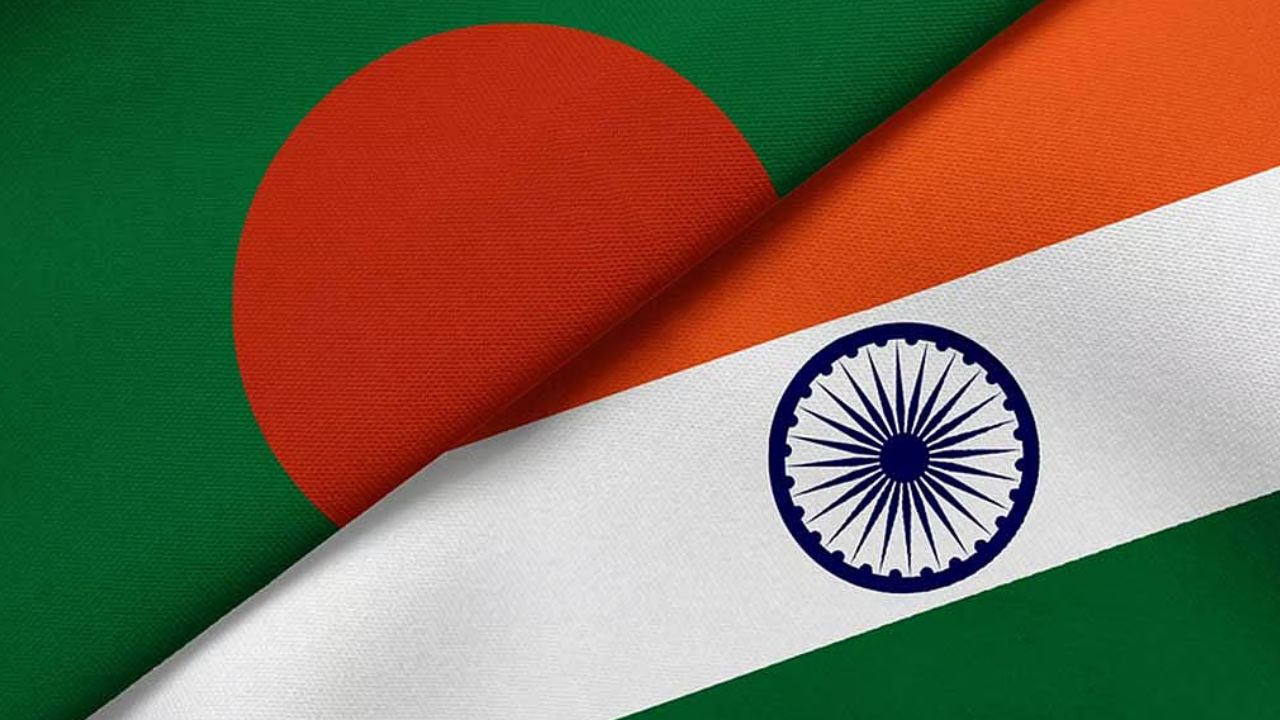
The United States and India maintained sharply divergent views on democracy and the rule of law in Bangladesh throughout most of the Awami League’s tenure.
Before AL returned to power for a third term in 2008, Bangladeshi political leaders routinely gathered in the living room of the US ambassador in Dhaka to broker political deals. Former US ambassador Marcia Bernicat candidly acknowledged this practice at her farewell press conference in 2018, describing it as a “rotten idea.”
It is evident that Washington and Delhi have long held competing perceptions—and engaged in a subtle power struggle—over who should govern Bangladesh. This trend appears to persist, as many Bangladeshis believe that both the US and India have taken sides and backed political parties aligned with their respective interests.
India, for its part, has recently signalled a shift in posture by showing openness toward BNP.
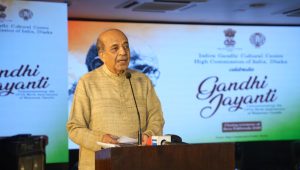
Indian External Affairs Minister S Jaishankar attended the funeral of former prime minister Khaleda Zia—also the mother of current BNP Chairman Tarique Rahman—in Dhaka. In addition, India’s Rajya Sabha adopted a condolence motion on 28 January, mourning Khaleda Zia’s death.
Meanwhile, US’s perception of Jamaat-e-Islami appears to have evolved in recent years.

The debate intensified following a Washington Post report published on 22 January, which quoted a US diplomat as suggesting that Bangladesh was becoming more Islam-oriented and predicting that Jamaat would perform better in the 12 February election than ever before.
The diplomat was quoted as saying, “We want them to be our friends.” Senior Jamaat leaders have echoed this narrative at public rallies, claiming they enjoy support from Washington in their bid to form the next government.
Senior diplomatic analysts argue that Delhi and Washington differ primarily because their national interests are not the same, leading to contrasting views on governance in Bangladesh. However, there is one significant point of convergence—containing China’s influence—which is likely to shape the future attitudes of both countries toward Dhaka.
Former ambassador Md Abdul Hye observed, “It is no secret that Delhi and Washington held divergent views about the AL government, as their national interests differ.”




He argued that this divergence would persist due to competing efforts to establish spheres of influence in the region, noting that both India and the US seek regional hegemony.
He further maintained that India’s priorities are likely to prevail over those of the US in Bangladesh because of geographical proximity, cultural ties, and deep political engagement. “India of the last century and today’s India are completely different,” he said.
“It has emerged as a regional power and a strategic partner of Washington, and both countries share a common rival—China.” He added that Washington is still coordinating with Delhi for its option in the Bay of Bengal, an entry to Malacca strait.
Political prism
There is a popular perception that Washington views Bangladesh through the prism of Delhi. However, despite their differences over the AL regime, it was ultimately Washington that appeared to have the upper hand.
Another former diplomat, speaking on condition of anonymity, said that the US may no longer be inclined to view Dhaka solely through Delhi’s lens. “The US has its own strategic and economic interests and is keen to pursue them independently of Indian influence,” he said.
Citing examples, he noted that Bangladesh’s imports from US have increased significantly and that Dhaka is purchasing a fleet of aircraft from Boeing. Washington may also seek deeper defence engagement, including encouraging Bangladesh to procure US defence equipment.
“The US can pursue its national interests directly, without relying on Delhi,” he said.
He added that India has also begun reassessing its approach. “Delhi now understands the cost of blindly supporting AL and is correcting course by engaging with other political parties,” he said, adding that while India has shown a preference for BNP, it is likely to engage with all political forces in Bangladesh going forward.
Washington Post report
Just three weeks before the parliamentary poll, Washington Post published a report quoting a US diplomat that Jamaat would perform better in the 12 February election. Serving diplomats feel that it is not a coincidence and a signal from the US administration to accommodate Jamaat in the future political equation in Bangladesh.
Big countries have their own assessment about the strength of the political parties in Bangladesh. Now all countries are engaged with Jamaat meaning they understood that the religion-based political party has political might.
A newspaper like Washington Post published a report three weeks before the election favouring a particular party gives a signal that one way or other the US administration is playing the ‘realpolitik’ card, analysts say.
A foreign ministry official said, “It may be a signal to India also. A strong Bangladesh political force that opposes Delhi is good for Washington to pursue its national interest as there is an indication that the US would no longer see Bangladesh through Indian prism.”
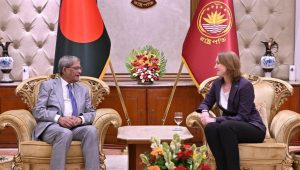
Meanwhile, US Ambassador to Bangladesh Brent T Christensen on 28 January after a meeting with Chief Election Commissioner AMM Nasir Uddin said the US government remains neutral in Bangladesh’s elections and is prepared to work with any government that is elected by the people.
“We are prepared to work with any government the Bangladeshi people elect to represent them going forward,” the US envoy said.
China factor
The strongest strategic convergence between Delhi and Washington remains their shared objective of containing China, both of whom view Beijing’s expanding influence as a threat.
Another former diplomat observed, “The China factor will bring Delhi and Washington onto the same platform and help them avoid a tussle over Bangladesh.” He said the issue is so critical that both capitals may be willing to set aside their differences over Dhaka in order to counter Beijing’s influence.