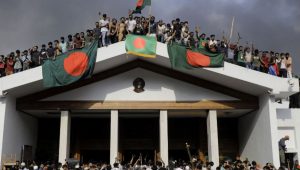
Bangladesh stands today in a moment of sharp uncertainty- a place where promising economic signals clash with persistent and troubling weaknesses. Earlier this year, the Metropolitan Chamber of Commerce and Industry offered a cautiously positive review of the economic situation. Their February assessment noted that the economy had begun recovering from the political instability that emerged in July 2024. Exports were showing strong growth, remittance inflows were consistent, the fall in foreign exchange reserves had been arrested and the exchange rate of the taka had stabilised despite some continued tremors beneath the surface.
These encouraging signs suggested that Bangladesh might finally be moving away from months of disruption. Yet even in that moment of limited optimism the chamber warned that deep structural problems persisted. It pointed to inflationary pressures, a shortfall in revenue collection, slow public spending, declining job opportunities, a weak investment climate and the need to restore confidence in the banking system. These challenges were not temporary obstacles. They were indicators of an economy still in distress, requiring careful and urgent attention.
In the months that followed the fragility became clearer. A new assessment from the authorities warns that inflation, weaknesses in the financial sector, low investment, governance shortcomings and external risks have become serious threats. The question that naturally arises is why this reversal occurred just when signs of recovery were beginning to appear. There may not be a single answer but the General Economic Division in its report titled Bangladesh State of the Economy 2025 provides an unmistakable warning. Unless the country confronts its vulnerabilities confidently, it risks slower growth, falling living standards and rising poverty.

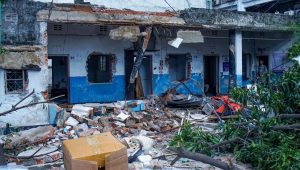
The report stresses that foreign direct investment remains critically low and that it is likely to remain at this depressed level in the coming months. Subdued investment and weak industrial activity are already pulling national growth downward. Nowhere is this decline more visible than in the garments sector which has long played the role of the backbone of the nation’s exports. In the past year at least 76 garment factories have shut down. More than fifty thousand workers, most of them women, have lost their jobs. Former BGMEA president SM Fazlul Haque described the situation bluntly when he said, “The garment industry is in distress. Aside from a handful of factories most are struggling to turn a profit. The longer the machines operate the greater the financial burdens become. If this trend continues, we will see even more factories go under.”
Economist Mustafizur Rahman of the Centre for Policy Dialogue acknowledged that some stability has returned, but he emphasised that this stability has come at a cost. Without quicker reforms and stronger revenue mobilisation, he warned, Bangladesh risks sliding into a debt trap. Stability without structural repair is short lived. It becomes a fragile calm that can be shaken easily by both internal vulnerabilities and external shocks.



The picture becomes even more concerning when foreign direct investment is examined at a time when the Asian Development Bank has already downgraded growth forecasts. While net foreign direct investment posted a modest rise of 2.9 percent in the fiscal year 2024 compared to the previous year, the early months of fiscal year 2025 tell a different story. Recent figures show a pronounced decline in net foreign direct investment compared to the corresponding period of the previous fiscal cycle. More troubling still is that when only net inflows are considered, the deterioration had already begun earlier. Data from Bangladesh Bank shows that net foreign direct investment actually fell by 8.8 percent in the fiscal year 2024 compared to the fiscal year 2023.
This leads to the difficult but necessary question regarding the interim government. What steps have been taken to rescue the economy and do these steps demonstrate operational competence. In its recent coverage, Daily Times of Bangladesh highlighted the expectations that surrounded the interim administration when it assumed office following the fall of the previous government. Citizens looked to the new leadership with hope that long neglected issues such as labour rights, gender equality, healthcare governance, media freedom and the weakness of local government would finally receive long overdue attention. Eleven reform commissions were formed in phases to study these issues and propose clear solutions.
Only months later uncertainty surrounds the fate of at least five of these commissions. Their recommendations created through months of meetings, expert consultations and publicly funded research have not been shared with political parties. They were not included in the widely discussed July Charter. Many now fear that these proposals may disappear quietly despite the need for urgent structural reform. The silence surrounding these commissions raises doubts about the seriousness of the reform effort.
Amid this landscape of economic strain, the people hear administrative announcements but no clear and guiding voice from the leadership. They see activity but not direction. They see committees but not conviction. They hear speeches but not the steady promise of a roadmap. An economy struggling to regain strength cannot move forward without confidence, clarity and communication.
Bangladesh does not lack expertise. It does not lack diagnostic insight. It does not lack the resilience of its people. What it lacks is a unified leadership voice that is willing to act decisively while also listening to expert guidance. An economy weakened by prolonged political tension needs both urgency and wisdom. The country now needs elected administrators who recognise the danger, work with relentless commitment, and undertake reforms that are firm in intent and thoughtful in design. The country has reached a moment where inaction could cost much more than uncomfortable decisions. Bangladesh has faced hardship before and has risen each time. It can rise again but only if those in charge choose commitment over caution and direction over drift. Until such leadership appears the economy will continue to walk on uncertain ground, hesitant in its steps and unsure of its future direction.
The writer is a poet, litterateur, and political analyst