Bangladesh is recording one of the highest measles fatality rates in the world as a fast-spreading outbreak continues to claim lives.
Alarmingly, public health experts point to malnutrition, delayed treatment, and critical gaps in outbreak management as the key drivers behind this deadly surge.
The crisis intensified rapidly over the weekend. Thirteen children died from measles and measles-like symptoms in the 24 hours leading up to Saturday morning, taking the total death toll to 512 since 15 March, according to the Directorate General of Health Services (DGHS).
Of these fatalities, 86 were confirmed measles cases and 426 were classified as suspected.
During the same 24-hour window, 972 new patients were diagnosed with measles-like symptoms, while laboratory tests confirmed 49 infections.
This brings the total reported cases in the country to 71,001.


Based on these official figures, Bangladesh’s case fatality rate now stands at around 0.72 per cent, a figure health experts warn is unusually high compared to other nations.
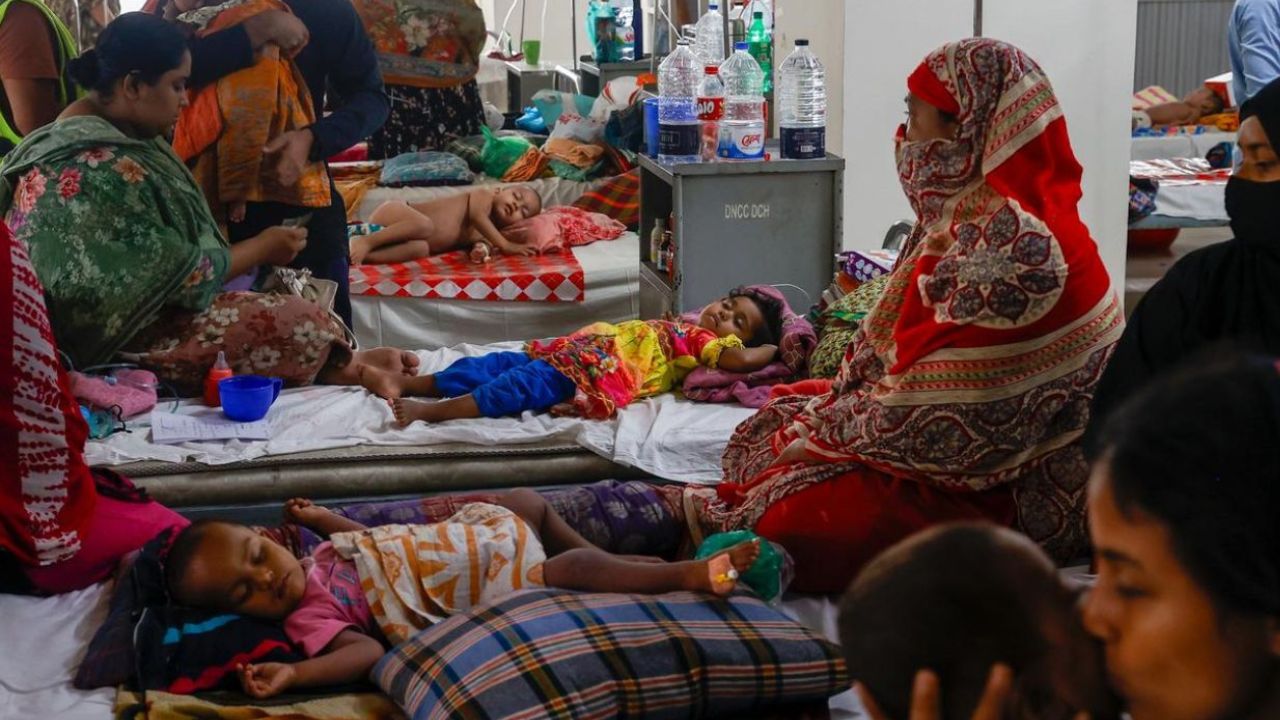
The sheer volume of patients has exposed severe health system constraints, with hospitals reporting acute shortages of beds and intensive care support amid rising admissions.
Public health expert Professor Be-nazir Ahmed highlighted the severe pressure medical facilities are facing in managing the surge, “Our population is huge, so we are struggling to manage the large number of infected children with the level of hospital services that are required. In many cases, three to four children are being treated on a single bed and ICU facilities cannot be provided on time. These factors sometimes lead to a high fatality rate.”
Bangladesh has drawn particular concern due to its comparatively high death toll and case fatality rate. A WHO situation update covering October 2025 to March 2026 ranked Bangladesh tenth globally in reported cases, with 3,276 infections.



India reported the highest number of cases at 19,705, followed by Yemen, Mexico, Pakistan, Angola, Kazakhstan, Cameroon, Sudan and Guatemala. The WHO has also assessed Bangladesh’s ongoing measles situation as “high risk” at the national level, citing continued transmission and vulnerability among children.
The WHO and other global health monitoring bodies have reported a broader resurgence of measles across multiple regions, warning that declining vaccination coverage is reversing years of progress in controlling the disease.
Medical journal The Lancet has also noted that 2024 and 2025 saw the highest number of measles outbreaks in two decades.
Sudan recorded the second-highest measles-related deaths this year with 371 fatalities, followed by Pakistan with at least 71 child deaths. Other countries reporting deaths include Mexico (32), Yemen (25), Angola (15) and Guatemala (10), based on available health ministry and media data.

Public health experts say multiple structural weaknesses are contributing to the high fatality rate in Bangladesh, even though its case count is lower than several other affected countries. They cite gaps in routine immunisation, child malnutrition, delayed hospital admission and limited access to healthcare in low-income and hard-to-reach communities.
They say malnourished children face a significantly higher risk of death.
Health system constraints are also worsening outcomes, with hospitals reporting shortages of beds and intensive care support amid rising admissions.

Be-nazir Ahmed criticised the absence of systematic death audits, arguing that it is preventing authorities from identifying weaknesses in the response. “Because these cases have not been properly audited, it is still unclear why deaths continue to occur one after another.
A full-scale war was not declared against the outbreak. Had that happened, perhaps we would not have seen so many deaths and the fatality rate would not have been this high,” he said.
He added that without death reviews, gaps in treatment and response systems remain unaddressed.
“Because death reviews are not being conducted, we are still in the dark about why so many deaths are occurring. If those reviews had been done, we could have identified where the weaknesses were and taken steps to address them,” he said.

Health officials have recently instructed hospitals to conduct death reviews, although experts say these mechanisms have not been consistently implemented at scale.
Former principal scientific officer of the Institute of Epidemiology, Disease Control and Research (IEDCR), Mohammad Mushtuq Husain, said immediate mortality reviews are essential during outbreaks.
“Death reviews are conducted to find out where the problems are, whether inside hospitals or outside. If there is a delay, important information may be missed because details of what exactly happened are often lost over time. That is why reviews should be done immediately,” he said.