The country’s real estate sector is bracing for a severe downturn as the proposed budget for the 2026-27 fiscal year introduces additional taxes on construction materials and a new “capital gains tax” on landowners.
Industry leaders warned on Monday that these measures, combined with rising utility costs, will drive apartment prices to “astronomical” levels and create a crisis among buyers.
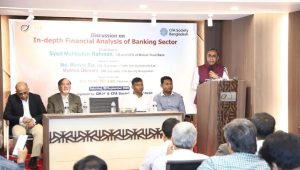
Speaking at a press conference held at the CIRDAP Auditorium in the capital president of the Real Estate and Housing Association of Bangladesh (REHAB) Ali Afzal detailed the association’s reactions to the proposed fiscal measures.
New tax burden on landowners
A significant shift in the proposed budget involves the taxation of landowners who enter into joint venture agreements with developers.
Under the new rules, landowners must pay a 15 per cent capital gains tax not only on the cash received from developers but also on the total value of the flats or floor space allocated to them. Previously, this tax was only applicable to cash components.

REHAB members argued that this will place immense financial pressure on landowners, which will inevitably be passed on to the end consumer.
Afzal illustrated this with a specific example, “In a project of 24 flats, if a landowner receives 12 flats valued at Tk12 crore, they will now have to pay Tk1.80 crore in taxes. This amount is equivalent to the price of nearly two flats.
“Landowners will simply recover this from the developers, ultimately making flats much more expensive for the public.”




Construction costs and investment fear
The sector is already reeling from administrative and political shifts. Afzal noted that the country has seen three different governments over the past two and a half years, leading to a lack of policy continuity and a sense of “investment fear” among both developers and buyers.
This instability is compounded by new duties on essential materials. The budget proposes a 10 per cent duty on cold-rolled coils and increases the tax on copper wires and tubes to 25 per cent. Furthermore, taxes on PVC resin and PET resin have been doubled.
Businessmen also highlighted that recent electricity price hikes alone are expected to increase the price of rods by Tk3,000 to Tk3,500 per tonne. These cumulative costs threaten to leave the housing market “buyer-less.”
Economic Contribution and Growth Targets REHAB emphasised that the housing and construction sector contributes approximately 15 per cent to the national GDP and supports the livelihoods of nearly 5 million people. The industry is linked to 269 secondary or linkage industries.
Afzal warned that if the budget is not revised to provide policy support and long-term home loans at single-digit interest rates, the government’s 6.5 per cent national growth target will be at serious risk.
Debate over ‘undisclosed money’
While private research organisations have criticised the government’s decision to allow the investment of undisclosed money (black money) – arguing it discourages honest taxpayers and promotes corruption – REHAB has welcomed the move.
The association described the opportunity for “voluntary investment disclosure” through a fixed tax on land and apartments as a positive step. They believe this will bring idle money back into the mainstream economy, increase liquidity in productive sectors, and stimulate overall economic activity.
Registration fees and revenue loss
Finally, REHAB expressed disappointment that their long-standing demand to reduce registration costs was “completely ignored.” Currently, the cost of registering a flat or land stands at 13 per cent, which the association wants lowered to 7 per cent to align with other South Asian countries.
They argued that high registration costs are deterring buyers, preventing the development of a secondary market, and causing a decline in the growth of government revenue.
Industry leaders concluded that ensuring an investment-friendly environment and easy home loan facilities is now the most urgent demand for the survival of the sector.