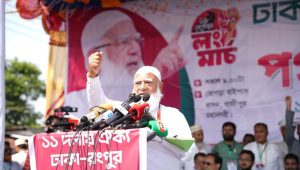
The 11-party alliance has rejected the initiative to amend constitution through a special parliamentary committee formed in Parliament, demanding instead that constitutional reforms be executed through the Constitution Reform Council in accordance with referendum verdict.
The alliance leaders added that the reform process must proceed via the designated council as mandated by the electorate.
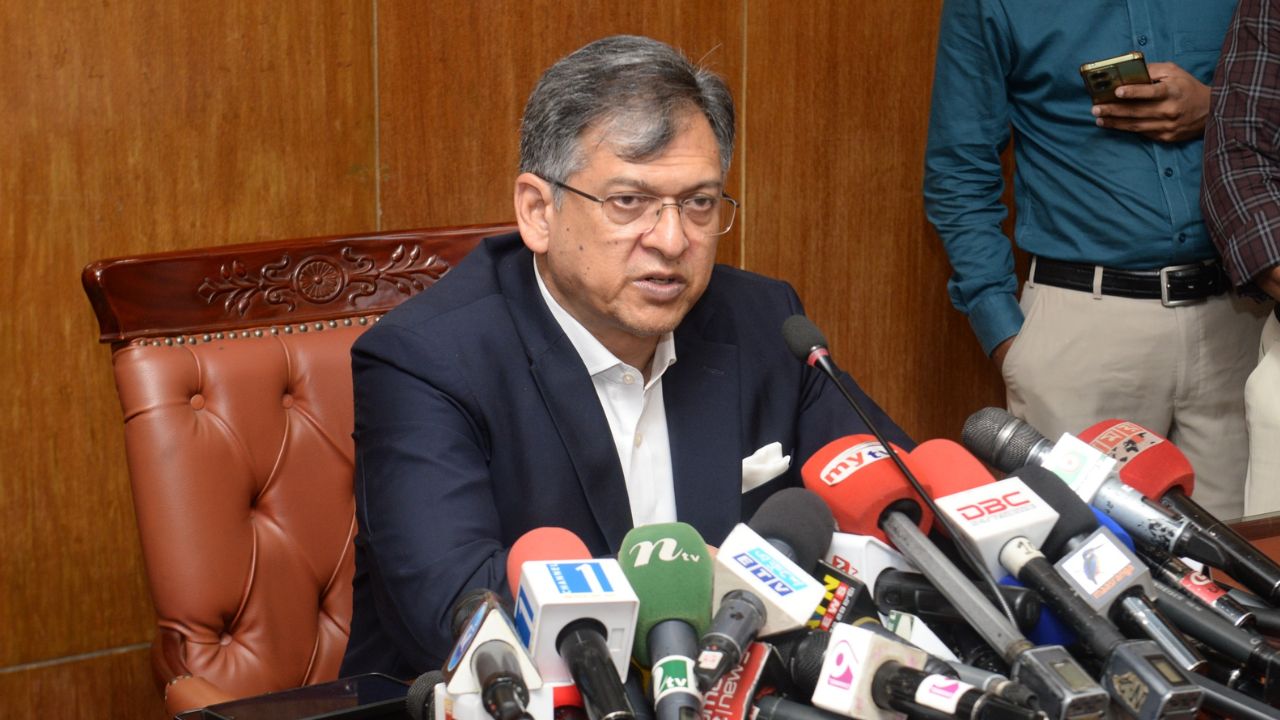
Addressing a press conference organised by the 11-party alliance at the National Press Club auditorium on Sunday, Bangladesh Jamaat-e-Islami Secretary General Mia Golam Parwar presented these demands in a written statement.
Rejecting any amendment measures, Parwar said the alliance supports constitutional reform rather than mere amendment.
Referendum mandate
Parwar noted that BNP had initially pledged state and constitutional reform in the first clause of its 31-point outline, committing to forming a commission for constitutional reform upon assuming office.
Following extensive deliberations within the National Consensus Commission, the July National Charter was formulated, and public consent on the reform proposals and process was subsequently sought through a referendum.
According to the written statement, the national referendum was held concurrently with the parliamentary election on 12 February 2026. Official government gazette notifications confirmed that 68.59 per cent of valid votes were cast in favour of the referendum proposals.

The alliance emphasised that the electorate did not merely approve individual constitutional proposals, but also sanctioned a specific reform process and institution.
Under the July National Charter Constitutional Reform Implementation Order, 2025, elected representatives are required to serve simultaneously as members of parliament (MPs) and members of the Constitution Reform Council.
However, the alliance alleged that while its elected MPs took oaths in both capacities, MPs elected from the BNP took their oaths solely as parliamentarians.
Six-point demands
The 11-party alliance formally presented a six-point list of demands:
- Proper and full implementation of the public verdict delivered in the referendum.
- Implementation of all constitutional reforms incorporated in the July National Charter and approved by the referendum.
- Rejection of initiatives to execute fundamental constitutional changes through a parliamentary special committee, bypassing the referendum-approved mechanism.
- Operationalisation of the Constitution Reform Council by completing the prescribed procedures for elected representatives as council members.
- Abstention from altering the fundamental structure of the constitution in disregard of public consent and the referendum mandate.
- Advancement of state and constitutional reforms based on public expectations, the referendum verdict, and political consensus.
Reiterating commitment to the July National Charter and the nearly 69 per cent public verdict, Parwar concluded that respecting the popular mandate remains the core requirement of democracy, confirming that the alliance will persist in demanding reforms exclusively through the Constitution Reform Council.



Constitutional arguments and power limits
Clarifying the alliance’s stance, Parwar argued that the powers vested in an MP and the constituent power entrusted to a member of the Constitution Reform Council by public referendum are distinct.
Maintaining that Parliament is a body created by the constitution whereas the people remain the ultimate source of power for fundamental restructuring, he added that the constitution creates Parliament, not the other way around.
The alliance also raised constitutional questions regarding the limits of Parliament’s amending powers under Article 142 of the Constitution.
Parwar emphasised that even with a two-thirds majority, Parliament must respect the judicial principle of the basic structure doctrine established by the courts when altering the fundamental framework.
He referenced past High Court verdicts concerning the 5th, 7th, 8th, 13th, and 16th amendments (also mentioning the 6th amendment during his address).
Highlighting the scope of reforms outlined in the July National Charter, the alliance noted key provisions including a bicameral legislature with a 100-member upper house, a balance of power between the president and prime minister, tenure limits for the prime minister, restrictions on holding multiple vital offices simultaneously, reforms to constitutional bodies such as the Election Commission, and the independence and decentralisation of the judiciary.
The alliance warned that altering these structural arrangements through standard parliamentary amendment procedures could trigger serious constitutional disputes.
Parwar questioned why a separate parliamentary mechanism was adopted when the public had directly voted for a specific reform process, adding that parliamentary majorities or special committees cannot override the sovereign will and mandate of the people.
Boycott of special committee and notes of dissent
Explaining the decision not to join the special parliamentary committee initiated by the BNP, Parwar said Leader of the Opposition Dr Shafiqur Rahman had conceptually rejected the committee initiative.
Parwar explained that participating in the committee would amount to legitimising an objectionable process, which led to the alliance’s boycott.
Addressing the issue of notes of dissent submitted by political parties during National Consensus Commission talks – including BNP’s notes of dissent regarding the prime minister’s role in constitutional appointments, the selection method for the upper house, and Article 70 of the Constitution – Parwar said no such exceptions existed on the referendum ballot paper.
He maintained that the overwhelming “Yes” vote effectively annulled all notes of dissent.
Supporting this view, Bangladesh Labour Party Chairman Mostafizur Rahman said the electorate had explicitly rejected the notes of dissent, adding that the government has yet to clarify how it intends to execute the referendum verdict.
Legal basis and governance obligations
Parwar also addressed remarks made by a government minister in Parliament questioning the legal validity of the Constitution Reform Council.
He pointed out that the council’s framework was established under a Presidential Order issued on 13 November 2025, which also governed the election and referendum processes.
Citing the definition of ‘law’ under Article 152 of the Constitution – which encompasses acts, ordinances, orders, rules, regulations, notifications, and customs having the force of law – Parwar argued that the Presidential Order provided a valid legal foundation for the council, making claims of legal invalidity baseless.
Dr Mostafizur Rahman further criticised the government, observing that seven months into power, the BNP has failed to initiate even the first clause of its 31-point demand regarding constitutional reform.
He demanded immediate transparency regarding the government’s plan to implement the referendum outcome.