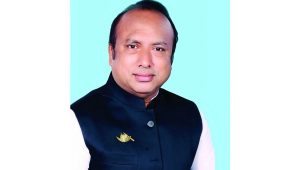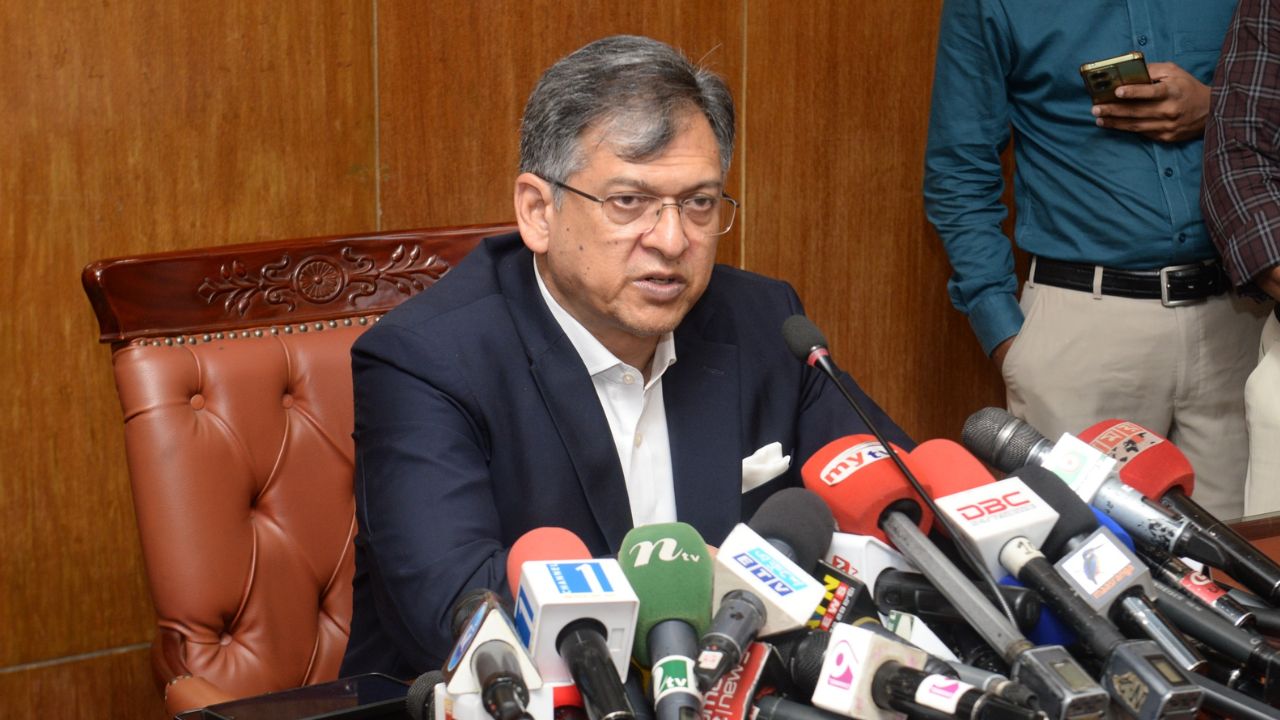

Home Minister Salahuddin Ahmed has expressed hope that discussions with political parties regarding implementation of the July National Charter will be completed by December, with a report subsequently presented to parliament.
Speaking to reporters at Parliament on Sunday, Salahuddin said representatives from 26 political parties that signed the July National Charter were invited to the meeting. Among them, 15 political parties sent two representatives each, while a few parties sent three representatives each.
One party submitted a written statement, whilst a representative of another party was unable to attend at the last minute due to illness. All in all, 17 political parties participated in the meeting, he informed.
Salahuddin said opportunities to participate in discussions remain open for non-signatory political parties as well as other registered and unregistered parties. He added that even if a party cannot attend the meeting, any written statement submitted by them would be taken into consideration.
In response to a query on whether the process was becoming one-sided due to the non-participation of the opposition party, he said, “No, it is not becoming one-sided; it is becoming 17-sided.”

At the same time, he added that for those who have not signed the July National Charter, opportunities will remain open if they wish to take part in discussions. The home minister commented that if new reform proposals come, the process could become more complex.
Salahuddin said lengthy discussions took place regarding the proposals of six reform commissions formed during the time of the interim government. Later, based on those proposals, the July National Charter was formulated through discussions by the National Consensus Commission.
However, he noted that if any new proposals are submitted in writing, they will be noted and included in the resolution.


Regarding constitutional amendment, he mentioned that if any political party comes to run the government with a public mandate and secures the necessary parliamentary support, it can initiate changes to any provision of the constitution in accordance with public demand.
Presenting his party BNP’s position on forming an upper house, Salahuddin said there are notes of dissent alongside differing opinions from various political parties on this matter.
He added that BNP’s stance is that the upper house will be formed in proportion to seats obtained in parliament.
Salahuddin also informed that other political parties hold differing views on the same issue.
When asked whether the opposition would participate if a constitutional amendment bill comes to parliament, the home minister said they have not yet stated they would not participate.
Explaining the distinction between constitutional amendment and reform, Salahuddin said, “Every amendment is a reform. But not every reform comes as an amendment.”
According to his statement, certain reforms can be implemented through laws, some through rules and regulations, and others through executive orders.
Addressing the notion that if the constitution is amended through a reform council, it cannot be challenged in court, he said if any amendment is adopted following the legal procedure of constitutional amendment, it will be considered a constitutional amendment.
Salahuddin noted that the constitution adopted through the Constituent Assembly was also subsequently amended.
However, mentioning that rewriting the constitution is a distinct matter, he pointed out that, “There is no scope to go into a new constitution, because we have an amended constitution.”