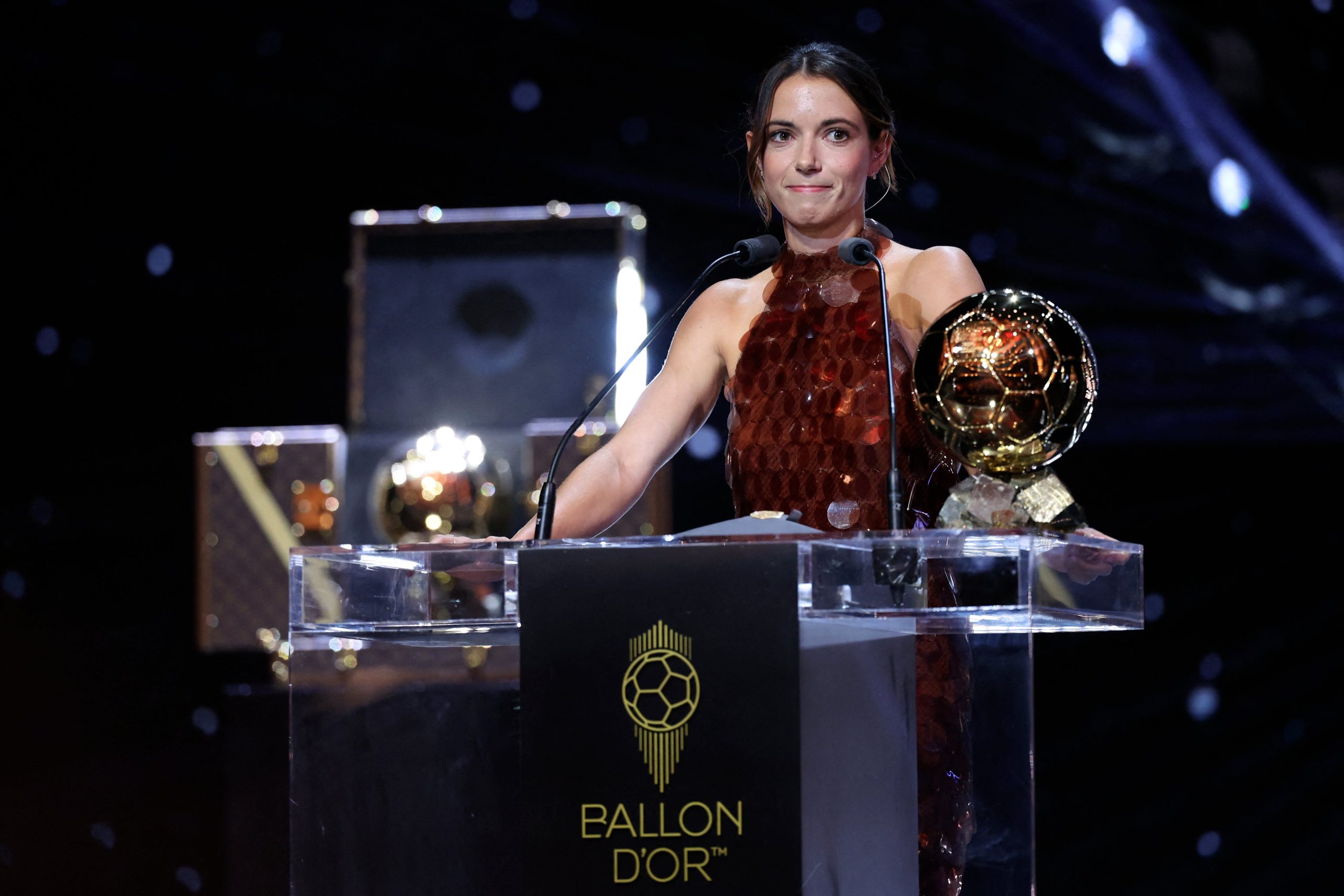



Aitana Bonmati has made history once again. The Barcelona and Spain midfielder has become the first player to win the women’s Ballon d’Or three times, cementing her status as one of the greatest footballers of her generation. This is a testament to her unmatched consistency, technical brilliance and resilience.
At 27, she stands at the pinnacle of the sport, not only as its most decorated player in recent years but as its most compelling symbol of excellence. In a year marked by personal adversity, she rose once again, delivering standout performances for club and country that have solidified her place among football’s all-time greats.
Bonmati accepted the award from Barcelona legend Andres Iniesta, someone she described as one of her lifelong idols. “My third time in a row here, and I still can’t believe it,” she said. “To receive it from the hands of Andres Iniesta, one of my idols since I was little, alongside Xavi. I learned my football from them. I owe Barcelona everything.”

Her journey to a third Ballon d’Or was anything but straightforward. Just days before the start of Euro 2025, Bonmati was in hospital with viral meningitis. Her participation in the tournament was in serious doubt, but she made a stunning return, scoring the winner in extra time against Germany to send Spain to their first-ever European Championship final.
Her ability to rise to the occasion, even after serious illness, once again highlighted the qualities that have defined her career: technical excellence, tactical intelligence and unshakeable determination. She was named UEFA’s player of the season, having delivered nine goal contributions in 11 appearances, including a crucial goal in the semi-final second leg against Chelsea.




In the context of football history, Bonmati’s achievements place her alongside some of the greatest to have ever played the game, male or female. Winning three consecutive Ballon d’Or titles is a feat matched only by the likes of Lionel Messi, whose sustained brilliance defined an era.
Her list of accolades continues to grow. In addition to her three Ballon d’Or titles, she has twice been named FIFA Best Women’s Player, has won the Champions League three times, and has been its player of the season on three occasions.
Her triumph is more than a personal accolade or a footballing milestone; it is a powerful symbol of progress for women everywhere. Her rise, from La Masia prodigy to global icon, represents the possibilities that emerge when women are given the space, support, and visibility to lead.
In a world where women have to fight to be seen, Bonmati’s dominance is a form of quiet resistance. She plays with elegance, intelligence, and strength, and she does so unapologetically. Her success challenges outdated norms, inspires young girls to dream without limits, and reminds society that women’s excellence deserves not just celebration but equal recognition.
Each time Bonmati steps onto the pitch, she carries with her more than just a football; she carries the weight of representation. Her third Ballon d’Or is not just a record; it is a reflection of how far the women’s game has come and a vision of how much further it can go.