A devastating fire at Hazrat Shahjalal International Airport’s cargo section has exposed serious lapses in safety, emergency preparedness, and regulatory oversight, leaving Bangladesh’s exporters and importers facing potential losses of over $1 billion.
Preliminary inquiries suggest that negligence, bureaucratic delays, and corruption may have contributed to the severity of the blaze, raising urgent questions about the management of the country’s main international gateway.
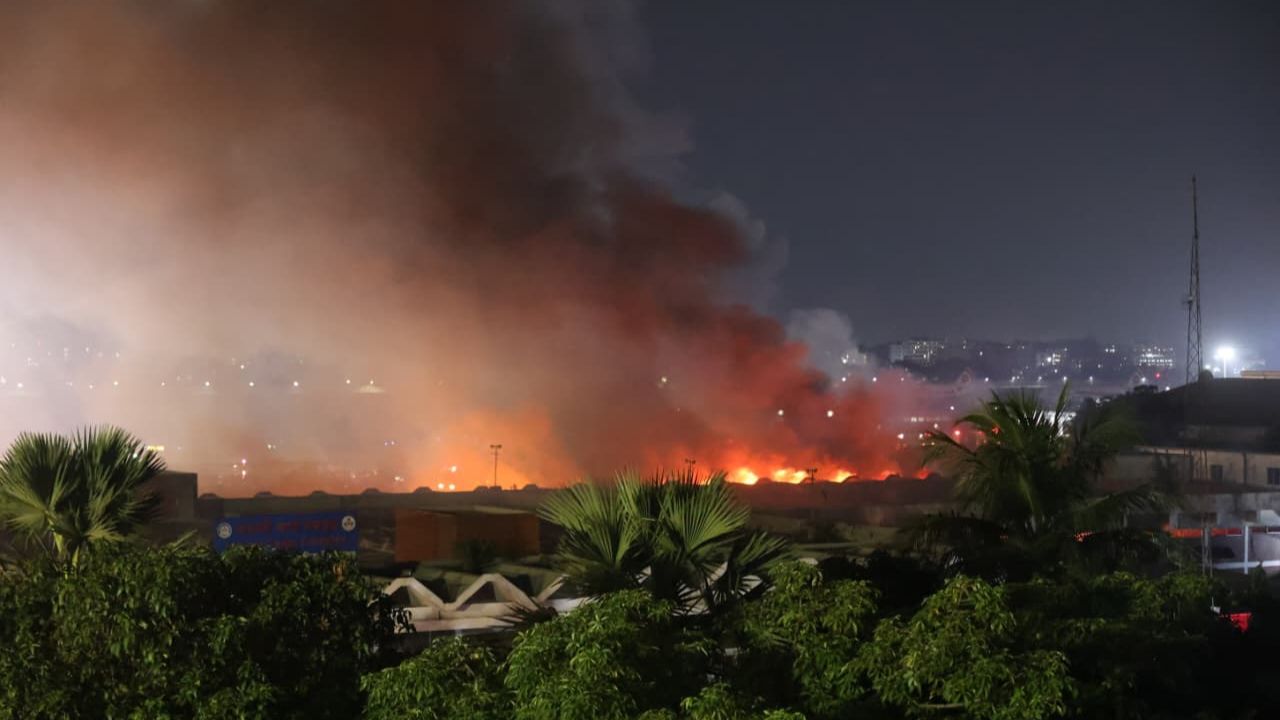
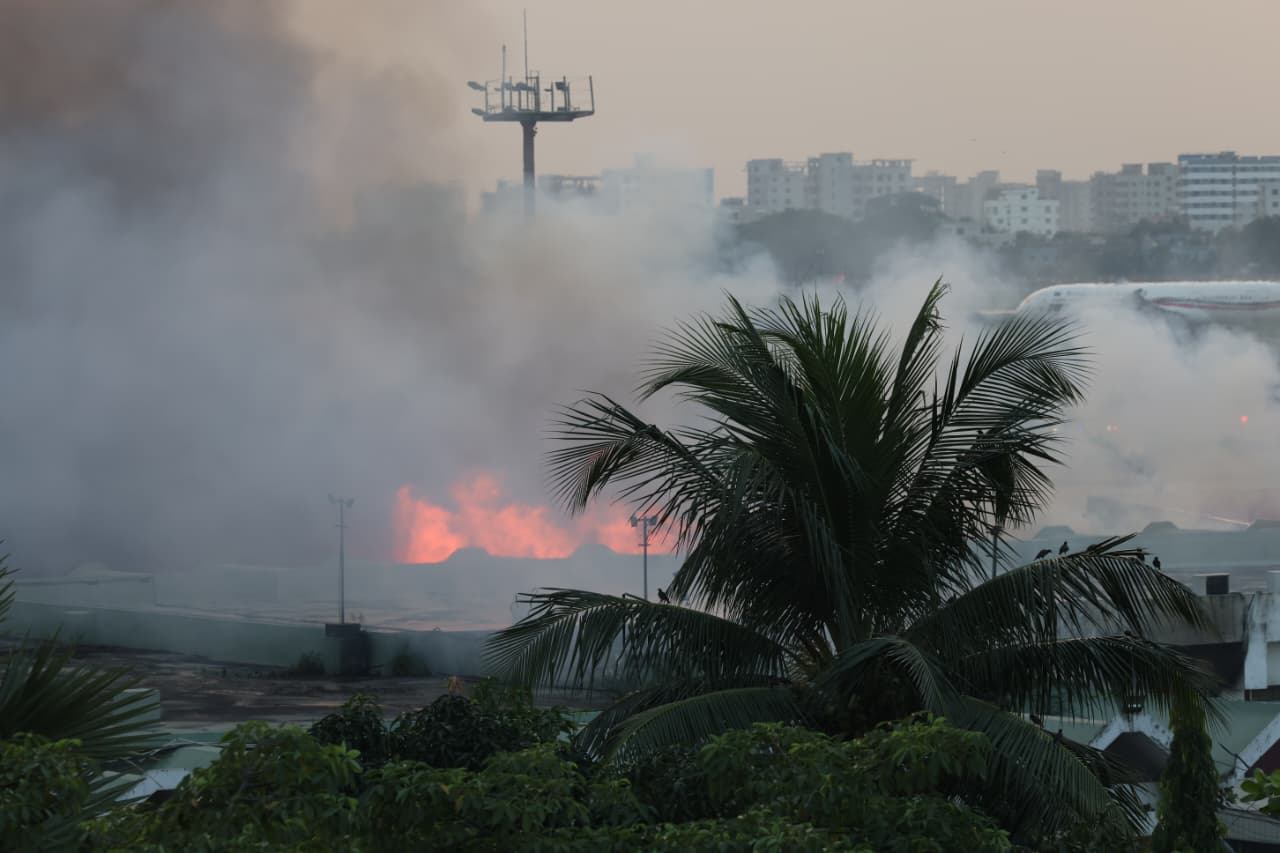
The fire, which broke out around 2:15 pm on Saturday in the warehouse of Sky Capital Airlines, raged for over seven hours. The rapid spread was fuelled by scattered goods, open spaces, and strong winds, creating conditions that made firefighting exceptionally difficult. Investigators are exploring multiple causes, including a possible mobile phone battery explosion or electrical faults, but the exact origin remains unclear.

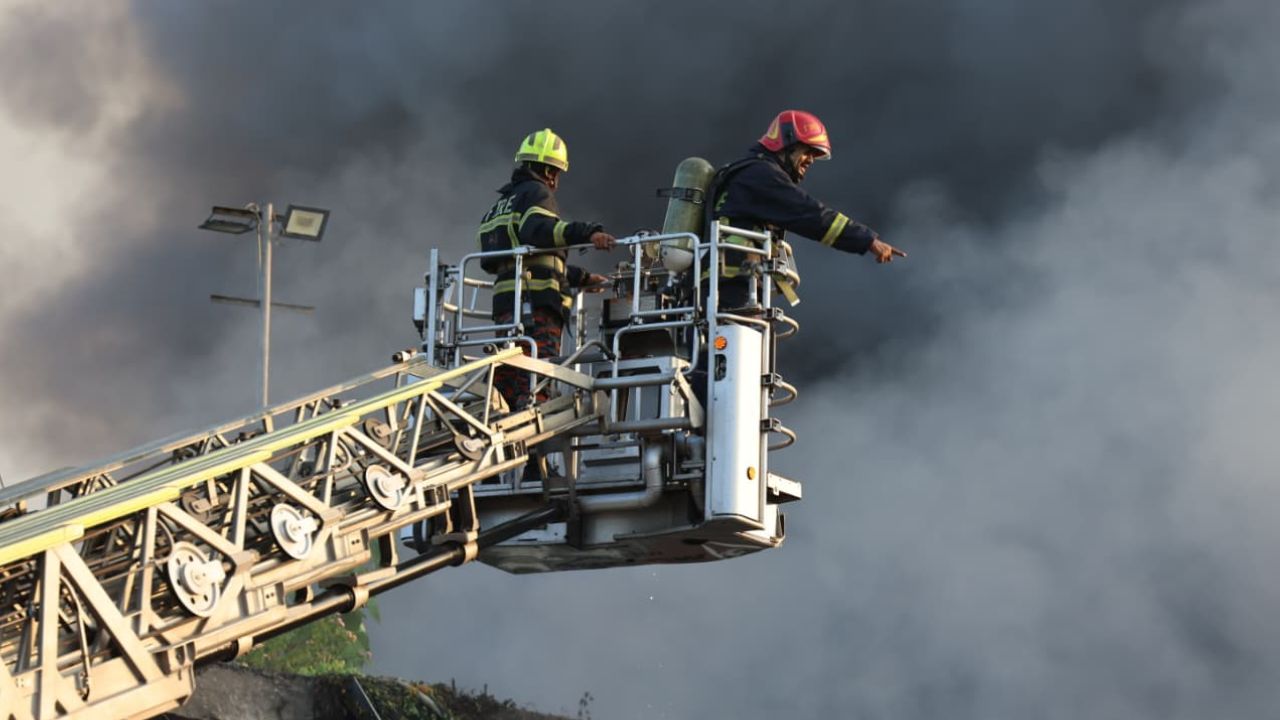
On the worst ever fire in the airport’s history, Fire Service and Civil Defence Director General Brigadier General Mohammad Zahid Kamal Civil Defence, said on Sunday: “Our units arrived at 2:50 pm and began firefighting operations immediately. Aviation firefighting vehicles were also in action.” He noted that the open area and strong air currents provided a constant supply of oxygen that helped the flames spread and made smoke visible high above.
Uttara Division Deputy Police Commissioner (DC) Mahidul Islam told The Daily TIMES of Bangladesh Times of Bangladesh that only the fire service investigation could determine the cause. “The police cannot confirm whether it was an accident or sabotage,” he said.
Yet accounts from airport personnel suggest that the Civil Aviation Authority of Bangladesh (CAAB) delayed allowing the fire service to enter through a hangar gate citing a lack of authorisation despite being mandated to respond immediately in emergencies. This forced firefighters to spray water from outside for an hour.
Civil Aviation Authority’s Deputy Director (fire) Rafiqul Islam said their three fire engines began working immediately, though he had heard allegations that fire service vehicles were initially not allowed to enter through the hangar gate.
Despite repeated attempts, the CAAB hierarchies, including the chairman, could not be reached for comments.

Critical lapses and corruption allegations
Multiple intelligence reports allege that CAAB officials and employees are involved in corruption and irregularities at the cargo village. Syndicates reportedly control the trade of smuggled goods, while authorised and unauthorised business operations thrive alongside harassment of traders. Such arrangements have compromised the security of areas meant to be “protected,” creating vulnerabilities that contributed to the fire’s intensity.
CAAB’s Assistant Director (Public Relations) Muhammad Kawsar Mahmud said: “If any specific complaint is received, necessary action is taken following investigation.”
International courier services, including FedEx and DHL, lease land from CAAB and reportedly sublet small sections — between 10 and 20 feet — to around 20 other courier companies. This has led to overcrowding and mismanagement, with goods being stored haphazardly, including flammable and dangerous materials. Attempts by CAAB to regulate these practices were met with legal challenges from the courier associations.
Additionally, parts of the airport leased to Biman Bangladesh Airlines, the national flag carrier, were misused for random storage of goods, even across apron areas, creating severe disorder. Some of the stored materials were classified as “dangerous goods” or flammable substances, which helped the fire spread.
Biman Bangladesh Airlines’ Public Relations Officer Bushra Islam said it would be inappropriate to blame anyone before the investigation concludes.




CAAB Deputy Director Rafiqul Islam remarked that courier services “ignore all rules” and noted that previous fire incidents had also occurred there.
When contacted, several officials and customer service representatives of FedEx and DHL declined to comment on the allegations.

Members of the airport fire service revealed that the fire coincided with weekends and lunch breaks, during which warehouses were locked, and smoke went unnoticed. With limited resources, firefighters had to rely on water from Dhaka WASA and army tankers, while 37 units from 13 fire stations struggled to bring the blaze under control. The Civil Aviation Ministry has vowed a thorough investigation, involving intelligence and other agencies, but questions remain over why internal emergency systems were insufficient to contain the fire swiftly.
Billion-dollar losses loom over exporters and importers
The fire has crippled Bangladesh’s commercial supply chain, with exporters and importers facing potential losses estimated at over $1 billion. The Exporters Association of Bangladesh (EAB) will brief the media Monday on the full extent of losses.
The ready-made garment (RMG) sector, which transports over 600 tonnes of goods daily through cargo village — rising to 1,200 tonnes in peak season — has been hit hardest. Customs clearance and cargo transportation were suspended, delaying or cancelling shipments and risking international contracts.
Inamul Haq Khan, acting president of the Bangladesh Garment Manufacturers and Exporters Association (BGMEA), told TIMES of Bangladesh: “We have yet to assess the exact losses, but it could be as high as $1 billion.” He noted that garment samples and accessories crucial for quick exports were destroyed.

Importers report devastating losses. Abdur Razzak, Air Import In-charge of Youngone Bangladesh, said: “Over Tk 100 crore worth of garment chemicals and accessories were awaiting clearance. Everything is gone. Who will compensate us? Civil Aviation or Biman Bangladesh Airlines? We’re confused. Many shipments weren’t even insured.”
Gemtex Linkage Industries Managing Director Imran Ahmed added that roughly Tk 2 crore worth of accessories imported from India were destroyed. “I already missed one deadline with the buyer. If I can’t deliver by the end of this month, the order will be cancelled,” he said.
Beyond RMG, small and medium-sized businesses have also suffered immensely. Many rely on one or two shipments per month worth Tk 75–80 lakh. Nizam Bhuiyan, import In-charge at cargo village, said: “Many of them have lost everything in the fire.” Electronics importer Mofidul Haider Chowdhury reported losing an entire shipment that arrived on Saturday, while Fayezur Rahman lamented that yarn worth Tk 14.5 crore had been destroyed. Electronics importer Harunur Rashid said: “Over 100 cartons of items scheduled for clearance on Saturday are gone. I have no choice but to shut down.”
Investigations and committee formations
In response, multiple investigative committees have been formed. A seven-member core committee, led by the home secretary, was established by the Ministry of Disaster Management and Relief. Adviser Faruk-e-Azam indicated that the committee could expand to 12–14 members and is expected to submit a report by 5 November.
Biman Bangladesh Airlines formed a six-member committee to investigate the fire at the cargo terminal, assess losses, and assign responsibility within five working days. The Ministry of Finance has constituted a five-member committee to determine financial losses.
Why the fire turned so catastrophic
Airport sources say the fire started in a cluttered warehouse at Sky Capital Airlines. Ground Support Equipment (GSE) staff were unavailable to move goods, and the fire spread quickly.
Like all international airports, Hazrat Shahjalal International Airport is equipped with crash fire rescue vehicles (CFRV) that use aqueous film forming foam (AFFF) instead of water. However, this system was reportedly not used during Saturday’s fire.
Again, no senior CAAB officials were available for comments in this regard.
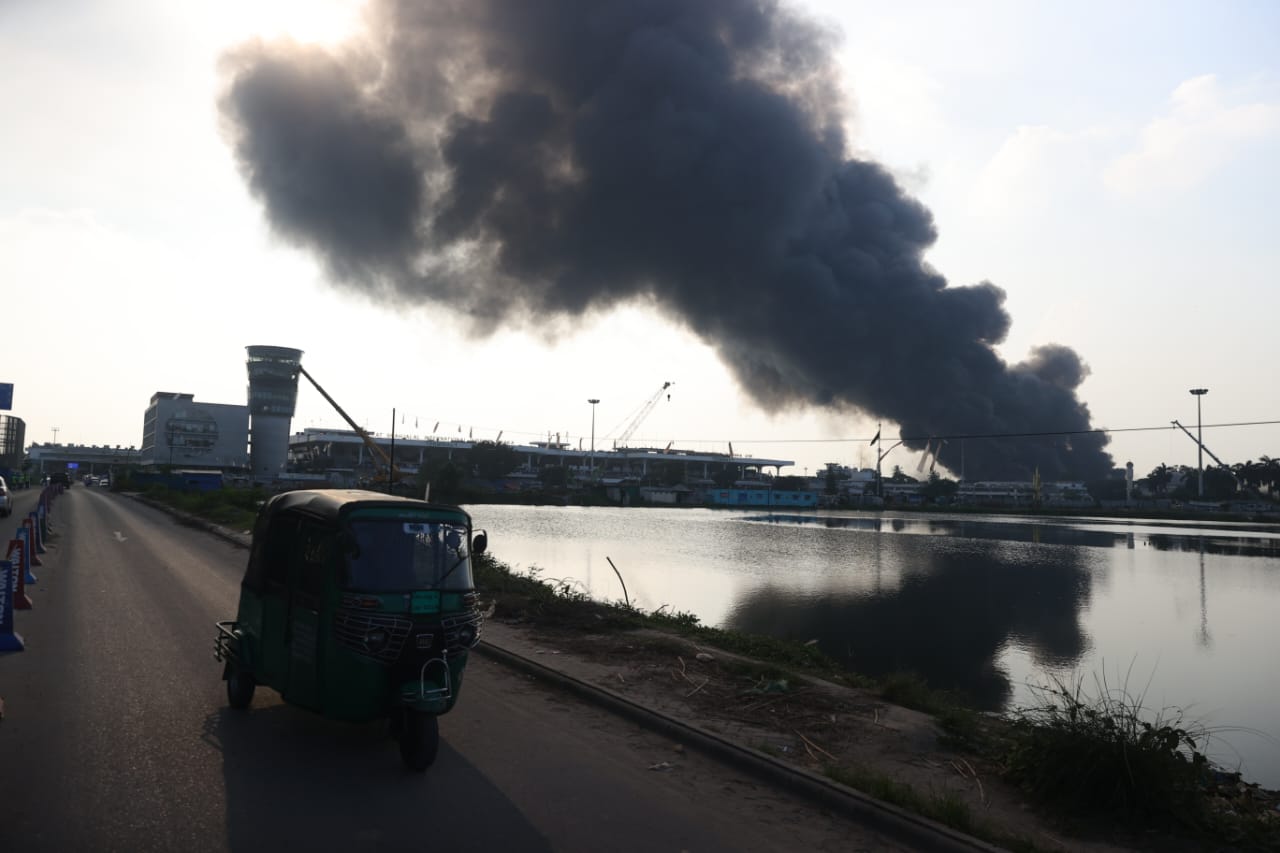
Firefighting was further hindered by bureaucratic delays and lack of authorisation. Fire services vehicles and staff were prevented from immediate entry, and firefighting resources had to improvise with water from WASA and army tankers. Open spaces and wind accelerated the spread.
Sheikh Bashir Uddin, adviser to the Ministry of Civil Aviation and Tourism, said: “The dense smoke made it impossible to approach initially. Goods were removed as long as it was safe. Every aspect will be investigated thoroughly. Allegations that the fire service arrived late or was inactive will be considered.”
Long-term consequences
The fire exposed systemic vulnerabilities in Bangladesh’s trade and logistics infrastructure. For sectors reliant on air transport, the incident highlights the urgent need for robust safety protocols, stricter enforcement of regulations, and transparent management of cargo operations. Delays and losses now threaten export deadlines, financial stability, and the international credibility of Bangladesh’s trade system.
As authorities work to determine the full extent of damage, stakeholders are pressing for accountability and compensation, warning that without reform, such disasters could recur.