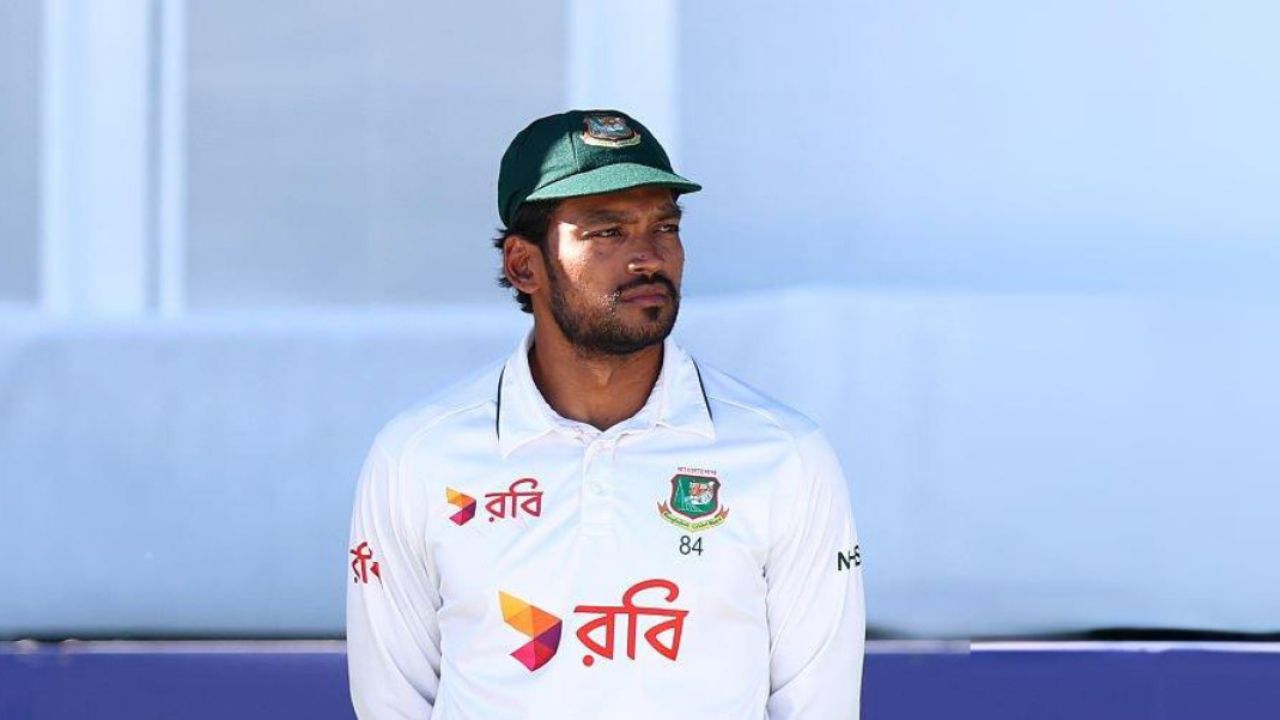



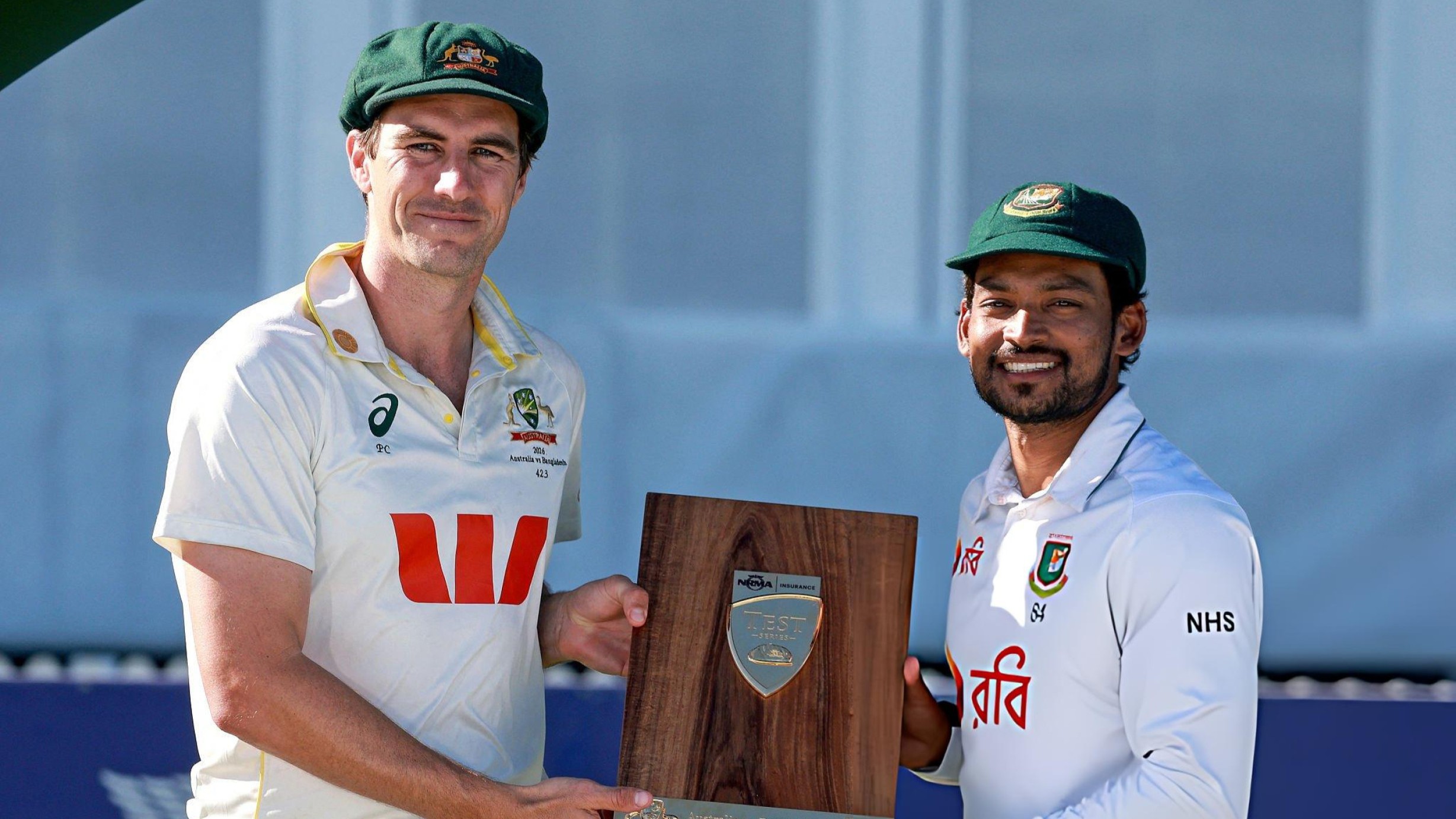
Bangladesh waited 23 years to play another Test series in Australia. In Darwin, they made the return worth the wait. A historic nine-wicket victory had contributions across the team, but three ‘Hasan’s stood at its heart — Hasan Mahmud, Tanzid Hasan Tamim and Mehidy Hasan Miraz.
One was cool and calm, one learned restraint going out of his typical style, and the other answered pressure with an all round masterclass making his experience count.
Hasan ‘composed’ Mahmud
Ever imagined a Bangladesh seamer arriving in Australia for the first time and removing both openers twice in the Test, picking up 9 wickets in the match? Hasan Mahmud turned this into reality.
He dismissed Travis Head twice, each time getting one of the world’s most destructive batters to chop the ball onto his own stumps. He ended up taking six wickets in his first innings of Test cricket in Australia, returning for three more in the second, and finishing with 9/111. You speak with him after all that, and you’ll feel like nothing has happened.
Cricket commentator Alan Wilkins once called him “Mini Glenn McGrath.” In Darwin, Hasan could hardly have chosen a more fitting country to justify the nickname.
He had recently played and excelled in county cricket for Kent and was then in Sri Lanka for the 2026 Lanka Premier League with Colombo Kaps. Bangladesh’s return to Australia brought another change of scenery. Nahid Rana’s injury also meant greater responsibility would fall on Hasan.
White ball cricket asks yorkers, slower balls and changes of pace from him. The Test in Australia demanded seam-up deliveries, wobble seam, accuracy and more importantly — his calm, thinking nature.
It was not hard for Hasan Mahmud to adapt.

Jake Weatherald offered an early example of this. The Australian opener had previously been vulnerable when moving his front foot too far across. In Darwin, he tried a more open stance and kept that front leg further towards the leg side.
Hasan repeatedly tested him on a good length before going slightly fuller in the 12th over, keeping the ball away from his body. Weatherald followed it. The edge was produced.
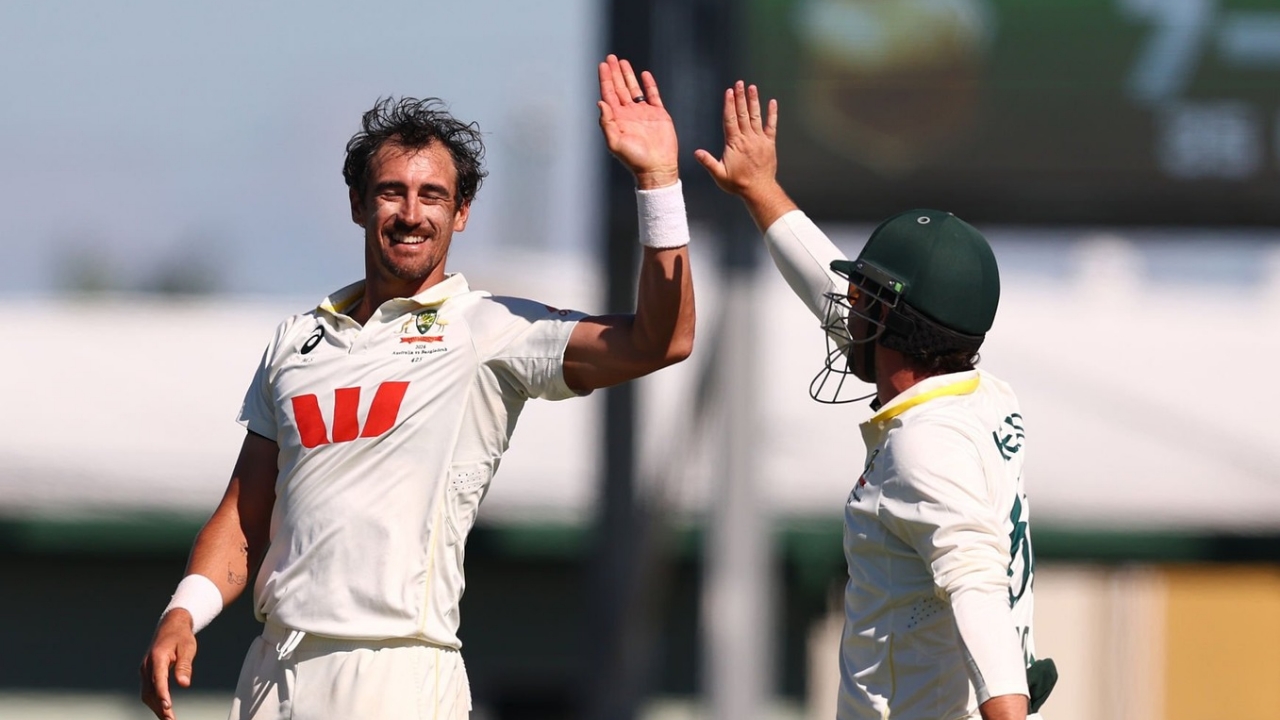
Mitchell Starc’s wicket was similar. He moved the ball in before shaping one away from the left hander. Another edge arrived.
Then great Steve Smith had to be removed, as he was well set. He had reached 71 and tried to disturb Hasan by coming down the pitch. Hasan responded with thought. He went short. Smith fell into the trap.
Six wickets belonged to Hasan by the end of Australia’s first innings.
His calmness then appeared in his batting. Bangladesh had slipped to 308/6 when he walked out to bat. His job was hardly glamorous. Stay there. Let the ball grow older. Give Miraz company. Make Australia bowl.


Hasan defended. High front arm elbow. Decent foot movement. Soft hands. Ninety two deliveries perished, and he stood his ground for 14.
When he bowled again, both Australian openers fell to him once more in the second innings. Cameron Green resisted with a superb hundred, but when Green’s fight finally ended, Hasan was there again. The delivery stayed low and crashed through.
His final match figures read 9/111, the third best by a visiting bowler in Australia on his first Test tour there — and there was no one that deserved the Player of the Match award more than he did.
Tanzid ‘calculative’ Hasan Tamim
Tanzid Hasan Tamim arrived in Darwin with an experience of 41 balls in Test cricket.
His only previous Test had come against Pakistan earlier in 2026. He made 26 from 34 balls and 4 from 7. There was intent in those innings, but there was nervousness too.
Chief selector Habibul Bashar saw beyond it.
“He looks good, but he definitely has a long way to go. It was his first Test and first innings. There may have been some nervousness, but he is a good player,” Bashar had said.
Australia was about to examine that faith. Tanzid was walking into a contest featuring Mitchell Starc, Pat Cummins, Josh Hazlewood and Nathan Lyon. For an opener with less than 30 first class matches under his belt and a natural desire to attack, it could have become a test of temptation as much as technique.
So Tanzid put the sword back in its sheath.
Balls outside off stump were allowed to pass. Deliveries aimed at his body were defended, shorter ones were left. Australia’s quicks offered pace, but Tanzid refused to answer with aggression in most cases.
More importantly, he played the ball rather than the reputation of the man delivering it, punched it through cover point, drove it through covers getting on top of the bounce.
He added 102 with Mominul Haque. Then came another vital stand, worth 93 with captain Najmul Hossain Shanto.
Eventually, a single off Nathan Lyon took him somewhere no Bangladeshi batter had been before — a Test hundred in Australia.
Tanzid reached 101 from 197 balls, with eight fours and a six. The aggressive opener had produced his greatest innings by discovering the value of restraint. His second innings duck changed little about what he had already given Bangladesh.
Mehidy ‘meticulous’ Hasan Miraz
Mehidy Hasan Miraz already knew what beating Australia felt like. In 2017, as a young cricketer, he was part of Bangladesh’s famous Test victory over them at home. He scored 18 and 26 and took five wickets in the match.
Nine years later, he met Australia again under very different circumstances. Inconsistent ODI performances had preceded the tour. The ODI captaincy had been taken away from him. BCB president Tamim Iqbal continued to praise his leadership qualities, but criticism remained.
Darwin gave Miraz the best kind of reply. His 65 from 154 balls was an innings built for the situation. Against Cummins, Starc and Hazlewood, he reduced his backlift and played late. When Australia attacked his body, he ducked rather than accepting unnecessary battles. When they overpitched, he drove and flicked. Beside the lower order, he became Bangladesh’s anchor.
Hasan Mahmud’s 92 ball resistance gave him a companion. Miraz made the partnership matter with occasional boundaries — as he hit 5 fours and a six in 154 deliveries.
Bangladesh reached 426 and built the advantage from which Australia spent the rest of the match trying to escape.
Then the pitch began to age. That was Miraz’s invitation. He attacked the rough and footmarks, repeated his areas and allowed the surface which was not offering much, to become his accomplice.
Steve Smith fell for 44. Alex Carey went for 30. Australia’s resistance gradually cracked. Miraz bowled 33.1 overs, including six maidens, and finished with 5/66.
He had given Bangladesh 65 runs when they needed depth and five wickets when they needed a door opened towards victory. Along the way, he also became the first Bangladesh cricketer to complete 1,000 runs and 100 wickets in the World Test Championship.