


At least 53 people have died and around 5,000 have been displaced after a powerful earthquake struck Indonesia’s Flores island, as rescue teams continue searching for survivors and assessing widespread damage.
The shallow magnitude 7.7 earthquake struck shortly before 05:00 local time on Saturday, or 22:00 GMT on Friday, at a depth of about 15km below the surface, BBC.
The National Disaster Management Agency (BNPB) said more than 900 homes and hundreds of other buildings had suffered severe damage following the main tremor and 341 aftershocks.
The disaster has emerged as Indonesia’s deadliest earthquake since 2022, when hundreds of people were killed in West Java.
The full extent of the destruction remains unclear, particularly because the affected area is remote and mountainous.

Abdul Muhari, deputy for the BNPB, said Manggarai province had recorded 25 deaths, while East Manggarai reported 20.
Four people died in Sikka, two in Ende, and at least one person each in Nagekeo and West Manggarai.
The BNPB said 3,356 people had been displaced in Sikka, while another 2,078 had been evacuated in Manggarai.
In East Nusa Tenggara province, 36 people suffered serious injuries and 77 sustained minor injuries, Deputy Health Minister Benjamin Paulus Octavianus said.
Tremors were felt as far west as Bima, according to the BNPB, while Manggarai was among the worst-hit areas.



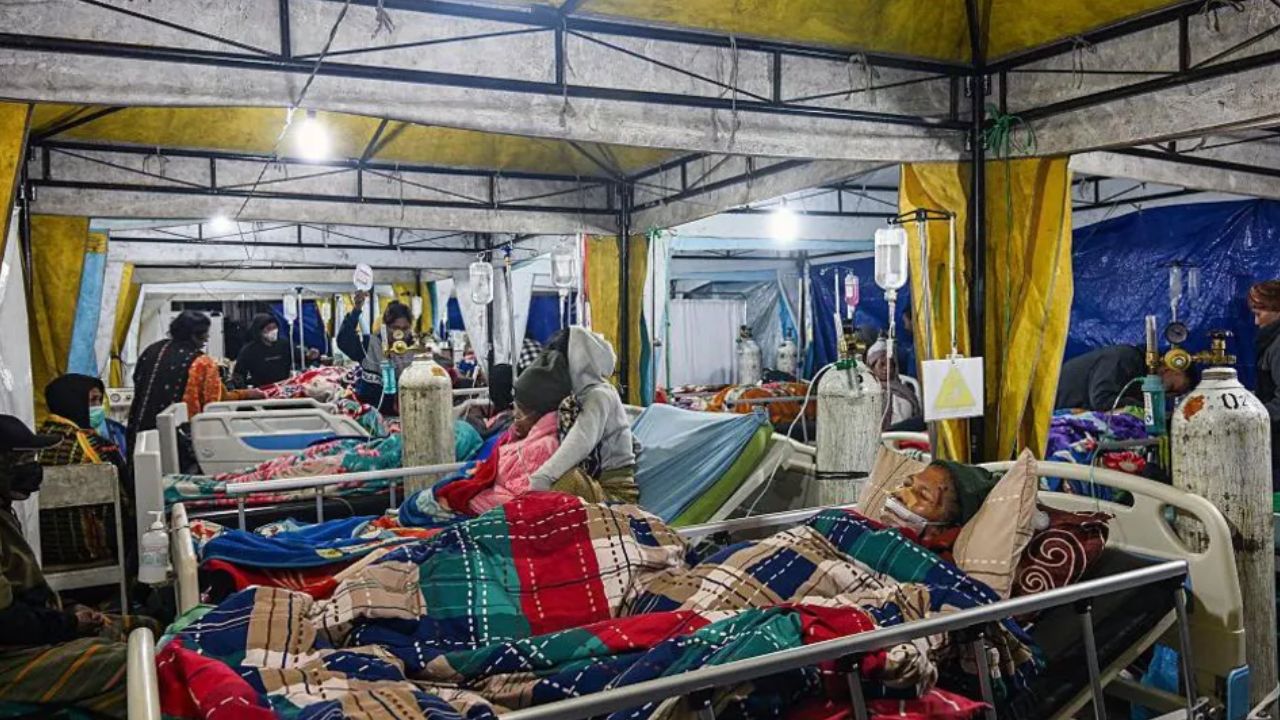
Early assessments show that dozens of schools, healthcare facilities and government offices, along with hundreds of homes, sustained severe damage. Ruteng Regional Hospital in Manggarai was among the affected facilities, with images showing collapsed ceilings in its operating theatre and clinics. Patients had to receive treatment in tents.
“We heard that medical assistance would be provided, but nothing has arrived yet,” hospital spokesperson Rista Mari told BBC Indonesian. “We hope that assistance will arrive soon.”
The BNPB said meeting evacuees’ basic needs and delivering logistical support remained among the emergency response’s top priorities. It has sent tonnes of emergency supplies to Manggarai.
At Maumere port, the largest town on Flores, video footage showed large pieces of concrete falling from the terminal building onto passengers waiting to board an inter-island ferry. Several people were thrown into the sea after a gangway leading to a ship collapsed.
Emanuel Melkiades Laka Lena, governor of East Nusa Tenggara province, said at a news conference that several victims died in their sleep after buildings and rubble collapsed on them.
In Talibura, a coastal village in Sikka, East Nusa Tenggara, resident Arnold Welianto said the earthquake jolted him awake.
“I was startled awake and immediately went to my child’s room,” he said.
Welianto also told the BBC that many residents had fled towards the hills after the sea receded. Authorities initially issued a tsunami warning, prompting around 2,000 people to evacuate on their own. They lifted the warning about three hours after the earthquake after detecting no significant rise in sea levels.
Landslides blocked access to several villages, but rescue teams worked throughout the day to reach people trapped beneath rubble. Authorities also set up a temporary medical tent outside a hospital in Ruteng to treat those injured in the quake.
The BNPB has urged residents to remain calm, avoid coastal areas and stay away from buildings showing signs of structural damage.
Indonesia frequently experiences earthquakes and volcanic activity because it lies at the meeting point of three major tectonic plates.
The disaster comes as the country also confronts a second magnitude 6.9 earthquake elsewhere, underscoring the seismic risks associated with the region’s location along the Pacific Ring of Fire.