Tanzim Redwan, a 17-year-old boy, is doing what most students his age can only dream of. He’s one of the few Bangladeshi high schoolers to have a paper published in a Q2 Springer journal. Recently, he presented his latest paper at an IEEE conference hosted by Nanyang Technological University, Singapore. He talked with the Times of Bangladesh about his curious journey.
The full interview follows…
TIMES: What ignited your interest in biology and research at such a young age?
Tanzim: When I was only five, my parents gifted me a fishbowl, without realising it would grow into an obsession. I spent hours observing and experimenting, even conducting small experiments to answer questions YouTube could not.
By the time I reached Class 5, I was breeding several species of aquarium fish and managing over 25 tanks at home. It was chaotic and often overwhelming, but it consumed me entirely. Each birthday, I waited for more fish.
Soon, my family accepted what they called my “abnormal” passion. That passion eventually directed me toward life sciences, and, with limited access to labs, I found my way into public health research.
TIMES: What motivated you to study adolescent malnutrition in Bangladesh, and why did you choose the Best-Worst Method?
Tanzim: I never had a balanced diet myself. Most of my meals were meat-based, and I was often told, “Eat vegetables or you’ll be malnourished.” Out of curiosity, I investigated and found something startling: adolescent malnutrition in Bangladesh was nearly three times higher than in the US, though still better than India or Pakistan.
I wanted to understand the reasons. Poverty, gender inequality, poor WASH facilities and lack of education were clear drivers. The challenge was to identify which factor should be addressed first.
That led me to apply the Best-Worst Method (BWM), a decision-making tool developed in 2015 and never used in Bangladesh’s public health sector. It helped me rank the factors systematically so that solutions could be prioritised more effectively.
TIMES: What sort of challenges did you face while conducting research?


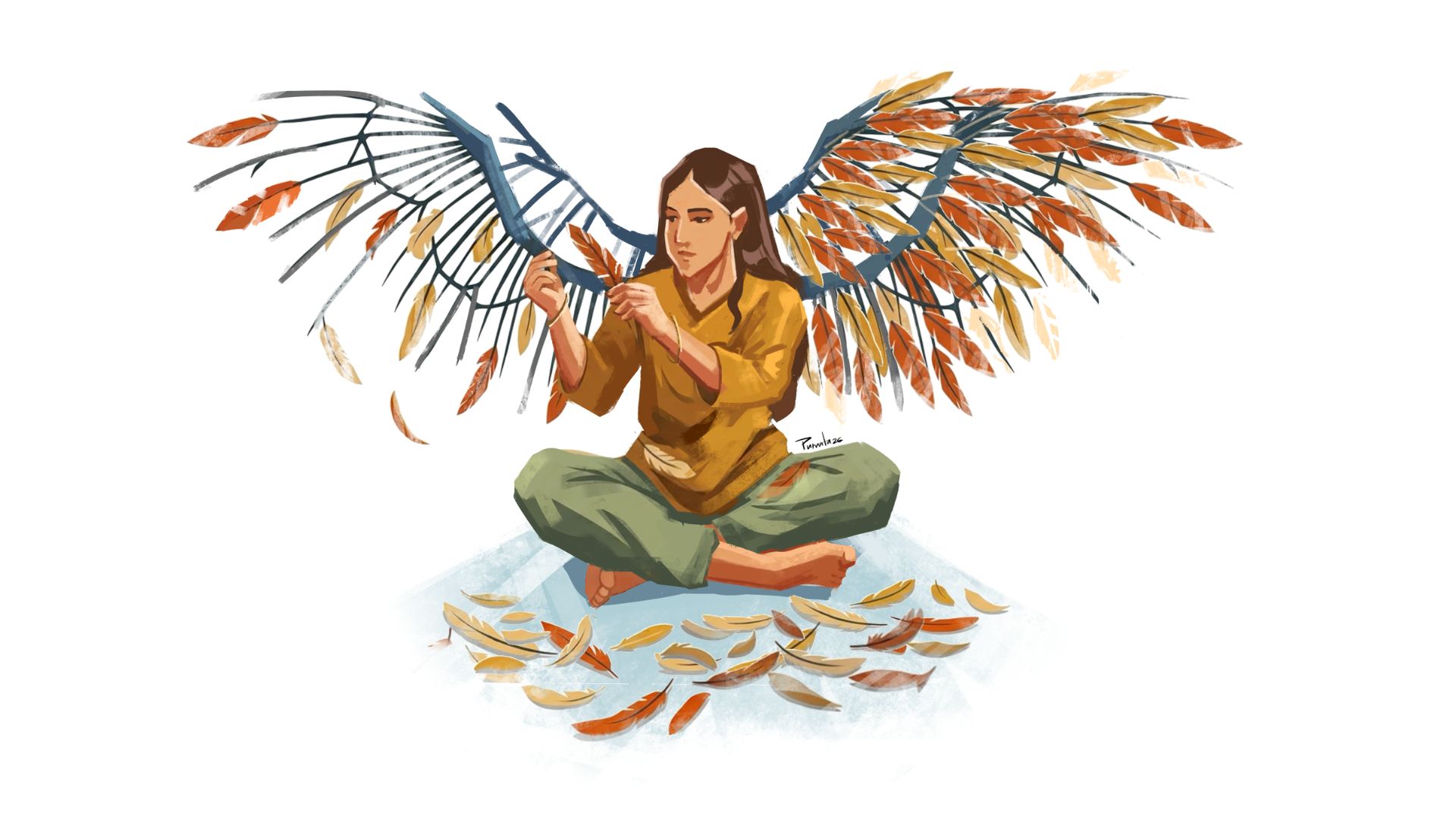
Tanzim: The greatest challenge was being taken seriously. Many assumed I was not capable, simply because I was a high school student. In Bangladesh, there is a cultural belief that research is only for highly trained academics, and unlike in the US, there are no structured opportunities for school-level students here. I had to prove that I was capable, and second, that I belonged in the research space.
Another major difficulty was the lack of mentorship and facilities. Resources for young researchers are scarce in Bangladesh, so I had to rely on persistence, creativity, and resourcefulness to make progress.
TIMES: How did working with Assistant Professor Md. Abdus Sabur influence your research journey?
Tanzim: I could not have achieved this without him. He introduced me to the Best-Worst Method, which is generally used in supply chain studies, not public health. He encouraged me to adapt it in a new way. From data collection to manuscript preparation, he guided me through every step. I would never have submitted my paper had he not urged me, reminding me that publication is the final step of the scientific process.
TIMES: How did it feel to have your study published in a Q2 journal?
Tanzim: It felt surreal. I had always seen Western high schoolers publishing papers but never imagined I could. I expected rejection, not acceptance in a Scopus-indexed Q2 Springer journal on the very first attempt.
The publication fee was nearly Tk 1,70,000, a huge sum in Bangladesh. But I was fortunate to receive a full waiver. For me, the real value was in the learning process, and publication only gave that learning a global platform.
TIMES: Tell us about Project Q2 and how it aims to inspire young students in research?
Tanzim: Project Q2 is a non-profit I founded to challenge the idea that research is not only for universities or labs. We form student teams, connect them with mentors, and guide them to publish in real journals.
So far, we have reached over 1,200 students worldwide through online programmes. In Bangladesh, we have partnered with five schools to run workshops that spark curiosity and questioning. The broader goal is to show that high school students can contribute meaningfully to research.
TIMES: What do you hope to gain from the experiences you have had by going to programmes like Harvard’s Junior Fellow Program and Johns Hopkins’ Global Health Leaders Conference?
Tanzim: For me, these programmes act as bridges — connecting me with world-class mentors and peers and showing how impactful research projects are designed and scaled.
Most importantly, I want to bring those lessons back to Bangladesh, adapting global best practices to local challenges and strengthening initiatives like Project Q2. These opportunities are not just about personal growth; they are catalysts to give back to the community.
TIMES: What are your future goals in science and research, and how do you plan to contribute to national development?
Tanzim: My focus is on biology, especially public health and biomedical innovation, as Bangladesh faces challenges like malnutrition, infectious diseases and the health impacts of environmental change. In the long run, I hope to bridge science, policy, and entrepreneurship so that research moves beyond journals and creates real-world impact.
If our generation can grow into critical, research-minded, and creative thinkers, Bangladesh can turn a new page. I am simply trying to play my part in that journey.