


Canadian poet, essayist and classicist Anne Carson has spent much of her literary career bringing ancient Greek myths into conversation with modern life. In Anne Carson’s world, a monster can fall in love, an ancient poem can survive in fragments, and a box of old letters can become a map of grief. The boundaries between poetry, fiction, translation and scholarship barely hold.
Carson crosses them freely, turning classical myths and private sorrows into works that resist easy classification. Her writing does not simply revisit the past. It finds in it the unsettled desires, broken relationships and unanswered questions of the present.
Carson won the 2026 Nobel Prize in Literature for her bold, inventive body of work, which creates new forms through a playful dialogue with classical tradition. Her achievement rests not simply on what she writes, but on how radically she questions the boundaries of writing itself.
Carson announced this approach with Eros the Bittersweet, her 1986 debut. Drawing on ancient Greek literature, she explores eros, or desire, as a force shaped by distance, longing and the painful awareness of what remains beyond our reach. Rather than treating love as a straightforward emotion, Carson examines its contradictions. Desire, in her reading, depends partly on separation: we want what we cannot fully possess.

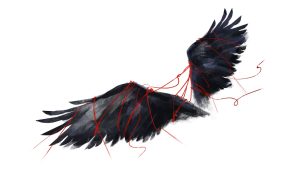
That interest in longing found a strikingly original form in Autobiography of Red, published in 1998. Subtitled A Novel in Verse, the book reimagines the Greek myth of Geryon, a red, winged monster associated with Herakles, as a modern coming-of-age story about love, identity and vulnerability.
Carson gives Geryon an inner life that the ancient myth barely accommodates. He becomes a young artist navigating desire and heartbreak, while the heroic figure Herakles becomes a complicated object of affection. Myth survives, but its emotional centre shifts. The result is neither a conventional novel nor a traditional poem, but a work that borrows the freedom of both




Her engagement with the past becomes even more intimate in “If Not” and “Winter: Fragments of Sappho” (2002). Translating the ancient Greek lyric poet, Carson preserves the gaps left by centuries of loss. Missing words and broken lines remain visible rather than being smoothed into complete sentences. The absences become part of the reading experience.
This sensitivity to absence reaches its most personal expression in “Nox” (2010), a work devoted to her brother Michael, who died after years of estrangement. Designed as an accordion-fold book housed in a box, it combines photographs, letters, dictionary entries and a translation of a poem by the Roman poet Catullus, who also mourned a brother. The result resembles an archive of grief: intimate, fragmented and resistant to neat conclusions.
Elsewhere, Men in the Off Hours places historical figures and writers in unexpected conversation, while “The Beauty of the Husband” explores marriage and betrayal through a sequence of 29 tangos. In “Wrong Norma” (2024), Carson continues to move between poetry, prose, visual art and the literary sketch.
Her work asks readers to surrender familiar categories: translation becomes creation; private sorrow meets the distant voices of antiquity.
Carson’s Nobel recognises a writer who has made literary experimentation more than a stylistic exercise. She has shown how old stories can acquire new lives, and how broken forms can express experiences that polished narratives cannot contain.
In her literary world, meaning does not always arrive whole. Sometimes it survives in fragments, waiting for a reader to bring the pieces together.