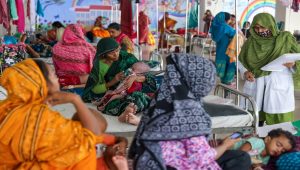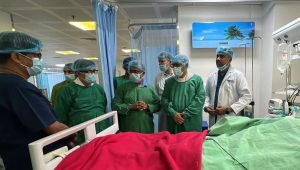



The government has taken up a project worth Tk 396.89 crore to expand treatment and control services for rapidly increasing non-communicable diseases (NCDs) to the rural level.
Under the initiative, the capacity of 14,500 community clinics, 64 district hospitals, and 430 upazila health complexes across the country will be enhanced.
Along with strengthening early detection, treatment, referral, and follow-up systems for major NCDs including diabetes, hypertension, and heart disease, the project prioritises improving the quality of maternal, neonatal, and child health care (MNCH).
Joint implementation and funding
Titled “Health System Strengthening through MNCH Services Improvement and NCDs Control,” the project is proposed for implementation from July 2026 to June 2028.
It will be jointly implemented by the Directorate General of Health Services and the Community Clinic Health Assistance Trust.

The project is scheduled to be presented today at a meeting of the Executive Committee of the National Economic Council (ECNEC), which began at 10am in the Cabinet Room of the Bangladesh Secretariat under the chairmanship of Prime Minister and ECNEC Chairperson Tarique Rahman.
According to Planning Commission sources, out of the total project cost, the government will provide Tk75.77 crore from its own funds, whilst the Japan International Cooperation Agency (JICA) will provide Tk 321.1 crore as a project assistance loan.
Under the initiative, computers and accessory equipment are proposed to be purchased for 14,500 community clinics, alongside medical and surgical supplies for 14,600 centres.



These inputs aim to strengthen community-level disease identification, patient record-keeping, and referral mechanisms to higher health centres as required.
Furthermore, measures will be taken to make NCD treatment and follow-up services more effective by expanding the capacity of upazila and district-level healthcare institutions.
Emphasis has also been placed on strengthening a continuous patient referral chain from community clinics to upazilas, and from upazilas to district hospitals.
Growing threat of NCDs
The project proposal highlights that non-communicable diseases have emerged as the primary cause of death in Bangladesh, accounting for nearly 71 per cent of total fatalities in the country.
Of these, heart disease (cardiovascular disease) alone accounts for approximately 34 per cent of total deaths.
According to data from the National STEPS Survey-2022, the age-adjusted prevalence of diabetes among adults aged 25 years and older stands at 9.7 per cent, whilst hypertension prevalence among the same age group is 23.5 per cent.
The proposal further notes that the incidence of non-communicable diseases is rising due to changes in diet and lifestyle, rapid urbanisation, tobacco use, and unhealthy living habits, leading to escalating treatment costs that severely affect poor and disadvantaged populations.
Alongside NCDs, the project aims to improve the quality and availability of maternal, neonatal, and child health care.
The project background points out that despite notable progress in the health sector, poor and less educated women and newborns in rural areas remain exposed to various health risks, with relatively lower health outcomes in remote geographical areas and humanitarian crisis zones.
Strengthening primary care
In light of these challenges, the initiative seeks to strengthen primary and secondary healthcare systems from community clinics up to upazila and district levels, focusing on early disease identification, treatment, referral, follow-up, public awareness, information systems, supervision, and research.
The Planning Commission recommended that the project’s implementation will enhance the quality and accessibility of MNCH services and NCD care – such as diabetes and hypertension treatment – from community clinics to district hospitals, while offering an opportunity to reduce major NCD-related morbidity and mortality through structured referral systems, public awareness, supervision, and necessary medical equipment.