

When Rehana Khatun went to Gabtoli to buy a ticket to Rangpur, she expected to pay Tk800 – the amount she had paid just a week earlier. Instead, the SR Travels counter demanded Tk950, citing the recent fuel price hike.
After bargaining, she managed to get the ticket for Tk900.
“Many buses are asking for even higher fares. I had no choice but to negotiate,” Rehana said.
Her experience reflects a wider reality facing commuters after the latest fuel price adjustment: while the government has set a new fare structure, passengers are often paying whatever transport operators demand.
Although bus fares were increased by 17 paisa per kilometre, operators on several routes have raised prices far beyond the approved rate. As a result, commuters are being forced to rely on bargaining rather than a fixed fare system.
SR Travels employee Md Badiul defended the higher charge, saying the official calculation did not reflect the actual cost of running buses.
“If calculated per kilometre, our fare should increase much more. Tk950 is still low,” he said.
According to the revised fare structure, the Dhaka-Rangpur route should see an increase of around Tk61 for a 51-seat bus and Tk77 for a 40-seat bus. But passengers are finding much steeper increases at counters.
A visit to Gabtoli, Sayedabad, and Mohakhali bus terminals on Tuesday found operators charging Tk100–150 more on several routes than before.

At Gabtoli, Golden Line increased the Dhaka-Faridpur fare from Tk400 to Tk450. A passenger travelling to Magura said the fare had jumped from Tk600 to Tk750 within a day.
Suryamukhi Transport employee Shafik Alam said the company was charging Tk50 more on routes including Faridpur, Barishal, Kushtia, and Rajbari.
At Mohakhali, a passenger travelling to Magura said his ticket price had increased from Tk500 to Tk600.
For commuters, the government’s fare revision has done little to bring certainty. Some operators have increased fares by 20 per cent, while others have raised them by 12.5 per cent or more.
On the Dhaka-Barishal route, passenger Mohiuddin Jony said the fare had increased from Tk600 to Tk650. But according to BRTA calculations, the 156-kilometre route should have seen an increase of only Tk26.
Hanif Paribahan Jatrabari Counter In-Charge Nasir Uddin said higher fuel prices had increased their cost by Tk3,000 per trip.
The problem extends beyond long-distance buses. In city transport, operators often ignore kilometre-based fares and charge passengers according to stops.


In some cases, two stops only 2.5 kilometres apart have a fare difference of Tk10, adding to the pressure on daily commuters.
On the Gulistan-Mohakhali route, Azmeri Glory Transport increased the fare from Tk20 to Tk30 – a 50 per cent rise despite the government-approved city fare increase of 6 per cent.
Capital and Agrani Transport raised the Kalshi-Chowrasta fare from Tk15 to Tk20, while Shikor and Bihanga Transport increased the Mirpur-10 to Farmgate fare from Tk20 to Tk25.
Across several routes, Tk10 fares have become Tk15, Tk15 fares have become Tk20, and Tk20 fares have risen to Tk25 or Tk30.
Passengers travelling shorter distances are facing the sharpest impact as fixed stop-based fares often result in disproportionate increases.
Though urban bus fares in Dhaka and Chattogram are meant to be charged by kilometre, operators use an illegal stop-based “waybill” system. Passengers pay the full fare even for shorter trips, with a 4km journey costing Tk20 instead of Tk10.


Despite regular BRTA mobile court drives, overcharging continues, while police take little effective action against excess fares, passengers alleged.
Utshab Transport driver Fahim Islam said the fare increase was necessary. “Due to the fuel price increase, fares should have been raised even more. Otherwise, owners will have to incur losses,” he said.
Passenger rights groups say weak monitoring has allowed operators to set fares according to their own calculations.
Bangladesh Jatri Kalyan Samity Secretary General Mozammel Haque Chowdhury alleged that no passenger representative was included in the BRTA fare revision meeting.
“Bus owners have effectively been determining fares unilaterally in those meetings,” he said.
Ashish Kumar Dey, general secretary of the National Committee to Protect Shipping, Roads and Railways, told TIMES that operators were collecting fares according to stops instead of following the per-kilometre system.
“BRTA complaint numbers remain inactive and there is no effective monitoring on roads,” he said.
Bangladesh Road Transport Owners Association Secretary General Md Saiful Alam, however, said transport operators were not properly compensated under the revised fare structure.
He said only the fuel cost increase was considered, while other operational expenses were ignored.
“When fares were last revised in 2022, the dollar exchange rate was Tk86. It has now risen to Tk125,” he said.
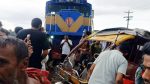
The fare squeeze has also spread to rickshaws in different parts of the country, with passengers reporting higher fares for short-distance journeys.
In Gazipur, passengers arriving after paying higher bus fares are now facing increased rickshaw fares. The fare from Rajbari to City Corporation area has doubled from Tk10 to Tk20, while the Joydebpur Railway Station-Uttar Chhayabithi fare has risen from Tk20 to Tk30.
Passenger Firoza Khatun questioned why rickshaw fares had increased.
“Bus fares were raised because fuel prices went up. But why should rickshaw fares increase so much?” she said.
A rickshaw driver told her that the daily deposit paid to owners had increased from Tk300 to Tk400, forcing drivers to charge more.
Hridoy Hossain, owner of a battery-powered rickshaw charging garage, said higher electricity costs were one reason behind the increase in deposits.
His monthly electricity bill rose from around Tk50,000 to Tk1.17 lakh last month.
“I had to leave the garage because it was no longer profitable,” he said.
Dil Afroza from Gazipur contributed to this report.