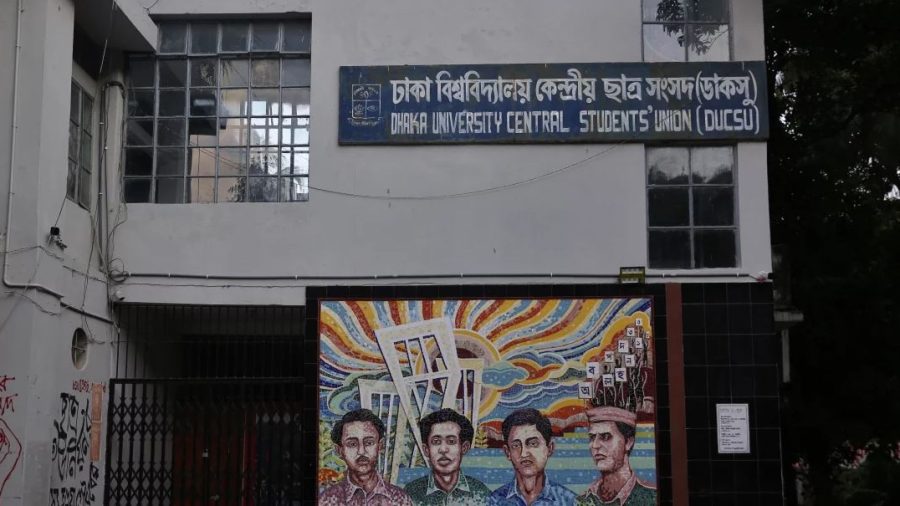

After a long 28-year hiatus, the Dhaka University Central Students’ Union (DUCSU) election was held in 2019. After another six-year gap, the historic student body became active once again through the 2025 election. In other words, students of the University of Dhaka have had an elected DUCSU only twice in the past 35 years. Before the election, various student organisations and independent candidates presented students with a range of promises. Resolving the accommodation crisis, ensuring campus safety, reforming administrative procedures, eliminating discrimination against female students, ensuring safe food, and digitising university services were among the major issues highlighted in their manifestos.
In the 2025 DUCSU election, the ‘United Students Alliance’ won 23 of the 28 representative positions, while the remaining five were won by independent candidates. Such a sweeping majority gave the newly elected DUCSU an unprecedented opportunity and, at the same time, placed a greater responsibility on it to deliver on its promises. But nearly a year into its tenure, one question deserves to be asked: how much of those promises have actually been fulfilled?
The accommodation crisis has long been one of the biggest challenges facing students at the University of Dhaka. A large majority of the students come from outside Dhaka, and many belong to middle- and lower-middle-income families. For them, renting a separate place to live in a city as expensive as Dhaka is simply unaffordable. As a result, accommodation is not merely a matter of convenience; it is directly linked to students’ ability to continue their higher education.
It was therefore natural that students had high expectations regarding this issue before the election. In the third point of the ‘United Students Alliance’ manifesto, the panel promised to ensure residential accommodation for students from their first year. It also proposed monthly housing allowances or arrangements for private accommodation where necessary. Yet, nearly a year after the election, there is still no visible and permanent solution to the accommodation crisis. If DUCSU cannot make meaningful progress on a basic issue such as accommodation, it is worth asking how significant its other achievements can be in the everyday lives of students.
Concerns over campus security are nothing new at the University of Dhaka. Allegations of harassment of female students, the presence of vagrants and drug users, and other forms of crime regularly emerge. Point 23 of the ‘United Students’ Alliance’ manifesto promised to make the campus safe and free from vagrancy. At different times, several DUCSU members have taken initiatives to remove vagrants from the campus at night. Such drives may provide temporary relief, but they cannot ensure long-term security.

A genuinely safe campus requires regular surveillance, adequate lighting, modernised security systems, an effective complaint mechanism and coordinated action between DUCSU and the university administration.
Students at the University of Dhaka have long complained about administrative complications. Changing this reality was also part of DUCSU’s 2025 election promises. Points 10, 13 and 27 of the manifesto included commitments to digitise various services, including a DUCSU app, library services and student email. Point 9 promised the establishment of a ‘paperless Registrar Building.’ Yet, there has been little major visible change in these areas. Digitalisation should reduce administrative suffering, make services faster and ensure greater transparency and accountability. If students still have to navigate the same bureaucratic maze, then digitalisation remains more of a slogan than a transformation.
Female students at the University of Dhaka have long expressed dissatisfaction with various restrictions imposed in women’s residential halls. Restrictions on the entry of non-residential female students, in particular, have been a source of controversy. Point 6 of the ‘United Students Alliance’ manifesto promised to ensure access to halls for non-residential female students. Yet, even after considerable time, the promise has not been fully implemented. Eventually, several organisations representing female students launched movements demanding reforms to these rules. Following the protests, the permitted entry time was extended by one hour.




But this raises an uncomfortable question: why did female students have to launch a separate movement to secure their rights when an elected DUCSU was already in place? One of the fundamental responsibilities of a student union is to represent students’ interests and rights. If students have to organise movement outside the student union to have their demands addressed, it inevitably raises questions about the effectiveness of the institution itself.
The quality of food served in university hall canteens has been a longstanding concern among students. It is directly connected to students’ health and quality of life. Yet, there has been no major visible transformation capable of addressing this longstanding problem at a structural level. Ensuring safe food requires regular inspections, transparent pricing, proper hygiene standards and an effective mechanism through which students can report complaints.
DUCSU is an important institution in the political and social history of Bangladesh. It has historically played a significant role in movements such as the Language Movement of 1952, the Mass Uprising of 1969 and the anti-autocracy movement of 1990. But the expectations surrounding DUCSU in 2025 were somewhat different. Students were not merely looking for DUCSU to play a role in national politics. They wanted the institution to address the everyday problems that have plagued university life for years.
To its credit, DUCSU has undertaken various social, cultural and constructive initiatives. These are undoubtedly positive. But without addressing structural problems such as accommodation, security, administrative complications, discrimination against female students and food safety, the long-term impact of such activities will remain limited.
It is somewhat like watering the leaves without strengthening the roots. There may be visible changes above the ground, but the fundamental problems remain beneath the surface.
Making promises before an election is easy. Turning those promises into meaningful change is the difficult part. Across South Asian electoral politics, there is often a striking gap between promises and performance. Populist promises may help win elections, but they rarely produce meaningful institutional change on their own. Constructive change requires planning, administrative capacity, continuity and accountability. Therefore, the success of DUCSU 2025 should not be measured simply by the number of programmes it has organised or initiatives it has undertaken. The real question is much simpler.
Has DUCSU made a meaningful difference in the everyday lives of students? Can a first-year student find accommodation? Can they feel safe on campus? Can they access university services without bureaucratic suffering? Can they get safe and affordable food? And, most importantly, can they rely on their elected representatives to defend their rights?
These should be the real benchmarks of DUCSU’s success. Because ultimately, the success of a student union is not measured by what happens on the stage, but by what changes they create in the life of an ordinary student.
The views expressed in this article are solely those of the author
The writer is a student, Geography and Environment, University of Dhaka. Email: [email protected]