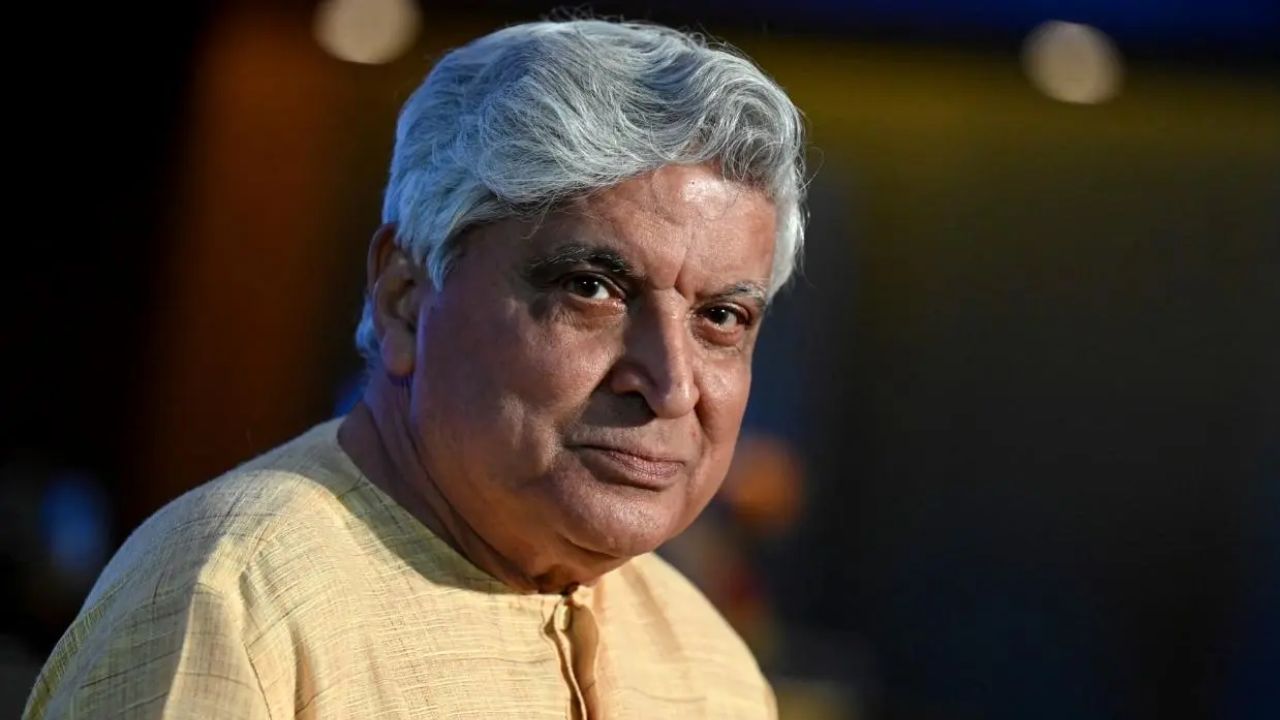



With 1942: A Love Story returning to theatres, veteran lyricist Javed Akhtar has reflected on the changing place of songs in Indian cinema and why younger audiences increasingly question their presence in films, writes NDTV.
Akhtar, who penned several memorable songs for the 1994 classic, believes Western cinema and music have influenced how the younger generation perceives the long-standing Indian tradition of using songs as part of storytelling.
“Ab jo log Western cinema se expose hue hain, unke andar ek embarrassment hai. Nayi generation sawal karti hai ki ye gaane ka kya chakkar hai?” he said.
Akhtar argued that songs should not be dismissed simply because they do not replicate real-life situations.
He questioned the expectation that everything in art must be realistic.
“Film mein gaane hero ga raha hai, party mein khade ho kar gaa raha hai, toh badi fake baat hai. Fake toh kya hai? Art ne theka liya real hone ka?” he said.

For Akhtar, the value of a song lies in what it brings to the cinematic experience.
“Wo interesting ho, seductive ho, aur koi achhi value aapko de raha ho, sense of beauty de raha hai, that is also a good value,” he explained.
The lyricist also expressed concern about the direction of contemporary film music, arguing that songs increasingly fall into two extremes — either they contain double entendres or lack meaning altogether.



“Ek toh jin mein double meaning ho, aur doosre jin mein koi meaning nahi. Toh beech mein ek meaning ka gaana nahi bachta,” he said.
His remarks come amid ongoing debates over the lyrics and visual treatment of songs in contemporary Indian cinema.
Akhtar believes the connection between music and storytelling is far older than Indian cinema itself and should not be treated as a convention invented by films.
“Music and narrative ka rishta Hindustan mein koi filmon ne invent nahi kiya hai,” he said, pointing to the long-standing relationship between music and storytelling in Indian artistic traditions.
The veteran lyricist also defended the talent of contemporary writers and composers, saying they should not be solely blamed for the changing nature of film music.
“Don’t blame the writer, the music director, they are very talented people,” Akhtar said.
Instead, he believes the larger problem lies in the way songs are conceptualised and incorporated into modern films.
According to Akhtar, songs were once more closely connected to the film’s narrative and characters.
He feels that contemporary songs are increasingly detached from the story.
“Ab unhone jo kiya hai, woh ek bahut hi bada compromise hai. Ab ke gaane background mein hote hain, jinka aam taur se foreground se koi vaasta bhi nahi hota hai,” he said.
For him, a good film song should contribute to the story rather than simply exist as an independent musical sequence.
“Gaane toh achhe tab honge, jab unn mein koi narrative ka participation ho, character ka representation ho,” he added.
Akhtar’s own work on 1942: A Love Story remains an example of this approach.
The film featured several enduring songs, including ‘Ek Ladki Ko Dekha’ and ‘Kuchh Na Kaho’, which continue to be associated with the film decades after its original release.