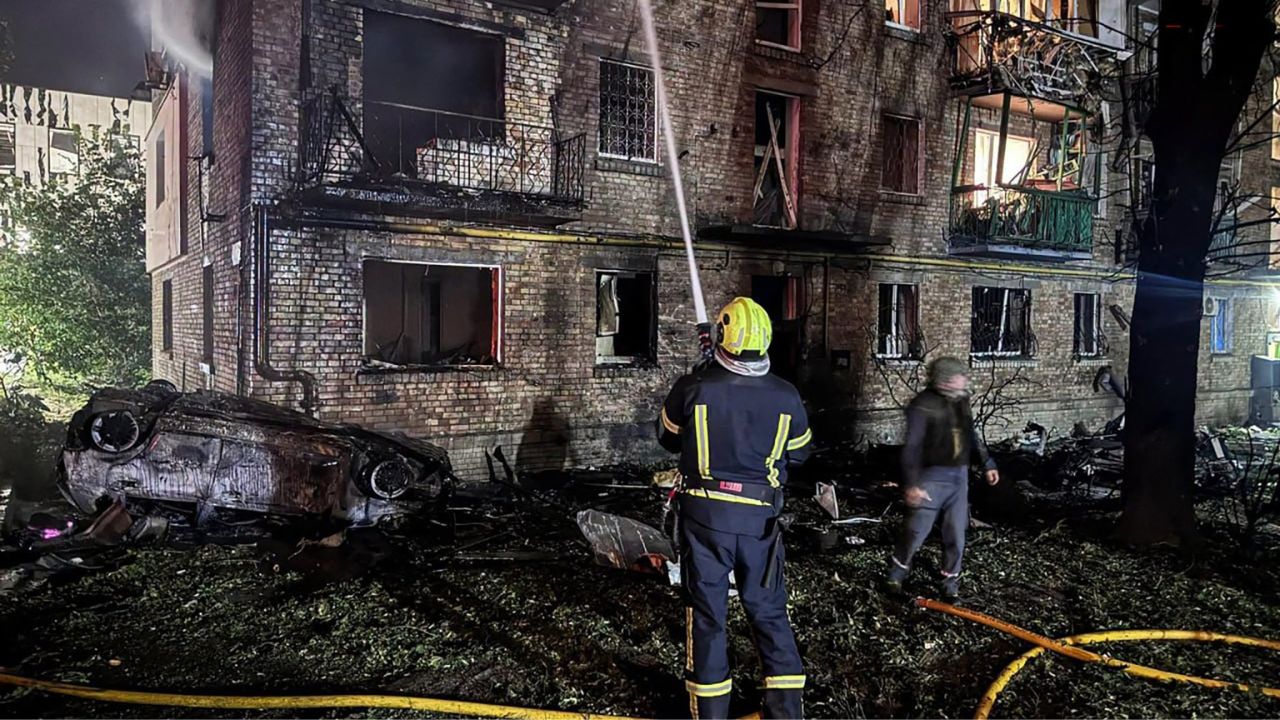

Russia fired its largest barrage of ballistic missiles at Kyiv since the war began, Ukraine’s foreign minister said, killing one person and injuring at least 16 during hours of attacks across six districts of the capital early on Sunday, according to Al Jazeera.
The bombardment, which damaged homes, offices, industrial facilities, vehicles and a dormitory, underscored Ukraine’s growing vulnerability as it faces near-daily Russian attacks while struggling with a shortage of Patriot interceptor missiles, its most effective defence against ballistic weapons.
Ukraine’s national police said the strikes affected six districts of Kyiv, while the State Emergency Service reported fires at residential and non-residential buildings across the city.
Rescue workers pulled four people from a burning private house in the Sviatoshynskyi district.
In the Shevchenkivskyi district, emergency personnel rescued residents from a three-storey building that had caught fire and brought another blaze at a non-residential property under control.
One person was later found dead.
Firefighters were also deployed to tackle blazes in the Solomyanskyi, Desnianskyi and Dnipro districts. Foreign Minister Andrii Sybiha described the missile barrage as “a brutal terrorist attack on the Ukrainian capital” and called for a forceful international response.

“We need devastating pressure on Moscow to end this terror,” he wrote on X.
The latest strikes came as Ukraine entered its fifth year of war under increasing pressure from repeated Russian missile and drone attacks.
Kyiv has been particularly exposed to ballistic missile strikes because of dwindling supplies of Patriot air defence munitions, which offer its strongest chance of intercepting such weapons.


Russia has launched several major waves of attacks on the Ukrainian capital during July and used ballistic missiles on at least seven occasions.
Ukraine’s air force said on Sunday that its air defences had destroyed 18 of the 41 missiles launched by Russia overnight.
Russian drones also struck the central Dnipropetrovsk region, which borders the front line, killing one person, regional official Oleksandr Ganzha said.
In the Zaporizhia region, a Russian drone hit a passenger train and killed its conductor, according to Ukraine’s national railway company.
The railway operator published photographs showing train carriages engulfed in flames.
Ukraine, meanwhile, said its forces had struck two Russian oil tankers in the Black Sea. The operation was part of Kyiv’s continuing campaign to disrupt fuel and other supplies reaching Russian-occupied Crimea by targeting shipping.
The escalation in Russian attacks comes amid rising political tensions within Ukraine following President Volodymyr Zelenskyy’s decision to remove Defence Minister Mykhailo Fedorov during a cabinet reshuffle.
The move has triggered street protests and caused concern among many Ukrainian soldiers.
Some critics said replacing Fedorov at a time when Ukrainian forces appeared to be gaining momentum represented the most serious mistake of Zelenskyy’s presidency.
The shortage of Patriot interceptors has become one of the most urgent challenges facing the government as it tries to protect cities and critical infrastructure.
US President Donald Trump has said he is prepared to grant Ukraine licences to manufacture Patriot interceptor missiles domestically, a step that could strengthen the country’s air defences.
However, details of the proposal and the timetable for any domestic production remain unclear.
Zelenskyy said on Sunday that defending the country against ballistic missiles was now his government’s most pressing security concern.
“Protection against ballistic missiles is our constant and top priority right now,” he wrote on X.
“Interceptors are needed every day, and I am grateful to everyone who takes our agreements seriously and ensures the delivery of anti-ballistic capabilities.”
The attack on Kyiv added to the mounting civilian and military pressure on Ukraine as Russian forces continue their aerial campaign and the country seeks additional air defence support from its allies.