Bangladesh’s air has been growing heavier, thicker, harder to ignore. For adults, polluted air may mean a scratchy throat, irritated eyes, or a lingering cough. For children, it can mean something far more profound and far more permanent.
Air pollution is no longer an abstract environmental issue reserved for climate summits and policy papers. In urban and semi-urban Bangladesh, it has quietly evolved into one of the most urgent threats to child health.
In the year 2024-2025, Bangladesh was ranked the world’s second most polluted country, trailing only Chad, with fine particulate matter (PM2.5) levels exceeding World Health Organization safety guidelines by more than 15 times.
From congested city roads choked with exhaust fumes to brick kilns on the outskirts, from construction dust to indoor smoke, children are breathing in a toxic mix during the most vulnerable years of their lives. This is the time when their lungs are still developing, and their immune systems are learning to defend them.

“Children are the most vulnerable to this,” said Dr Farjana Sharmin, a Medical Officer of Pediatrics at the Mymensingh Medical College. “Their respiratory systems are still growing. On top of it, they breathe faster than adults and spend more time outdoors. That means they inhale way more polluted air relative to their body weight. The damage begins early- sometimes even before birth.”
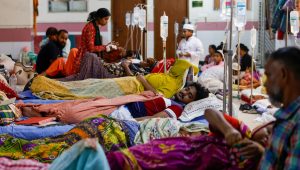
Our country has seen a worrying rise in respiratory complaints among children in recent times. “More and more patients are coming to the pediatric wards and in the outdoor departments with persistent coughs, recurrent wheezing, aggravated asthma, allergic rhinitis and frequent chest infections,” added Dr Farjana.
In severe cases, prolonged exposure to polluted air can impair lung development, reduce overall lung capacity and increase the risk of chronic respiratory diseases later in life.




But the lungs are only part of the story. Recent research has shown that long-term exposure to air pollution can affect cognitive development, concentration levels and even behavioural health in children.
Fine particulate matter, especially the PM2.5, the microscopic particles small enough to penetrate deep into the lungs and bloodstream, has been linked to systemic inflammation. For a growing child, this can cause vulnerabilities that may shape health trajectories for years to come.
Infants and toddlers are particularly at risk. Their airways are narrower, making them more susceptible to blockages and inflammation. A mild irritation that an adult body might tolerate can escalate quickly into breathing distress for a child.
“This increases a lot in winter as well. We see a lot of children coming in with acute respiratory infections during that time,” noted the paediatrician. “Parents sometimes think it is just a seasonal cold. But repeated exposure to polluted air weakens the child’s defences.”
In many households, pollution extends indoors as well. Secondhand smoke, mosquito coils, incense sticks and poor ventilation can contribute to it. In rural areas, the use of biomass fuels for cooking adds another layer of risk, particularly for young children who spend a lot of their time near their mothers.
The scale of this problem is massive. It goes way beyond the borders of our country. While it may seem like it is something which is impossible to avoid, Dr Farjana emphasises that Smart Individual efforts can also make a difference here. Parents can take small but meaningful steps:
- Limiting outdoor play during peak pollution hours
- Encouraging the use of masks when going out
- Keeping windows closed during heavy smog
- Maintaining indoor air quality through proper ventilation
- Reducing the smoke exposure of children
- Regular health check-ups and early medical consultation for persistent respiratory symptoms
Yet individual efforts alone are never enough to stop this global threat. Because at the heart of the issue is a simple truth: children cannot choose the air they breathe. We cannot allow our children to carry the invisible burden of a crisis that they did not create.
Country-scale and even global-scale measures need to be taken to put a stop to this. We must take systemic, country-wide measures to ensure that the air of the future is fit for those who will inherit it.