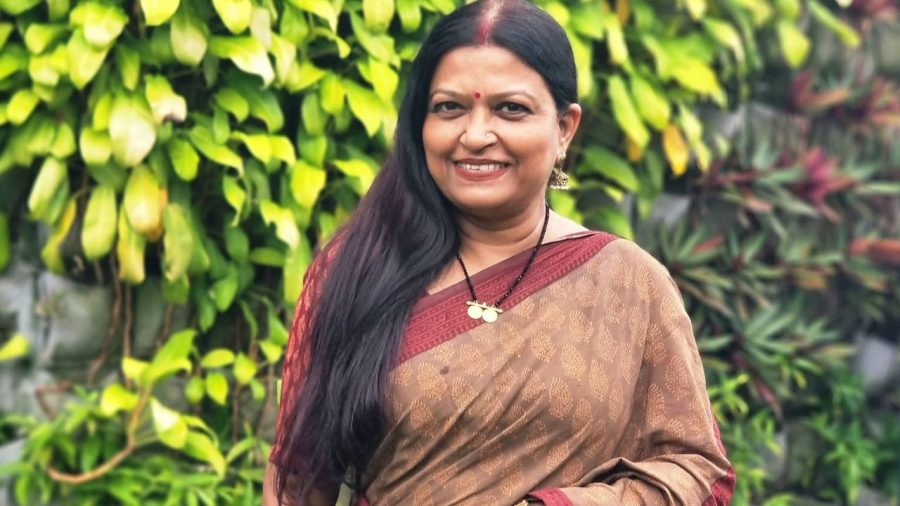

For Chayanika Chowdhury, directing has never been a job that ends when the cameras stop rolling. It demands patience, long nights, Friday shoots and the willingness to understand every part of the process.
And when asked what advice she would give women who want to enter the profession, she has little interest in making the conversation about gender.
“A director has no gender. A director is simply a director,” Chayanika said. “The first thing you need to become a director is patience. There are no fixed working hours. You have to work late into the night, and there are shoots even on Fridays. A woman needs family support to work as a director. A director must know every segment of the work. If you depend only on the cameraman or think editing can be dealt with later, it is not possible to work for a long time.”
That uncompromising view comes from a career shaped by persistence rather than an easy route into directing. Chayanika once dreamed of becoming a Rabindra Sangeet singer, inspired by Mita Haque, Rezwana Chowdhury Bannya and Sanjida Khatun. She even travelled to Santiniketan to learn music.
But family and household responsibilities eventually took her away from that path. Her artistic journey, however, did not stop. She turned to writing and gradually found her way into directing.
Chayanika’s media career began in 1977 and 1978, when she took part in recitation, singing and dancing on Notun Kuri. In 1998, she began working as a screenwriter with the drama Bodh. Three years later, she stepped behind the camera with Shesh Belay.

Mujibur Rahman and Zaydan Rabbi of Light and Shadow gave her the opportunity to make the drama. It was never broadcast.
Her first broadcast drama was Ek Jibone, produced by Ad Media. Zaydan Rabbi and Chayanika’s sister, Tamalika Karmakar, were involved in its production.
Over the years, Chayanika found herself working with established performers, something she says helped her overcome the feeling of being a newcomer.
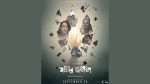



“Many artists, including Aupee Karim, Shahed Sharif Khan and Srabanti, have worked with me. Because of them, I never felt that I was new. I felt that I could do the work,” she said.
She credits Imdadul Haq Milan, Mahfuz Ahmed, Mustafa Kamal Syed and Faridur Reza Sagar for helping her reach where she is today. But, she says, her greatest debt is to her family.
She does not, however, describe herself as a naturally gifted director.
“I do not consider myself a talented director, but I am very hardworking. I love my work deeply. To me, work is like prayer. Work is my only love,” she said.
That love has also shaped her approach to cinema. Her first film, Bishwoshundori, was released in December 2020, followed by Prohelika during Eid-ul-Azha in 2023.
Bishwoshundori was released in December 2020; Prohelika followed in Eid-ul-Azha 2023. It won no National Film Award, but she believes Bubly deserved one, followed by Tama Mirza for Surongo, and says they could have won jointly. She also believes Megher Nouka, cinematography and screenplay deserved awards.
“Mahfuz Ahmed gave a very good performance after a long time. In that case, he and Shakib Khan could have received the award jointly. Anyway, who receives the awards is a matter for the concerned authorities.”
Despite Bishwoshundori receiving awards, she could not accept actress Champa and screenwriter Rumman Rashid Khan missing out.
Her next films are Matal Hawa and Sakha: The Soulmate. The country’s situation delayed them for two years. Shabnoor and Mahfuz Ahmed had been linked to Matal Hawa, but that casting is no longer in place; Shabnoor is not working, and Chayanika waited.
“Everything has been finalised, but the announcement will come after the shoot.”
“Why would I shoot secretly? I am not someone who hides my work.”
Now, after years of moving between writing, television and cinema, Chayanika has another milestone to mark. Her directing journey began with the shoot of Shesh Belay on 18 September 2001, and this year completes 25 years since she first stepped behind the camera.
“To my knowledge, no Bangladeshi director has had four or five dramas aired simultaneously on the same day and at the same time to mark 25 years in the profession. For me, that is the biggest achievement and reward,” she said.