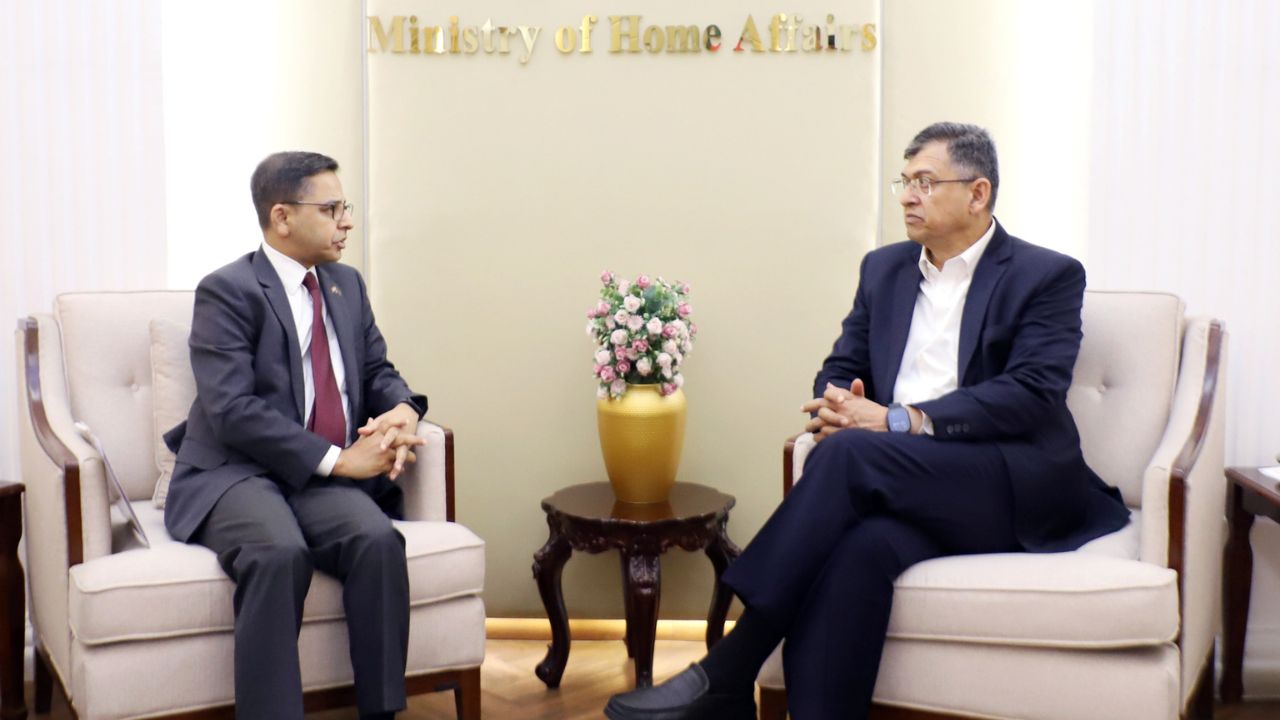



Home Minister Salahuddin Ahmed said the foundation of bilateral relations between Bangladesh and India will be rooted in people-to-people contact, rather than the mutual relationship of one country’s political party with another.
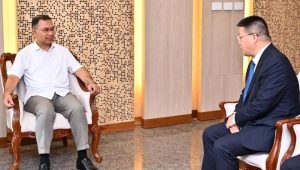
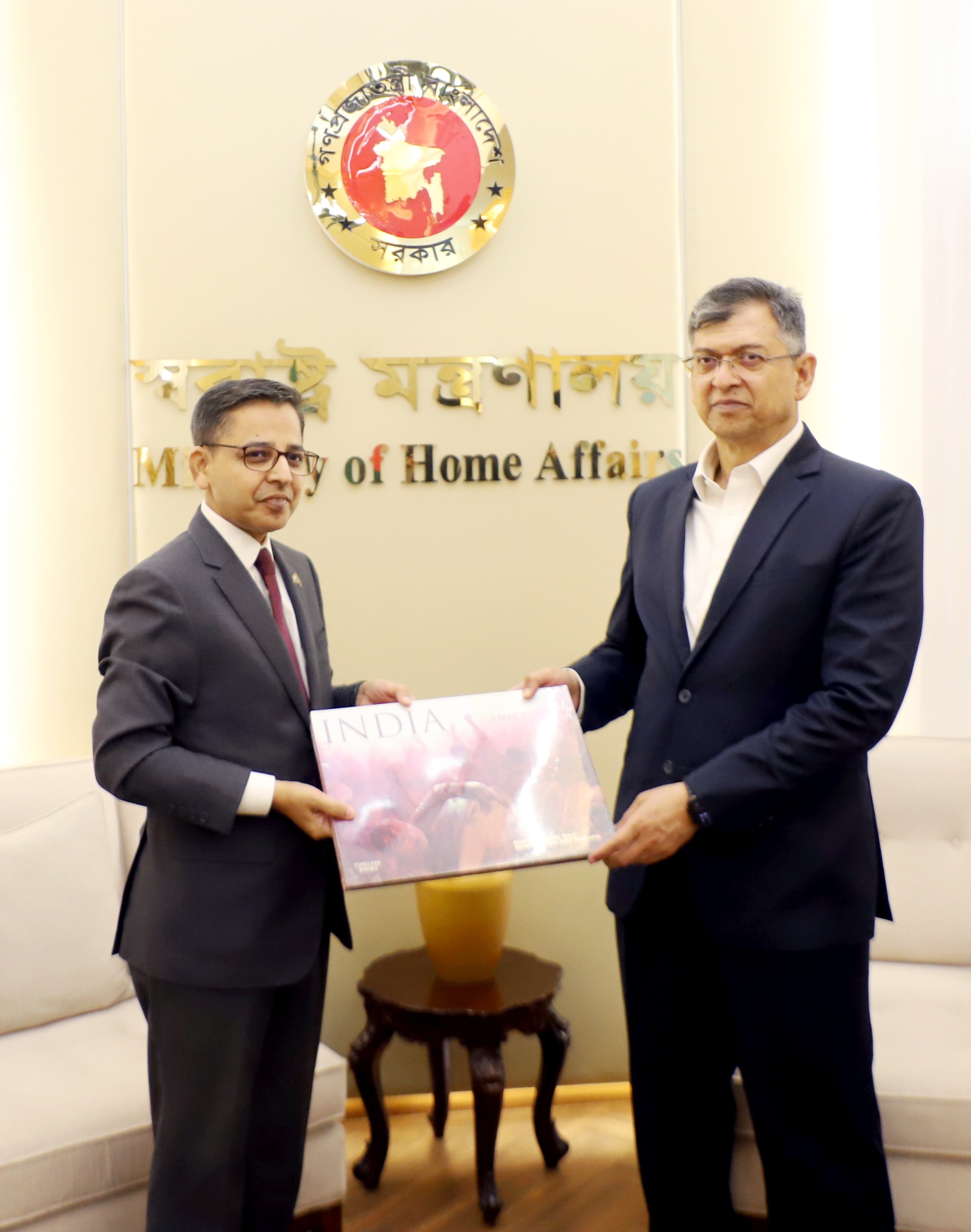
Salahuddin made these remarks during a courtesy call by Indian High Commissioner to Bangladesh Pranay Verma at his office in the Bangladesh Secretariat on Sunday.
During the meeting, Ahmed emphasised that the government wishes to move the bilateral relationship forward by learning from past experiences and renewing ties.
He further noted that both nations share a common culture and history, and that mutual dependence should be viewed as a strength based on shared interests rather than a weakness.
In response, High Commissioner Verma expressed optimism about restoring the historical relationship between the two countries. Salahuddin also extended his gratitude to Indian Prime Minister Narendra Modi for congratulating Bangladesh’s newly elected Prime Minister Tarique Rahman.

The discussions encompassed a wide range of mutual interests, including security, law and order, the prevention of mob culture and attacks, the reopening of Indian visa centres, and increasing the rate of visa issuance.
The meeting also addressed cybercrime, the cessation of border killings, director general-level conferences between the BGB and BSF, and training exchanges between the police academies of both nations.


Additionally, the officials discussed prisoner exchanges, the expansion of trade, and the sending of trainees to India’s ITEC programme to enhance professional skills.
Regarding visa services, the Minister requested the High Commissioner to increase the issuance rate and reopen shuttered centres.
Verma explained that while medical visas are currently being issued, various centres were closed over the last 1.5 years due to security concerns following mob attacks and protests.
However, he noted that with a political government now established and the law-and-order situation improving, visa centres will be reopened gradually as security is ensured.
Salahuddin assured the High Commissioner that no mob attacks would be tolerated and that adequate security has been provided for all Indian installations, including the High Commission office and visa centres.
The High Commissioner also raised concerns regarding attempts to hack the online visa application website. In response, Salahuddin directed the Cyber Crime Unit of the Dhaka Metropolitan Police (DMP) and the Counter Terrorism and Transnational Crime (CTTC) unit to take necessary action.
On the issue of border security, the Minister urged for the number of border killings to be brought down to zero, noting that such incidents hinder bilateral relations. Additionally, both parties discussed skill-enhancement under India’s ITEC programme.
Verma highlighted the high quality of Indian training programmes, and Salahuddin assured him that more trainees from Bangladesh’s law enforcement agencies would be sent to India to participate.
Indian Deputy High Commissioner Pawan Badhe, Counsellor Abhijit Saptarishi, and First Secretary Ann Mary George attended the meeting. Representing the Bangladesh side were Rebeka Khan, joint secretary (Political-1) of the Ministry of Home Affairs, and other relevant ministry officials.