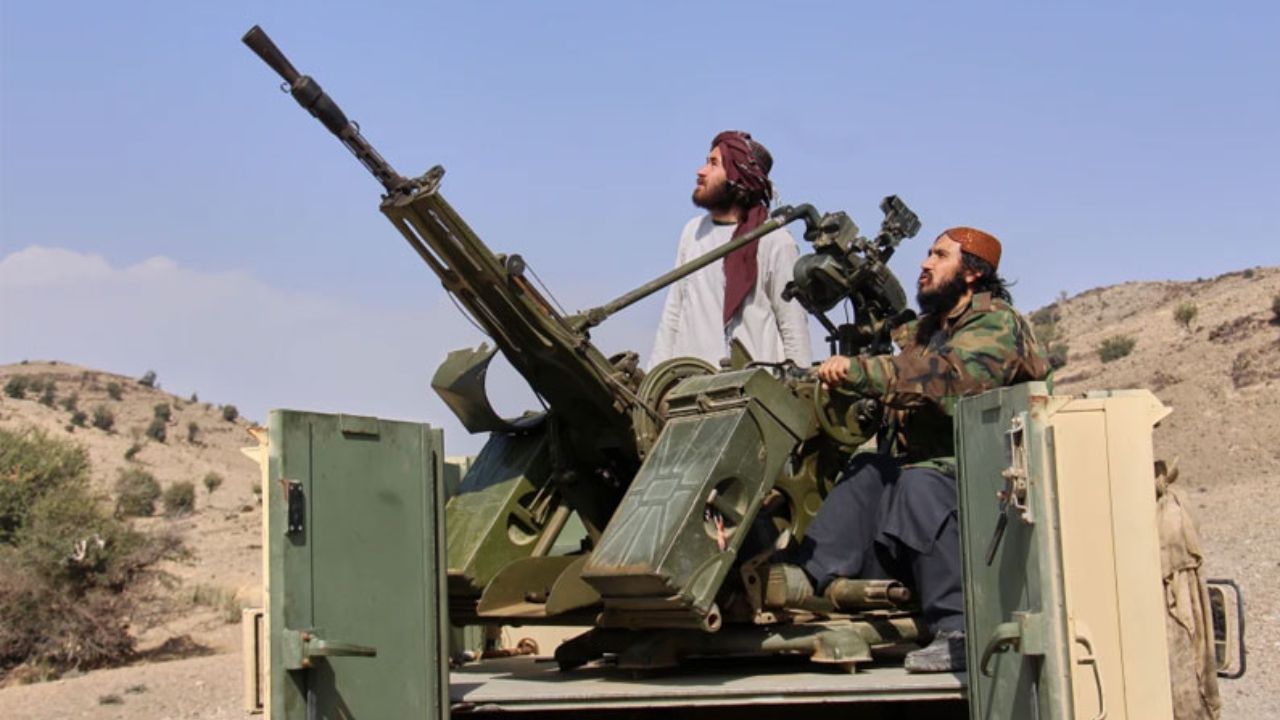

Taliban authorities in Afghanistan signalled that they are open to negotiations on Friday after Pakistan launched air strikes on major Afghan cities, leaving dozens dead in what marks the gravest confrontation yet between the former allies.
Pakistan’s Defence Minister Khawaja Asif described the situation as an “open war”.
Afghan Taliban, who said they had carried out “retaliatory attacks” following strikes on what were described as terrorists’ hideouts last weekend, indicated a willingness to talk, reports Dawn.
“Afghanistan… has always preferred to resolve issues based on mutual understanding and respect,” the Afghan foreign ministry quoted Foreign Minister Amir Khan Muttaqi as telling Mohammed bin Abdulaziz Al-Khalifi of Qatar during a telephone call.
Taliban spokesman Zabihullah Mujahid echoed the message, saying “now also we want to resolve this matter through dialogue.”
Regional and international actors have since stepped up efforts to prevent the hostilities from escalating further.

Neighbouring Iran offered to mediate. Foreign Minister Abbas Araghchi wrote on X, “The Islamic Republic of Iran stands ready to provide any assistance necessary to facilitate dialogue and to enhance understanding and cooperation between the two countries.”
Saudi Arabia and Qatar have also engaged in intensive diplomacy to cool tensions, a source familiar with the talks told Agence France-Presse.
“Saudi Arabia, in coordination with Qatar, is making efforts to reduce tensions between Pakistan and Afghanistan,” the source said, adding that the objective is to “de-escalate the situation and prevent it from spiralling out of control.”




Saudi Foreign Minister Faisal bin Farhan Al Saud expressed concern over recent developments during a phone conversation with Muttaqi. In a separate call with Pakistan’s Ishaq Dar, he agreed to remain closely engaged.
Turkey joined the diplomatic push. Foreign Minister Hakan Fidan held separate discussions with counterparts from Pakistan, Afghanistan, Qatar and Saudi Arabia, according to a Turkish diplomatic source.
From Moscow to Beijing, major powers urged restraint.
China, a neighbour and key investor in the region, voiced deep concern. Foreign Ministry spokesperson Mao Ning said, “China supports combating all forms of terrorism and calls on both parties to remain calm and exercise restraint, properly resolve differences through dialogue and negotiation, achieve a ceasefire as soon as possible, and avoid further loss of life.”
She added that Beijing was mediating through its own channels and had asked both sides to ensure the safety of Chinese personnel and projects.
Russia also pressed for an immediate halt to the fighting. Foreign Ministry spokeswoman Maria Zakharova wrote on Telegram, “We call on our friends Afghanistan and Pakistan to abandon this dangerous confrontation and return to the negotiating table to resolve all differences through political and diplomatic means.”
Kremlin spokesman Dmitry Peskov said Moscow was “closely monitoring this situation.”
From Europe, United Kingdom expressed grave concern. Foreign Secretary Yvette Cooper posted on X, “We are deeply concerned by the significant escalation in tensions between Afghanistan and Pakistan. We urge both sides to take immediate steps toward de-escalation, avoid further harm to civilians, and re-engage in mediated dialogue.”
Meanwhile, United States President Donald Trump adopted a notably restrained stance, diverging from his usual readiness to mediate international disputes.
Speaking to reporters in Washington before departing for Texas, Trump indicated he would not intervene, citing close ties with Pakistan’s leadership. When asked if he had been requested to step in, he said, “Well, I would but I get along with Pakistan, as you know, very well. Very, very well.
“[They] have a great prime minister, a great general there … two of the people I really respect a lot. And I think that Pakistan is doing terrifically well,” he added.
United Nations joined the growing calls for calm. Secretary-General Antonio Guterres “is deeply concerned by the escalation of violence we’re seeing,” his spokesman Stephane Dujarric said.
“He calls for an immediate cessation of hostilities, and he reiterates his call on the parties to resolve any differences through diplomacy.”
The International Committee of the Red Cross (ICRC) also urged protection for civilians. Its President Mirjana Spoljaric said the organisation was “preparing an operational response to humanitarian needs on the ground”, while calling for a de-escalation of hostilities between Afghanistan and Pakistan, reports AFP.