


Harirampur Upazila in Manikganj covers around 575 square kilometres and encircled by the Padma River. Photo: TIMES
Masum Badsha Manikganj
Elections repeat in Harirampur, leaders change and pledges flow freely, yet residents of the riverine chars say little alters in their daily struggle against erosion and isolation.
Harirampur Upazila in Manikganj, encircled by the Padma River, comprises 13 unions with 141,608 registered voters, including 71,334 men, 70,234 women and one transgender voter, according to the latest official data.
Local and government records show the upazila covers around 575 square kilometres and is home to roughly 360,000 people.

Within it, three char unions — Lecharagonj, Azimnagar and Sutalorie— are among the most neglected, spanning about 36.03 square kilometres with nearly 19,400 voters and an estimated population of 80,000.
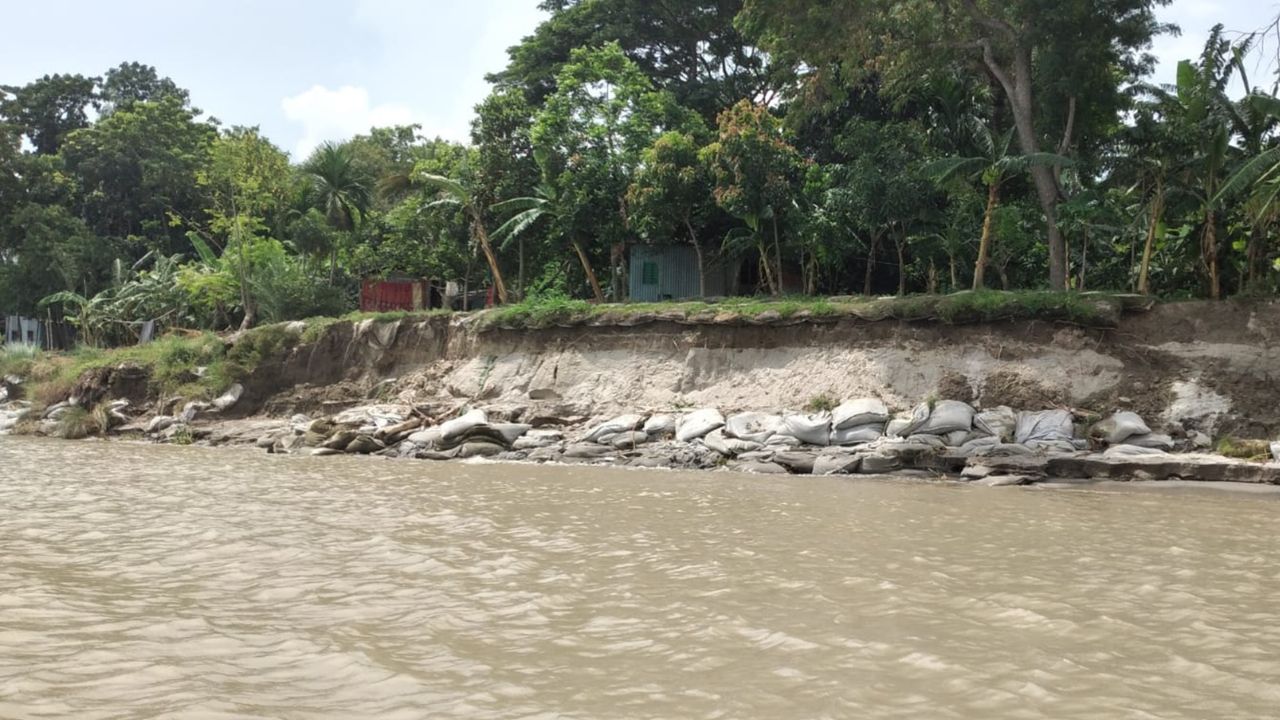
Residents say a large proportion lack secure housing as shifting river currents and severe erosion swallow vast tracts of land each year, forcing repeated displacement.
River transport remains the only access route to the char areas, with no land connection in place.



Passengers and goods are still carried largely by horse or bullock cart, and in some cases by vans, reflecting what locals describe as decades of neglect.
Education, communications and healthcare services are limited, but access to treatment is cited as the gravest concern.
In medical emergencies, patients must cross the Padma to reach a hospital, a journey residents say becomes nearly impossible at night, leading to preventable deaths.
Char dwellers allege that temporary geo-bags and other short-term erosion control measures have failed to provide protection and in some cases have intensified riverbank collapse.
During election campaigns, candidates promise river training works, road links and improved services, yet residents say no durable solution has materialised.
“Everyone comes during the vote, listens to our suffering and then disappears,” said Arjina Begum of Lechraganj. “We build homes and the river takes them away again. That is how we survive.”
Belayet Ali of Azimnagar said nearly 20 bighas of ancestral land had been lost to the Padma. “Votes come, leaders change, but our hardship does not,” he said.
Shakil Gazi, a young resident of Sutalorie, said each election brought fresh assurances but little visible progress.
With another parliamentary election held, residents say river erosion control, secure transport links and guaranteed healthcare should top the political agenda.
They argue that without sustainable embankments, permanent river management, safe land and river connectivity, planned resettlement and basic services, electoral cycles will continue to pass without altering the fate of Harirampur’s char communities.