


A review of the draft Primary Healthcare (PHC) legislation has identified key legal and implementation gaps, even as it was described as a major step in Bangladesh’s health sector reform and its push toward universal health coverage (UHC).
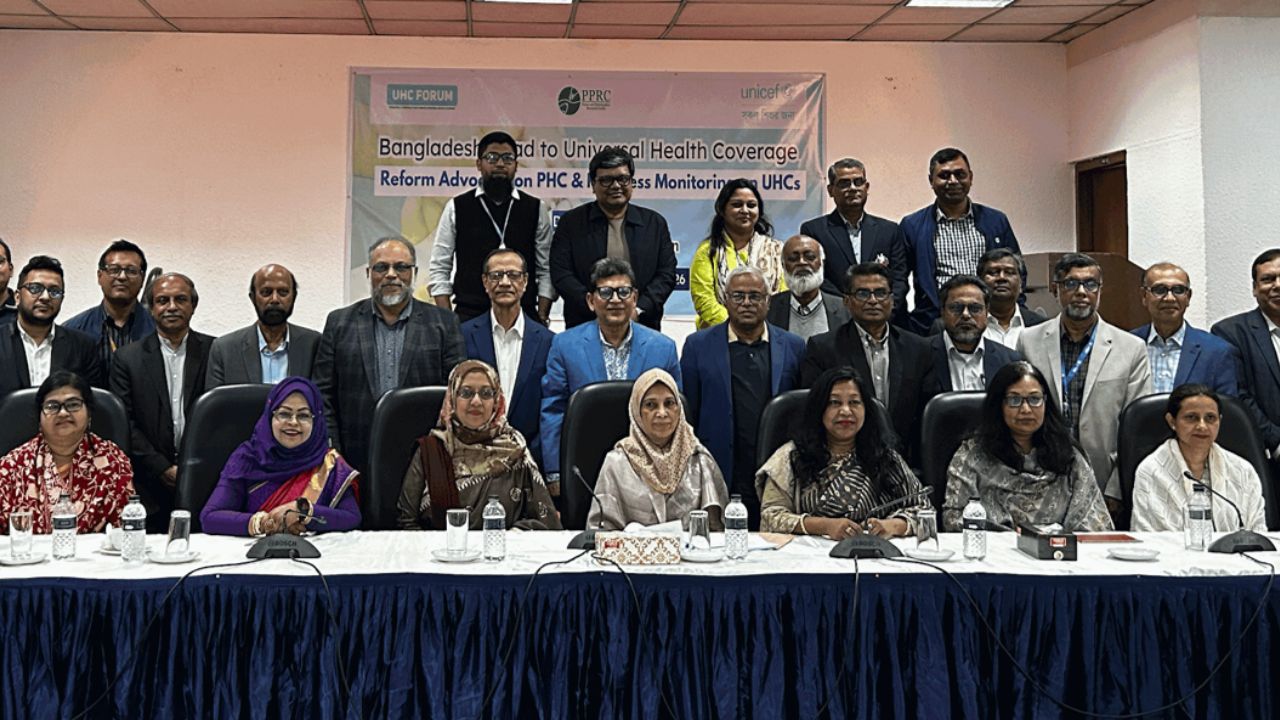
The findings were discussed at a high-level policy dialogue titled “Review of Draft Primary Healthcare Legislation”, held at the Cirdap Auditorium in Dhaka on Wednesday, as part of the Bangladesh Road to Universal Health Coverage – New Dialogue Series 2026.
Jointly organised by the Power and Participation Research Centre (PPRC) and the UHC Forum, with support from UNICEF, the dialogue brought together senior health professionals, policymakers, researchers and civil society representatives to examine the draft law currently under consideration.

Participants said the proposed legislation marks a significant milestone by re-establishing primary healthcare as the foundation of the health system, but stressed that further refinement is needed, particularly in the absence of an explicit constitutional mandate prioritising health sector reform.
Speakers underscored the need for stronger legislative and constitutional grounding for PHC, especially as Bangladesh faces time constraints in meeting Sustainable Development Goals (SDG) targets and fulfilling international health commitments.



Decentralisation and system integration emerged as key concerns, with speakers noting that effective PHC reform would be difficult without clearer institutional roles, meaningful decentralisation, and stronger coordination between rural and urban healthcare systems, which currently operate in a fragmented manner.
Implementation readiness was another major issue, as participants pointed to governance gaps, administrative overlaps and the need to align the draft law with existing health legislation and the recommendations of reform commissions to ensure accountability and political ownership.
Financing and human resources were discussed as interconnected challenges. Participants raised concerns over inefficient budget utilization, particularly in urban health, and the lack of a comprehensive financing framework linking rural and urban PHC planning.
In his concluding remarks, PPRC Chairman and economist Hossain Zillur Rahman said that while progress has been made in advancing PHC reform, sustained advocacy and further refinement of the draft legislation are essential for effective implementation.
Several speakers also highlighted the political economy of health reform, calling for stronger political commitment, engagement with major political parties and the inclusion of health reform priorities in upcoming election manifestos.
They noted that while laws and ordinances are necessary, their success ultimately depends on effective implementation, institutional ownership and sustained political will.