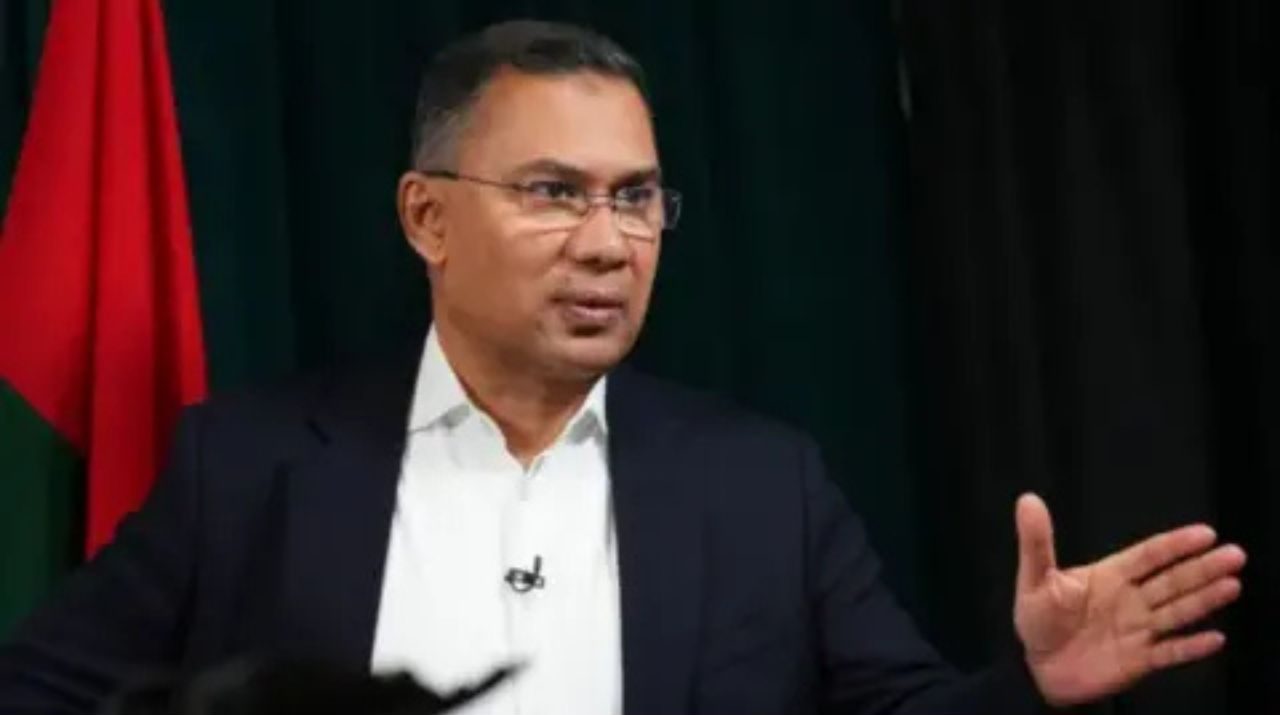
The BNP is rejecting the politics of revenge and believes in the path of solutions, because changing the country requires a future built on justice, morality and forgiveness — not hatred. BNP Acting Chairman Tarique Rahman said this on Wednesday in a post on his Facebook page.
He made the post on the occasion of International Human Rights Day, referring to the situation in Bangladesh.
Tarique Rahman wrote that for 16 years Bangladesh had seemed crushed under a dark cloud. Some had felt that darkness intensely, while others had carried it quietly. But for those whose political stance was against the fallen regime of that time, the darkness was a daily reality — knocks on the door at night, false cases, torture, fear turned into a culture, and countless families waiting for loved ones who never returned home.
He wrote that no one had carried that burden more than the BNP. Extrajudicial killings, enforced disappearances, custodial deaths and false cases had harmed BNP leaders and activists the most, and during the 2024 mass uprising the BNP’s own home had shed the most blood.
He wrote that the victims were not only BNP activists; students, journalists, writers, pedestrians and ordinary people had all carried the wounds of that terrifying environment, where dignity, security and freedom of expression — the most basic of human rights — had been under threat.
Writing about himself, Tarique Rahman said that he too had been deprived of the basic right to speak. Since 2015 his right to speak had been completely taken away. Directives were issued to ensure that no newspaper, TV station or social media platform in the country published any of his statements. Yet even in that imposed silence, he continued to fight for rights, democracy and people’s just demands, because the spirit of truth cannot be stopped by orders.

He wrote that during this entire dark period BNP Chairperson Khaleda Zia had been the strongest symbol of the party’s patience and resistance. False cases, imprisonment and attempts to politically annihilate her were all reflections of an authoritarian rule imposed on the whole nation. Yet she never deviated from her democratic ideals and held firm to her belief that rights belong to everyone and that a country cannot move forward through fear.
He wrote that he himself was a witness to that painful time. His mother, the leader of the nation, endured the mental agony of watching her son taken to jail and tortured. The family also lost another son forever. Like thousands of families in Bangladesh, theirs had been a target.
The BNP acting chairman wrote that history contains a truth: suffering does not always make people bitter — sometimes it makes them greater. He wrote that Khaleda Zia, his mother, had proved this. She had taught that the injustices they endured should not happen to anyone else, and that changing the country requires a future shaped by justice, morality and forgiveness, not hatred.
He said that Bangladesh now needs something greater than politics — a united country where human rights are guaranteed for all, where people have the freedom to speak, where opposing views are part of democracy rather than a threat, and where no one is persecuted or disappeared for having a different opinion.
Writing about his own party, Tarique Rahman said the BNP rejects the politics of revenge and believes in the path of solutions. He said the party is giving its word that no Bangladeshi will have to live in fear of the state, whether a government supporter or an opponent.
He wrote that Human Rights Day on 10 December reminds everyone that human rights are the basic condition for daily survival. He said the stories of Abrar Fahad, Mushtaq Ahmed, Ilias Ali, Sajedul Islam Suman, Sagar-Runi and countless other martyrs must be remembered so that such repression and impunity never return.
He added that although the BNP has endured severe losses, the party has not broken. Instead, it has become stronger by holding on to truth, justice, accountability, reconciliation and the rule of law. He wrote that the party wants to build a Bangladesh where every person’s voice, rights and life are valued, and where human rights form the foundation of the country’s future.