

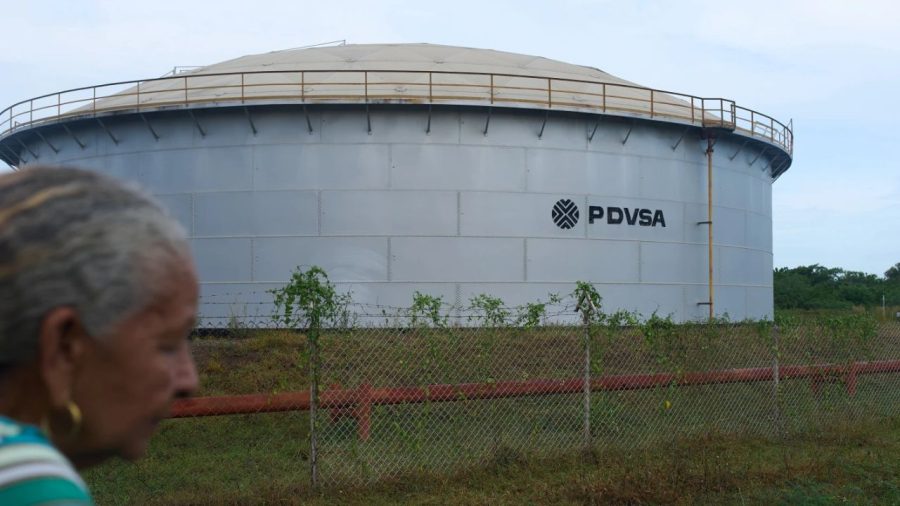



When United States President Donald Trump announced “the biggest oil deal in world history” with Venezuela on 28 August, he said the agreement would “more than double” US oil reserves and “substantially lower gas prices for all Americans”.
However, analysts have cautioned that the deal is unlikely to reduce US crude or fuel prices in the near future, reports Al Jazeera.
Venezuela holds the world’s largest proven oil reserves, estimated at 303 billion barrels, or around 17 per cent of global reserves, according to the US Energy Information Administration.
Much of the country’s oil, however, is heavy and sour crude, making its extraction and refining expensive.
Although refineries along the US Gulf Coast can process Venezuelan crude, analysts say Washington’s agreement with Caracas is unlikely to provide immediate relief from high oil prices.
What does the US-Venezuela oil deal involve?
The Trump administration last week announced an agreement that would give the US control of more than 65 billion barrels of Venezuela’s proven oil reserves, representing more than one-fifth of the country’s known reserves.
According to a White House fact sheet, the US will establish a private joint venture with North American Blue Energy Partners (NABEP), owned by billionaire Venezuelan businessman Alejandro Betancourt, a former ally of Hugo Chavez, the former socialist president.
NABEP already ranks as Venezuela’s second-largest operator after US oil giant Chevron, which is also expected to expand its operations in the country.
Under the agreement, the Pentagon’s Office of Strategic Capital will receive a 35 per cent stake in NABEP, which will “have reputable US auditors, lawyers, and advisors”, the White House said.
The White House said that “millions of barrels of new Venezuelan output will be processed through US refineries and pumped with American rigs and infrastructure, supporting billions in investment in the United States and thousands of jobs here at home”. The US will also have the guaranteed right to purchase 20 per cent of the output at cost.
The NABEP joint venture has the capacity to produce about 200,000 barrels of crude oil per day, potentially increasing US supplies at a time when Iran’s blockade of the Strait of Hormuz has pushed up global oil prices, including in the United States.

Venezuela’s interim President Delcy Rodriguez welcomed the agreement, which is also expected to provide much-needed funds for the country’s state treasury.
The joint venture is expected to make it easier for NABEP to operate in Venezuela, which remains under US sanctions.
The US has imported significant volumes of Venezuelan oil since President Nicolas Maduro was captured in a US military operation in January this year. Maduro was flown to the US to face trial on guns-and-drugs charges, while his vice president, Rodriguez, remained as interim leader.
Since then, she has facilitated US access to Venezuela’s oil industry, while Washington has lifted personal sanctions against her.
In August, US Under Secretary of Energy Kyle Haustveit said more than 500,000 barrels per day (bpd) was moving from Venezuela to the US, accounting for about 40 per cent of Venezuela’s national production of 1.25 million bpd.
Have US crude prices fallen?
Analysts say US crude prices have instead risen since Trump announced the latest agreement.
Johannes Rauball, a senior crude oil analyst at global trade intelligence agency Kpler, said US West Texas Intermediate (WTI) crude had traded at around $83-$86 per barrel before Washington reached the agreement with Caracas, while Brent crude, the global benchmark, stood at approximately $85-$88 per barrel.




“Since then, prices have moved even higher – with WTI pushing past $90 and Brent topping $95 per barrel – driven up primarily by heightened geopolitical risks and acute Middle East supply disruptions around the Strait of Hormuz,” he told Al Jazeera.
On Thursday morning at 06:00 GMT, WTI crude futures had risen by 61 cents, or 0.7 per cent, to $90.83.
Why are US oil and fuel prices not falling?
Rauball said the agreement could eventually improve supply and market sentiment, but significant practical obstacles would prevent any immediate increase in Venezuelan production.
“It will take years for this deal to result in a meaningful ramp-up in production due to Venezuela’s severe physical bottlenecks and ageing infrastructure – most notably degraded pipeline gathering systems, insufficient electrical grid support, and a lack of specialised crude upgraders,” he said.
He added that US refiners were already operating at maximum capacity to meet domestic and international demand, leaving little scope for further expansion.
“While access to heavier Venezuelan crude supplies offers the specific feedstocks US Gulf Coast refiners require, it will not translate into near-term price relief at the pump given these refining throughput constraints and ongoing operational delays,” he said.
Tracy Shuchart, senior economist at futures trading platform NinjaTrader, also expressed scepticism about expectations of cheaper fuel following the agreement.
Writing in a post on X on August 29, she said: “Everyone cheering the Venezuela deal thinks a flood of cheap oil is about to hit and pull gas prices down. It isn’t.
“Venezuela pumps about 1.2M bpd right now, up from just under a million. That gain came mostly from Chevron ramping up existing wells after sanctions were lifted, not from new drilling. The easy barrels are already back. The reserve number is a stock that will take decades to convert to flow,” she said.
What could the deal mean for global oil prices?
Iran’s closure of the Strait of Hormuz, through which more than 20 per cent of global oil and natural gas passes during peacetime, has disrupted global energy markets.
Brent crude climbed above $100 per barrel shortly after the strait was closed in early March. Before the war, it had traded at about $66 per barrel. On Thursday at 06:05 GMT, Brent rose by $1.03, or 1.1 per cent, to $95.68 per barrel.
Rauball said the immediate impact of the US-Venezuela agreement on global crude prices remained “neutral”, as markets continued to focus on short-term supply shortages caused mainly by the closure of the Strait of Hormuz.
“Over the longer term, a successful ramp-up [of production] will gradually increase the overall availability of Venezuelan crude in the global market. This added volume will help increase crude supply globally over time, ultimately exerting persistent downward pressure on global oil prices further down the line,” he said.
However, analysts say additional Venezuelan supply cannot fully compensate for oil volumes lost from Gulf producers that previously shipped crude through the Strait of Hormuz.
Frederic Schneider, a nonresident senior fellow at the Middle East Council on Global Affairs, said: “The US-Israeli war on Iran took at least 10million barrels a day off the market through Hormuz. Venezuela cannot replace that, also partly because it is a different grade, namely, heavy, sour crude which competes with other heavy imports (mostly Canadian and some Mexican) rather than substituting for the lighter Gulf oil.”
Hamad Hussain, a climate and commodities economist at the United Kingdom-based firm Capital Economics, said Venezuela would require substantial investment and time before it could significantly increase production for global markets.
“Even in the long term, the potential for political instability and high costs involved could make investors wary of committing to oilfield projects in Venezuela. This could hold back the extent to which oil supply in Venezuela increases and, in turn, limit the downward pressure on crude oil prices over the coming years,” he told Al Jazeera.
Only a limited number of countries, mainly the US, China and India, have refineries capable of processing the extremely heavy crude produced by Venezuela.
“Refineries in Europe are geared towards refining lighter grades of crude, so there would be little interest in importing oil from Venezuela there,” Hussain said.
He also warned: “The heaviness of Venezuelan crude would be a bigger problem for President Trump’s stated aim to refill the US Strategic Petroleum Reserve (SPR) with crude from Venezuela. This is because storing oil from Venezuela in the SPR could cause damage to the underground caverns.
Global crude prices will therefore continue to depend heavily on how the US and Israel’s war on Iran, which has paralysed the Strait of Hormuz, develops.
Who stands to benefit most?
US oil companies are likely to make the biggest gains from the agreement.
After the deal was announced late on Friday, shares in Chevron, currently the only major US oil company operating in Venezuela, rose 2.2 per cent to $206.20 on the Dow Jones index of publicly listed companies.
On Tuesday, US Energy Secretary Chris Wright said several US and foreign companies were also expected to sign oil agreements in Caracas this week, potentially increasing Venezuela’s crude production. The companies expected to be involved include Chevron, Italy’s Eni, India’s ONGC, Colombia’s GeoPark and the US’s GE Vernova.
Venezuela’s oil production exceeded 3 million bpd at its peak in the late 1990s before falling sharply because of underinvestment, mismanagement and US sanctions. Production has stood at around 1.1 million to 1.2 million bpd in recent months, rising slightly since President Nicolas Maduro was abducted by US forces in January.
Wright said US consumers could see lower gas prices once oil companies increased their investment in Venezuela.
“The investment in these deals will massively grow available oil production, which will give downward pressure on oil prices, but the biggest kink right now in gasoline and diesel prices is refining capacity,” Wright told reporters in Venezuela, without giving any details about how refining capacity would be increased.
Schneider, however, said he did not expect many other oil companies to rush into Venezuela’s oil sector.
“The more fundamental problem is that the high-price shock earlier in the war has destroyed demand, which has put pressure on WTI,” he told Al Jazeera. “With a highly uncertain demand forecast and Gulf oil coming back online at some point, no company wants to put $100bn into a country as risky as Venezuela,” he added.