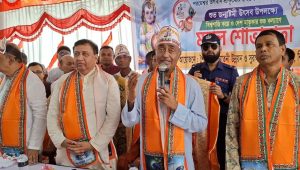
BNP has adopted a strategy to pull Islamist parties aligned with Hefazat-e-Islam into its orbit in an effort to prevent the formation of a unified Islamist alliance under Jamaat-e-Islami ahead of the 13th national election.
The party has begun working to form an alliance with several such parties and organisations, including Bangladesh Khilafat Majlish, Jamiat Ulama-e-Islam, a faction of Islami Andolan Bangladesh, a faction of Islami Oikya Jote, Nezam-e-Islami and Bangladesh Jamiatul Mudarreseen.
Sources close to BNP’s top leadership say although Hefazat formed in 2010 is officially a non-political organisation, several leaders of different Islamist political parties and groups also hold organisational roles within it.
BNP considers two wings of Jamiatul Mudarreseen – Islami Jubo Kafela and Islami Chhatra Kafela – to be particularly influential.
These Islamist parties and organisations are not aligning themselves with Jamaat-e-Islami, and they also differ with Jamaat on issues related to Bangladesh’s Liberation War.
In addition to building alliances with these groups, BNP is strengthening its ties with Hefazat Amir Maulana Shah Mohibullah Babunagari, Sharsina’s Pir Mufti Shah Abu Nasr Nesaruddin and senior Alems from the Aliya madrasa system.

Sources say BNP has already held discussions with Bangladesh Khilafat Majlish Amir Maulana Mamunul Haque as part of its effort to build the new alliance. During the initial talks, BNP proposed leaving the Dhaka-7 seat for him and may offer one or two additional constituencies to Khilafat Majlish.
Speaking to TIMES of Bangladesh, Maulana Mamunul Haque confirmed the discussions, noting that the talks went beyond seat-sharing and also touched on strategies for governing the state if the alliance were to come to power.
He added that discussions on these policy matters were still underway, and the alliance had therefore not yet been finalised.


Alongside Bangladesh Khilafat Majlish, Jamiat Ulema-e-Islam is receiving considerable attention from BNP. Anticipating that the party may join the coalition, BNP has held back from announcing candidates for Sylhet-5, Brahmanbaria-2, Narayanganj-4 and Nilphamari-1.
In the 2018 election, Jamiat Ulema-e-Islam Amir Ubaidullah Farooq contested Sylhet-5 under the BNP-led alliance. If the party joins the coalition again, BNP is prepared to leave the seat for him once more.
Jamiat’s secretary general Monjurul Islam Afendi is also being considered for Nilphamari-1, while central leader Maulana Junaid Al Habib is a potential nominee for Brahmanbaria-2, and Monir Hossain Kasemi is being discussed for Narayanganj-4.
However, sources within Jamiat Ulema-e-Islam say the party has demanded 12 seats from BNP – a number BNP is unwilling to concede.
Speaking to TIMES of Bangladesh about efforts to bring Islamist parties into the electoral alliance, BNP Standing Committee member Salahuddin Ahmed said the party’s doors were open to all forces opposed to fascism.
“BNP is liberal. Anyone who wishes to join the anti-fascist platform will be welcomed for discussions. Nothing has been finalised yet,” he said.
BNP leaders believe that if they can bring Bangladesh Khilafat Majlish and Jamiat Ulema-e-Islam into the alliance, several other religion-based parties are likely to follow. This would prevent Jamaat-e-Islami’s alliance from monopolising the religious vote.
BNP considers the Hefazat Amir especially important because of his strong influence over Qawmi madrasa across the country, including the Hathazari madrasa. Party leaders are therefore actively trying to secure his support.
Several senior BNP leaders say that if the Islamist parties join the alliance, they will be incorporated into the partners already finalised, forming a broader coalition. In that case, BNP may allocate around 40 seats to its alliance partners. If the Islamist parties do not join, the party is expected to leave roughly 30 seats for the partners already confirmed.
The parties with whom BNP has already finalised agreements include Gono Forum, Nagorik Oikya, Gono Songhoti Andolon, Bangladesh Jatiya Party, the Liberal Democratic Party, Jatiya Party (Kazi Zafar), the Revolutionary Workers Party, the National Democratic Movement, the Labour Party, National Peoples Party and Bhasani Janashakti Party.