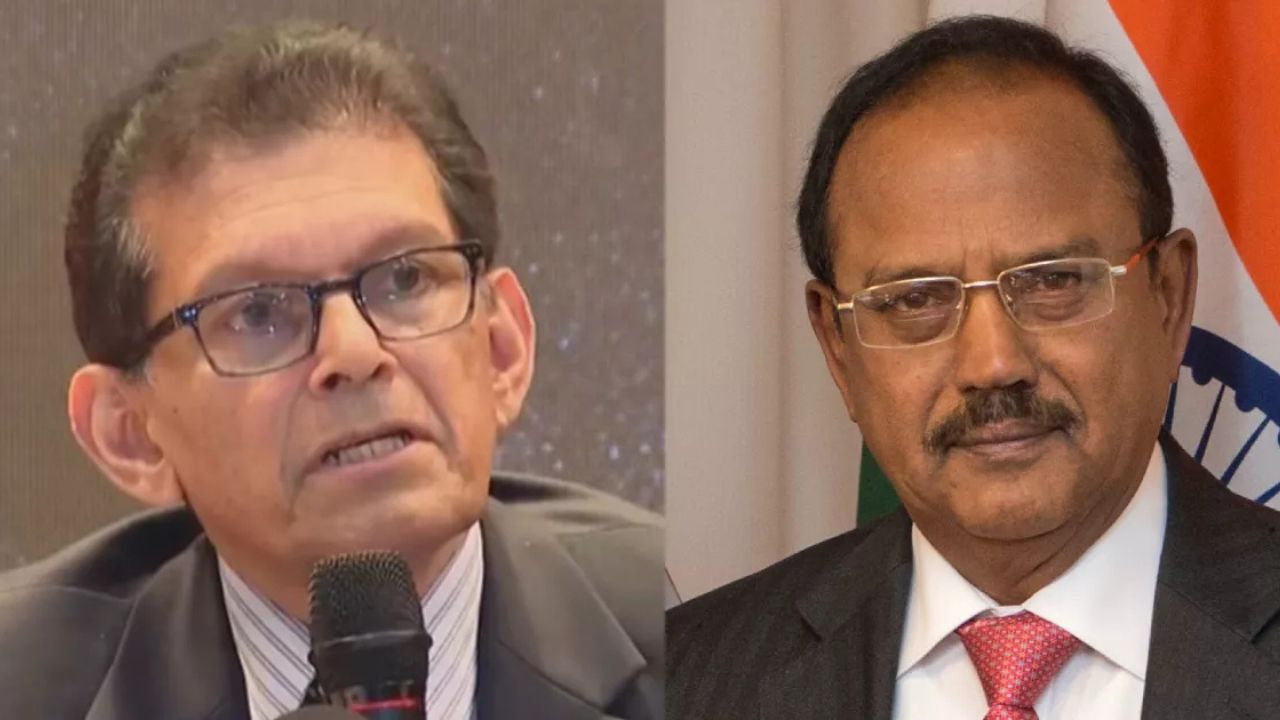

National Security Adviser Khalilur Rahman held a meeting with his Indian counterpart Ajit Doval in New Delhi on Wednesday, where the two discussed key bilateral and regional issues.
Rahman, who is in the Indian capital to attend the Colombo Security Conclave NSA-level meeting, also invited Doval to visit Bangladesh, according to a press release issued by the Bangladesh High Commission in India.
The meeting comes just days after the International Crimes Tribunal pronounced its verdict against ousted prime minister Sheikh Hasina, sentencing her and former home minister Asaduzzaman Khan Kamal – believed to be in Kolkata – to death.
It is also the highest-level policy engagement between the two countries since Chief Adviser Mohammed Yunus and Indian Prime Minister Narendra Modi met in Bangkok in April.

Experts say the timing offers India an opportunity to clarify its position and ensure continuity of policy with Bangladesh’s next elected government.
Forward-looking engagement
The tone of the official press release was notably positive, and the invitation to Doval is being interpreted as a signal of forward-looking cooperation.




A former diplomat, speaking to the TIMES, said: “To my understanding, this was likely a structured meeting. With the next general election expected in February, it gives Delhi the opportunity to explain its position – information the interim government can pass on to the next administration.”
He added that the engagement will likely help set the tone of Bangladesh–India normal relations once a new government is formed.
Security at the core
Bangladesh tends to view its relationship with India through a development lens, while India looks at Bangladesh primarily through a security lens.
“It is no secret that security remains India’s foremost concern, and I am sure that issue came up in the discussion,” said another former diplomat. Security, he noted, security is “all-encompassing,” allowing for a wide range of topics to be included under its umbrella.
“India expects predictable behaviour from its neighbours and seeks a relationship that safeguards its security interests,” he said. “Delhi would not want to see a political force in charge of Bangladesh that could jeopardise India’s security.”
India’s call for an inclusive election
Indian Foreign Secretary Vikram Misri has publicly stated that New Delhi wants a free, fair, inclusive, and participatory election in Bangladesh. Analysts interpret this as India signalling that the Awami League should not be excluded from the political process.
Another former diplomat noted that the collapse of the Awami League government last year disrupted the decades-long political duopoly in Bangladesh. “Now Jamaat-e-Islami – banned under the Hasina government – is witnessing a resurgence, along with its student wing, Islami Chhatra Shibir,” he said.
“In this context, the Awami League could act as a stabilising force to prevent radical actors from gaining influence in ways that might harm India,” he added.