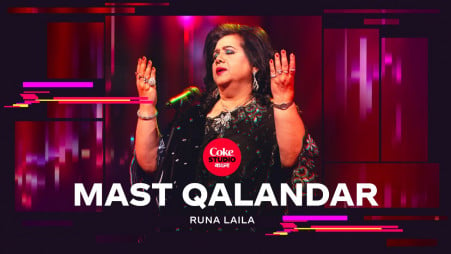

South Asian music legend Runa Laila is set to grace Coke Studio Bangla with a renewed version of her classic ‘Dama Dam Mast Qalandar’, releasing today on the platform’s official YouTube channel, marking the end of the third season.
With a remarkable career spanning six decades and vocals delivered in 18 languages, from Bangla and Urdu to Punjabi, Gujarati and English, her appearance marks one of the most anticipated moments of the show’s third season.
Although speculation had been simmering for months, producers remained notably discreet about her involvement. Runa Laila herself revealed last year that she had recorded a piece for Coke Studio Bangla, yet stopped short of naming the track.

A teaser unveiled on November 14 confirmed what many had hoped for: a reimagining of one of the region’s most enduring devotional anthems.
While the performance goes live today, the recording itself is far from recent.




A prolonged hiatus in the programme’s production schedule meant the song was shelved for nearly a year before being prepared for release. The collaboration, however, had already surfaced publicly two years ago in Kolkata, where Runa Laila performed the song alongside members of the Coke Studio team, including music curator Shayan Chowdhury Arnob and composer Shubhendhu Das Shubho.
Fittingly, the release arrives on the eve of the singer’s birthday intended as both a celebration and a tribute to an artist whose influence continues to shape musical culture across Bangladesh and beyond.
It also becomes the eighth release of Coke Studio Bangla’s current season; the most recent track, ‘Café’, offered a contemporary take on Mohiner Ghoraguli’s classic and featured Avash vocalist Tanzir Tuhin, Gaurab Chattopadhyay and Brazilian musician Livia Matos.
Adding to the celebratory moment, a new novel titled ‘Mayar Singhasan’ will be launched tomorrow to honour Runa Laila’s life and legacy.
Written by Abdullah Al Muktadir and published by Chandrabindu Prokashon, the book chronicles her early journey, artistic struggles and rise to becoming one of Bangladesh’s most revered cultural icons.