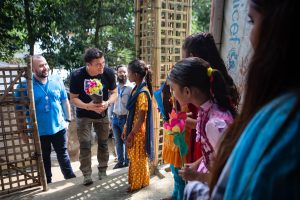
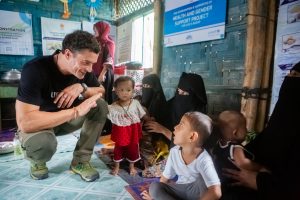
UNICEF Goodwill Ambassador and actor Orlando Bloom visited Cox’s Bazar this week to witness the impact of shrinking global aid on the half a million Rohingya children living in the world’s largest refugee camps.
During his four-day visit, Bloom met with children, mothers and aid workers to understand how cuts to official development assistance (ODA) are threatening children’s access to education, healthcare, and protection.
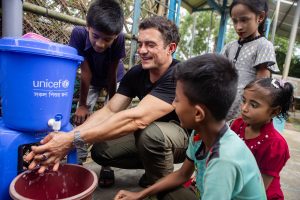
“The children in these camps are a hundred percent dependent on aid, but that aid is sadly shrinking,” Bloom said. “These children need an education in order to have a future.”

Earlier this year, UNICEF was forced to temporarily close most schools in the camps, affecting nearly 150,000 children. While classes have since resumed, another major funding shortfall could shut down all schools again in early 2026, leaving more than 300,000 children without learning opportunities.
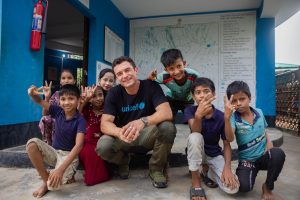



Bloom also highlighted the rise in child abductions and recruitment by armed groups, with more than 400 cases reported in October alone, which is three times higher than the same period last year.
He described meeting two children who had escaped after being held for months, calling their experiences “heartbreaking” and warning that “insufficient protection services are putting these children at real risk.”
UNICEF has reported an 11 per cent rise in severe malnutrition among children under five, as well as worsening sanitation conditions that have led to a spike in skin diseases.
UNICEF Representative Rana Flowers said the steep reduction in aid risks creating “a lost generation,” warning that over half a million children could face “lifelong development delays, loss of childhood, or death.”
As Bloom put it, “The situation unfolding in the Rohingya camps is a child survival crisis. We urge the international community to step up and support children who need aid now more than ever. They don’t deserve to be forgotten, no child does.”