
The “Bangladesh Hindu Buddhist Christian Unity Council” (BHBCUC) has expressed deep concern that fears about safety, livelihood, and protection of property may discourage minority communities from exercising their voting rights.
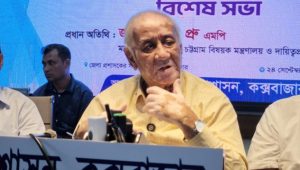
The organisation shared this concern at a press conference held on Thursday at the National Press Club, focusing on ongoing communal violence ahead of the 13th national parliamentary election.
Speaking at the event, acting general secretary Monindra Kumar Nath said that if minority communities become discouraged from voting, the responsibility must be taken by the government, the administration, the Election Commission, and political parties. He also expressed hope that the Election Commission and all relevant authorities would take strong and effective action to improve the situation quickly.

Speakers at the press conference said that although only 14 days remain before the election, the pattern of communal violence seen last year has not stopped. In the first 27 days of January this year alone, they reportedx 42 incidents of communal violence and 11 killings.
According to them, religious and ethnic minorities and small indigenous communities across the country, especially women, are living in constant fear. Minority business owners are also unable to operate normally, forcing many to relocate internally.



The speakers further alleged that removing secularism as a core principle of state policy through a referendum in this election, along with direct promotion of this move by the government and the Election Commission, is unfortunate and clearly biased. They argued that the constitutional vision of a non-communal, secular, and non-discriminatory Bangladesh is now under challenge.
This, they said, could create serious barriers for minority citizens in enjoying equal rights. In this situation, they believe it has become a major challenge for minority voters to safely reach polling centres and cast votes freely.
In this context, the Unity Council placed several demands before the Election Commission.
They called for a fair and effective level playing field for minority voters and candidates so they can vote and campaign without obstruction. They urged a strict ban on the use of religion and communal rhetoric in the election process and demanded enforcement of punishment against such misuse.
They also asked for the deployment of the army if necessary to ensure security for minority and indigenous communities, identification of minority-populated areas as high-risk zones, increased patrols and monitoring by law enforcement, and the formation of a special monitoring cell.
The organisation emphasised the need to clearly inform the administration, law enforcement agencies, and political parties about the Election Commission’s security measures. They also demanded a ban on using places of worship for election campaigning and called for religious hate speech, rumors, and incitement to be treated as punishable crimes under special powers laws.