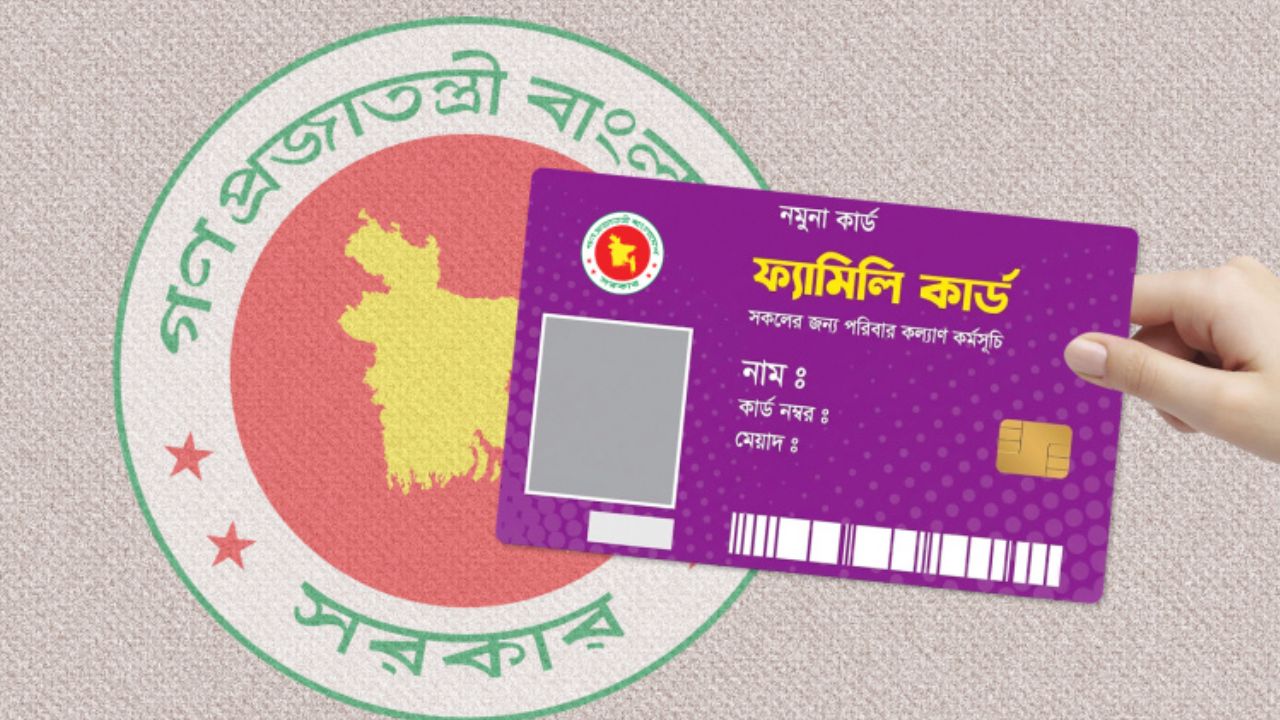



The government will gradually bring around 1.60 crore families under its much-anticipated Family Card programme over the next four years, following the successful completion of a pilot project, Social Welfare Minister Abu Zafar Md Zahid Hossain said on Thursday.
The programme will be formally launched on 16 August, with the inaugural rollout taking place in Ward No. 8 of Latifabad Union in Kishoreganj Sadar Upazila, where the prime minister is scheduled to inaugurate the initiative.
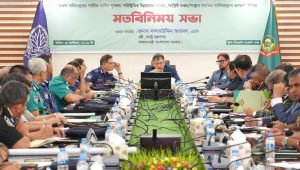
The announcement came after a meeting of the Cabinet Committee on the Family Card programme, chaired by Finance Minister Amir Khosru Mahmud Chowdhury, at the Secretariat.
Briefing reporters after the meeting, Zahid Hossain said the Family Card would operate as a dynamic social registry, allowing beneficiaries’ information to be updated regularly in line with changes in their socio-economic conditions.
“The objective is to ensure that no deserving poor household is left out while preventing ineligible individuals from receiving benefits,” he said.
According to the minister, beneficiary selection will be carried out through a verification process at the union level, replacing the static beneficiary lists used in previous social safety net programmes.

“A person may move from poverty to lower-middle income or from middle income back into poverty over time. Therefore, the database will remain dynamic rather than fixed,” he said.
He added that religion, ethnicity, political affiliation or any other identity would not influence beneficiary selection, describing the programme as part of the government’s effort to build an inclusive and equitable social protection system.
Following its launch, data collection and implementation will gradually expand across all upazilas and unions by the end of October instead of being rolled out nationwide simultaneously.




The government has initially set a target of bringing around 1.60 crore families under the programme within four years, although the figure could increase based on future assessments and data collection.
Highlighting the importance of directing financial assistance to women, Zahid Hossain said female recipients are more likely to spend the support on children’s education, nutrition, healthcare, poultry farming, tree plantation, cottage industries, tailoring and other income-generating activities, contributing to women’s empowerment and rural economic development.
Referring to the pilot phase, he said the programme had been tested in 56 locations. Minor data collection issues were identified in two areas of Jashore and Netrakona, but were subsequently corrected.
No major problems were reported in the remaining 54 areas, while the overall error rate remained below 3 per cent.
From 16 August, information will be collected through a revised questionnaire using a fully digital system, he said, adding that any implementation errors identified during the rollout would be corrected promptly.
The minister said a three-tier monitoring mechanism had been established to ensure transparency.
Government officials-not political representatives-will oversee data collection at the union level, while separate committees headed by Upazila Nirbahi Officers, deputy commissioners and divisional commissioners will supervise implementation at the upazila, district and divisional levels.
A national committee chaired by the finance minister will oversee the programme.
Prime Minister Tarique Rahman is personally monitoring the programme’s progress and providing policy guidance, Zahid Hossain said.
He added that the Cabinet Division and the Finance Ministry would cross-check beneficiary information to ensure that no individual receives multiple government allowances or benefits.
Once the initial nationwide data collection is completed, the database will be updated every month to reflect changes such as deaths, migration and shifts in socio-economic conditions.
The programme’s policy guidelines, questionnaire and eligibility criteria have already been published online.
Independent evaluations will be carried out by the Finance Division, the Implementation Monitoring and Evaluation Division (IMED), and local and international universities to assess its effectiveness, with officials saying at least six months would be needed for a meaningful evaluation.
Zahid Hossain also underscored the role of the media, saying the government would seriously consider reports of any irregularities or weaknesses in the programme and take corrective measures where necessary.