



There is not enough water to fight fires, roads are too narrow for fire engines to enter and buildings lack adequate fire safety measures. To make matters worse, warehouses storing chemicals and flammable materials occupy the ground floors of residential buildings.
In Old Dhaka, firefighters must therefore battle not only the flames but also decades of unplanned urban development and inadequate safety infrastructure.
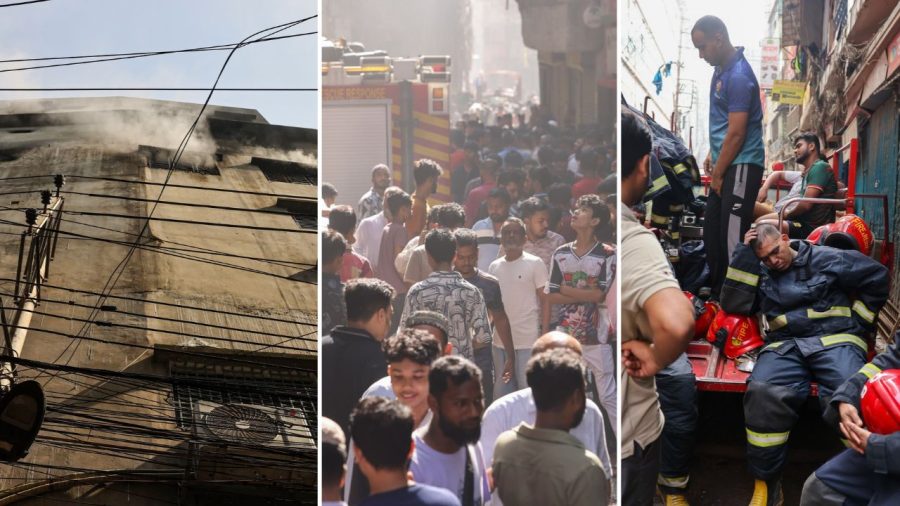
Monday’s fire at Chhoto Katara in Chawkbazar once again exposed these longstanding problems. A shortage of readily available water, narrow lanes and inadequate ventilation to release smoke and heat from buildings meant firefighters took more than 21 hours to bring the blaze under control.
Even with 12 Fire Service units deployed, firefighters struggled to contain flames spreading through a warehouse stocked with umbrellas, cosmetics, perfume bottles, attar and other goods.
Fire Service Shift In-Charge and Senior Station Officer Ruhul Amin outlined these difficulties at a press briefing on Tuesday afternoon.
Describing the severity of the fire, Fire Service and Civil Defence Assistant Director Kazi Nazmuzzaman said, “Another three to four markets are connected to this plaza.”
From Nimtoli to Churihatta and now Chhoto Katara, devastating fires have repeatedly exposed the dangers facing Old Dhaka. Yet the underlying causes remain largely unchanged.
Narrow roads, inadequate water supplies, unplanned buildings, chemical warehouses and the authorities’ failure to enforce fire safety measures continue to leave the densely populated area vulnerable to recurring disasters.

Water shortages hamper firefighting
Inadequate water supplies have long hampered firefighting operations in Old Dhaka.
Water-carrying fire engines cannot enter its narrow lanes, while underground reservoirs in buildings often lack sufficient water. The construction of buildings on filled-in water bodies has further reduced alternative sources of water across the city.
Highlighting the problem in 2023, Fire Service Deputy Director Dinmoni Sharma said, “When we receive a fire alert, we immediately take 4,000 to 5,000 litres of water for initial use. But even a slightly larger fire requires more water. If buildings and markets do not have underground reservoirs, where will we get the water? We bring water through hoses from distant sources, but how far can we realistically bring it?”
Although building construction regulations require water reservoirs, thousands of buildings across Dhaka lack them.
Firefighters faced similar water shortages during the Churihatta fire on 20 February 2019. With insufficient water in the buildings’ reserve tanks, they had to lay hoses over long distances to secure supplies.
Vehicles belonging to the Dhaka Water Supply and Sewerage Authority (Wasa) and the city corporation were also used to transport water.




In developed countries, cities address such problems by installing fire hydrants along roadsides. Connected to water supply systems, these hydrants provide pressurised water, allowing firefighters to begin operations immediately upon reaching a fire.
Yet Dhaka, particularly Old Dhaka, still lacks such a system.
In 2019, then Fire Service Deputy Director for Operations and Maintenance Debashish Bardhan said, “We have long been recommending that the city corporations and Wasa install street fire hydrants throughout the city, including Old Dhaka.”
Architect and urban planner Mobassher Hossain, a former president of the Institute of Architects Bangladesh, also said there was every opportunity to install hydrants across the city.
Chemicals below, residents above
Alongside water shortages, the storage of flammable materials makes fires particularly dangerous in Old Dhaka.
Shops packed with plastic drums, sacks of chemicals and combustible materials are common in parts of Armanitola, Lalbagh, Kotwali, Bangshal and Chawkbazar.
Tangled electrical wires hang above these shops, while some buildings have residential flats directly above commercial premises. Dangerous factories and warehouses also occupy substantial portions of the ground floors of many buildings.
According to Fire Service and Civil Defence figures for 2025, a total of 3,938 buildings in Old Dhaka face fire risks.
Of the 91 chemical warehouses inspected, 42 were classified as hazardous and another 38 as highly hazardous.
Earlier, a 2021 report by a law enforcement agency identified 44 areas of Old Dhaka as being at the highest risk of fire.
These areas contained 3,500 warehouses, factories and shops storing chemicals, flammable materials and explosive substances. Of these, 1,301 were classified as highly hazardous.
Various reports have estimated that Old Dhaka currently has around 25,000 warehouses storing chemicals and flammable materials.
Fire Service recommendations remain unimplemented
There are allegations that important Fire Service recommendations aimed at reducing fire risks in Old Dhaka have remained buried in official files for years.
As a result, hazardous warehouses, inadequate water sources and deficiencies in fire safety arrangements have remained unaddressed.
Efforts to relocate chemical warehouses have also lost momentum as media attention surrounding major fire tragedies has faded.
Expressing concern over the situation, urban planner Adil Muhammad Khan told TIMES, “The city has become a money-making machine, with no place for people or humanity. Those responsible for running the city are failing to implement any of the protective measures needed to ensure people’s safety. That is why disasters keep happening.”
Fire Service and Civil Defence Directorate Director for Operations and Maintenance Lieutenant Colonel Md Mahmudul Hasan said the agency had made detailed recommendations to improve fire safety in Old Dhaka.
Asked about progress in implementing the Fire Service recommendations, DSCC Chief Urban Planner Md Nazrul Islam told TIMES that he did not know which department was handling them or what progress, if any, had been made.
Referring to Dhaka’s various environmental problems, including air and water pollution, he said the risk of fire was a secondary consideration amid so many serious challenges.
Meanwhile, repeated attempts to contact Mohammad Nazrul Islam, executive engineer of Dhaka Wasa’s MODS Zone 02, were unsuccessful.
Chhoto Katara in Chawkbazar falls under the jurisdiction of that zone.