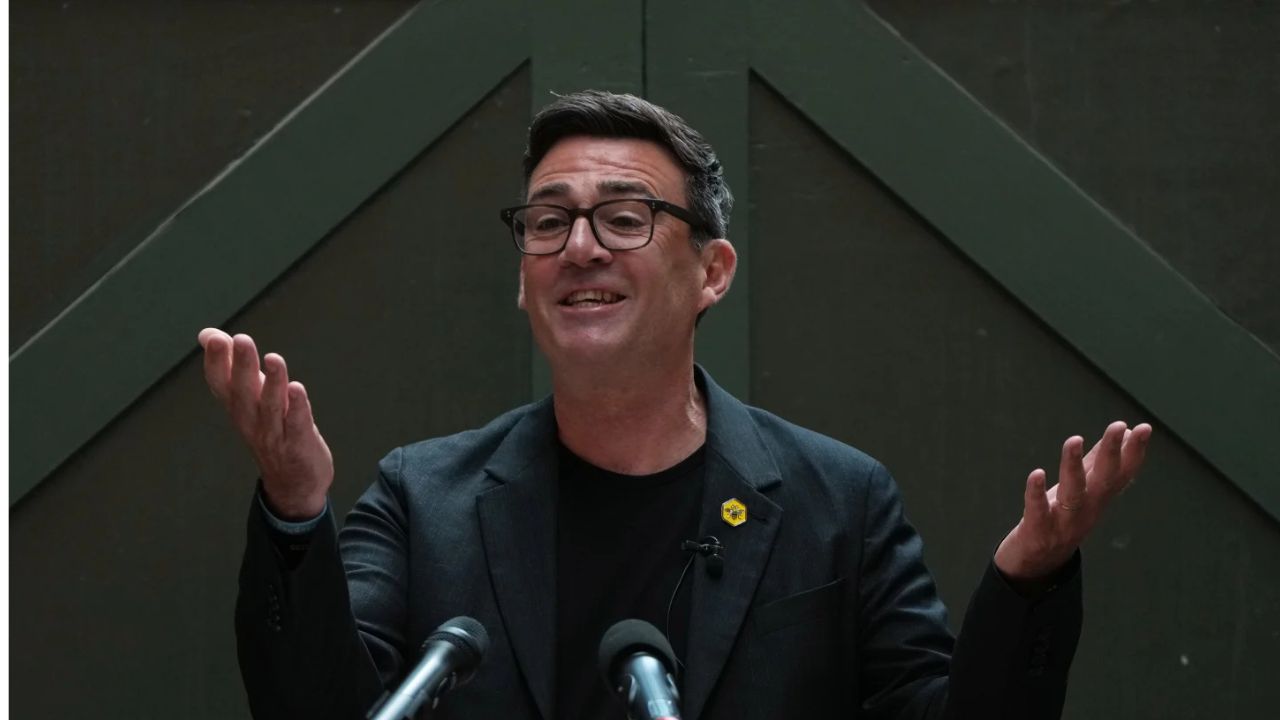



Veteran Labour politician Andy Burnham is due to become Britain’s next prime minister on Monday, replacing Keir Starmer without a general election after emerging as the sole candidate able to command sufficient support among Labour lawmakers.
Burnham secured the backing of 349 of the party’s 401 MPs and was formally confirmed as Labour leader at a special conference on Friday.
Because Labour holds a parliamentary majority, its leader is entitled to form the government and serve as prime minister.
Burnham will officially take office after meeting King Charles III at Buckingham Palace on Monday, when he will be invited to form a government. Starmer, who announced his resignation last month, will remain caretaker prime minister until the transfer is completed, reports AP.
The change is possible because Britain operates a parliamentary system in which voters elect lawmakers rather than directly choosing a prime minister. A governing party may replace its leader during a parliamentary term, with the new leader normally becoming prime minister without the need for a fresh national vote.

Such changes can happen when a prime minister resigns as party leader or is removed following an internal challenge. Britain’s next general election is not required until 2029, five years after Labour’s landslide victory in 2024.
Starmer announced on June 22 that he would step down as Labour leader after less than two years in office. His premiership had been damaged by a succession of political controversies, including his decision to appoint a man with close links to the late sex offender Jeffrey Epstein as Britain’s ambassador to the United States.
Pressure increased after Labour suffered heavy losses in local elections in May, prompting a growing number of MPs to call for Starmer’s departure. The challenge intensified when Burnham, widely regarded within Labour as a potential leader of both the party and the country, won a special election and returned to Parliament.
Starmer eventually bowed to mounting demands and resigned, automatically triggering a Labour leadership contest.




Under party rules, a Labour MP seeking to challenge for the leadership must win the support of at least one-fifth of the party’s lawmakers in the House of Commons. Burnham comfortably passed that threshold, and no rival candidate qualified to stand against him.
His appointment will make him Britain’s seventh prime minister in a decade, underlining a period of prolonged political instability.
It is far from unprecedented for a British prime minister to enter office through an internal party process rather than a general election. Four of the six leaders who have held the post during the past decade initially became prime minister after winning, or emerging from, party leadership contests.
Theresa May took office in 2016 after David Cameron resigned, while Boris Johnson replaced May in 2019 following a Conservative leadership race.
When Johnson announced his resignation in 2022, Conservative members selected Liz Truss as his successor. Her premiership lasted only 49 days before she stepped down and was replaced by Rishi Sunak through another internal party process.
Burnham will inherit a political system still marked by the disruption that followed Britain’s withdrawal from the European Union. Successive prime ministers have struggled, in different ways, to manage the economic and political consequences of Brexit.
The formal transfer of power on Monday will follow a long-established sequence.
Starmer is expected to deliver a farewell address before travelling to Buckingham Palace, where he will meet the king and formally tender his resignation.
Burnham will then arrive at the palace, where Charles will invite him to form a government. The private ceremony is traditionally called the “Kissing of Hands”, although no hands are now actually kissed and the two men are more likely to shake hands.
After leaving Buckingham Palace, Burnham will officially be Britain’s 59th prime minister. He will then travel to 10
Downing Street, his official residence and office, where he is expected to make his first statement as head of government.
The entire transition, normally shown live on television, is expected to be completed within a matter of hours.