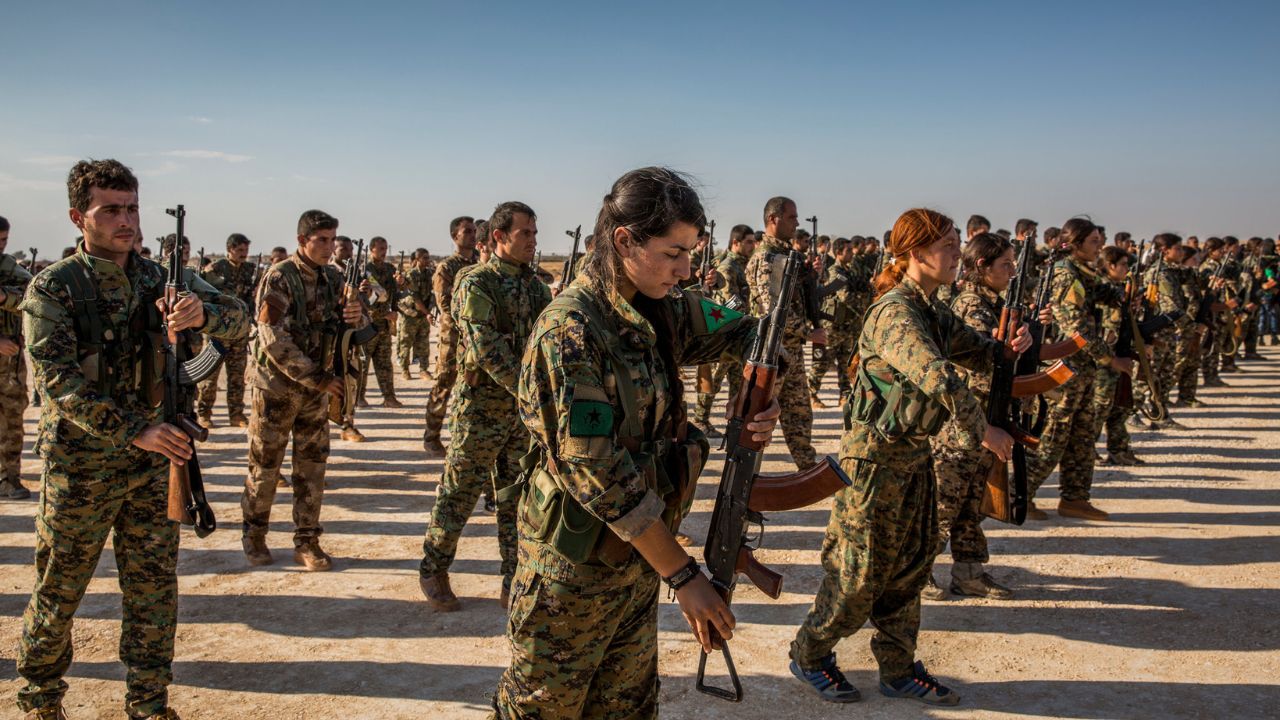



US President Donald Trump has initiated direct communications with at least three Kurdish political and military organisations in Iran and Iraq, reports Al Jazeera.
The outreach comes as Washington looks to mobilise these factions against the Iranian government amidst a conflict that has already claimed at least 1,230 lives within Iran.
Tehran responded to the perceived threat on Thursday by launching operations against what it described as anti-Iran separatist forces based in the semi-autonomous Kurdistan region of neighbouring Iraq.
Iran’s official IRNA news agency confirmed that three missiles targeted Kurdish headquarters in Iraqi Kurdistan, following an earlier military announcement on Tuesday regarding the use of 30 drones against Kurdish positions.

Local reports also indicated that Iranian missiles struck the city of Sulaimaniyah. US officials have stated that the strategic objective is to overextend Iranian military resources and dismantle the current government infrastructure.
There is further speculation that these Kurdish groups could be supported to establish a ground buffer for Israeli forces potentially entering through Iraq. US-Israeli air strikes have heavily targeted the Iraq-Iran border since the war began on Saturday, reportedly to weaken Iranian defences and facilitate the movement of Kurdish opposition fighters into Iranian territory.

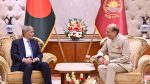
President Trump has reportedly held talks with Masoud Barzani, the leader of the Kurdistan Democratic Party, and Bafel Talabani of the Patriotic Union of Kurdistan.
Talabani confirmed his discussion with the US President on Wednesday. Additionally, Trump spoke with Mustafa Hijri, the head of the Democratic Party of Iranian Kurdistan, on Tuesday. Just prior to the outbreak of the war, six Iranian Kurdish opposition groups seeking an independent state formed the Coalition of Political Forces of Iranian Kurdistan on 22nd February.
This alliance includes the Kurdistan Democratic Party of Iran, the Kurdistan Freedom Party, the Kurdistan Free Life Party, the Organisation of Iranian Kurdistan Struggle, the Komala of the Toilers of Kurdistan, and the Komala Party of Iranian Kurdistan. By Wednesday, thousands of fighters from this coalition were reportedly positioned inside Iran.
Despite the outreach from Washington, the Kurdistan Regional Government has shown reluctance to be drawn into the conflict. KRG President Nechirvan Barzani informed Iranian Foreign Minister Abbas Araghchi that the region will not be part of conflicts directed at Tehran. The broader Iraqi government remains in a precarious position, having declared three days of mourning following the death of Ayatollah Ali Khamenei, who was killed in US-Israeli strikes on Saturday.
Iraqi President Abdul Latif Rashid, a member of the PUK, has urged dialogue to conclude the hostilities.
Winthrop Rodgers, an associate fellow at Chatham House, noted that while US support for targeting infrastructure is beneficial for Kurdish groups, they remain cautious of the administration’s unpredictable nature, citing the previous withdrawal of support for Syrian Kurds.
Rodgers suggested that while the US is treating these groups as strategic assets, it is unlikely that firm commitments have been made regarding their long-term political autonomy.