There are some places that photographs simply cannot prepare you for.
You can scroll through countless images, watch endless travel documentaries and listen to friends insist that a destination is every bit as beautiful as they say. But then you arrive, and reality quietly exceeds expectation. That was my experience the first time I laid eyes on Lake Bled.
It was the summer of 2015, and my mother, who worked in the airline industry, had planned a trip through Central Europe. From Austria, we rented a car and crossed into neighbouring Slovenia, leaving behind busy motorways for winding roads that gradually revealed one of Europe’s most enchanting landscapes.
Nestled beneath the Julian Alps, the emerald-green lake shimmered beneath a flawless blue sky. Rising from its centre was a tiny island crowned by the elegant Church of the Assumption, while perched high on a rocky cliff stood Bled Castle, silently watching over the valley as it has been for nearly a thousand years. It looked less like a real destination and more like the setting of an old fairy tale.

Yet the strange thing about fairy tales is that they rarely capture the quiet grandeur of places like this. Stories speak of magical kingdoms and enchanted lakes, but they seldom convey the stillness of mountain air, the gentle ripple of water against a wooden boat or the feeling of standing somewhere so beautiful that it momentarily silences every thought. Lake Bled possesses that rare quality.
We boarded one of the lake’s traditional wooden boats and drifted towards the island at an unhurried pace. There was no engine breaking the silence, only the rhythmic pull of oars and the occasional splash echoing across the water. As the shoreline slowly receded, the bustle of everyday life seemed to disappear with it.
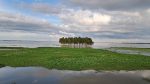

Although I chose not to ring the famous wishing bell inside the island church (a tradition said to bring good fortune) the visit itself felt rewarding enough. Some places do not need legends to justify their appeal, their beauty speaks eloquently on its own.
Later, we made our way to Bled Castle, whose medieval stone walls command panoramic views across the lake and surrounding mountains. Looking down from its terraces, it was easy to understand why this corner of Slovenia has captivated travellers for generations. Every angle seemed carefully composed by nature itself. The moment that remains with me most vividly, however, came when I wandered off alone.
Free from itineraries and conversation, I walked the lakeside paths at my own pace, stopping whenever another breathtaking view presented itself, which was often. The lake reflected the surrounding forests with mirror-like clarity, swans glided effortlessly across the water, and church bells drifted faintly through the crisp alpine air.
It was then that a simple thought occurred to me: I could not believe a place like this actually existed. We often say that a place “looks like a fairy tale”, but standing beside Lake Bled, I found myself thinking the opposite. Perhaps fairy tales were inspired by places like this all along. If anything, the stories underestimate what nature is capable of creating.
No artist’s brush or writer’s imagination could fully reproduce the subtle shades of green that changed with the afternoon light or the remarkable harmony between lake, forest and mountains.
Of course, no visit to Bled is complete without eating its famous Kremna rezina, the delicate vanilla cream cake that has become almost as synonymous with the town as the island church itself. Whether sampled in a lakeside café or simply admired from neighbouring tables, it has become part of the ritual of experiencing Bled, a reminder that travel is often as much about local traditions as grand scenery.
More than a decade has passed since that journey, yet Lake Bled remains one of the clearest memories from my travels. I have visited larger cities, stood before grander monuments and crossed more famous landmarks, but few destinations have left such a lasting impression.
In an age when social media promises paradise around every corner, Lake Bled remains one of those rare places where reality outshines the postcard. More than a decade later, it is still the place that reminds me that the world’s greatest landscapes don’t merely inspire fairy tales, but quietly surpass them.