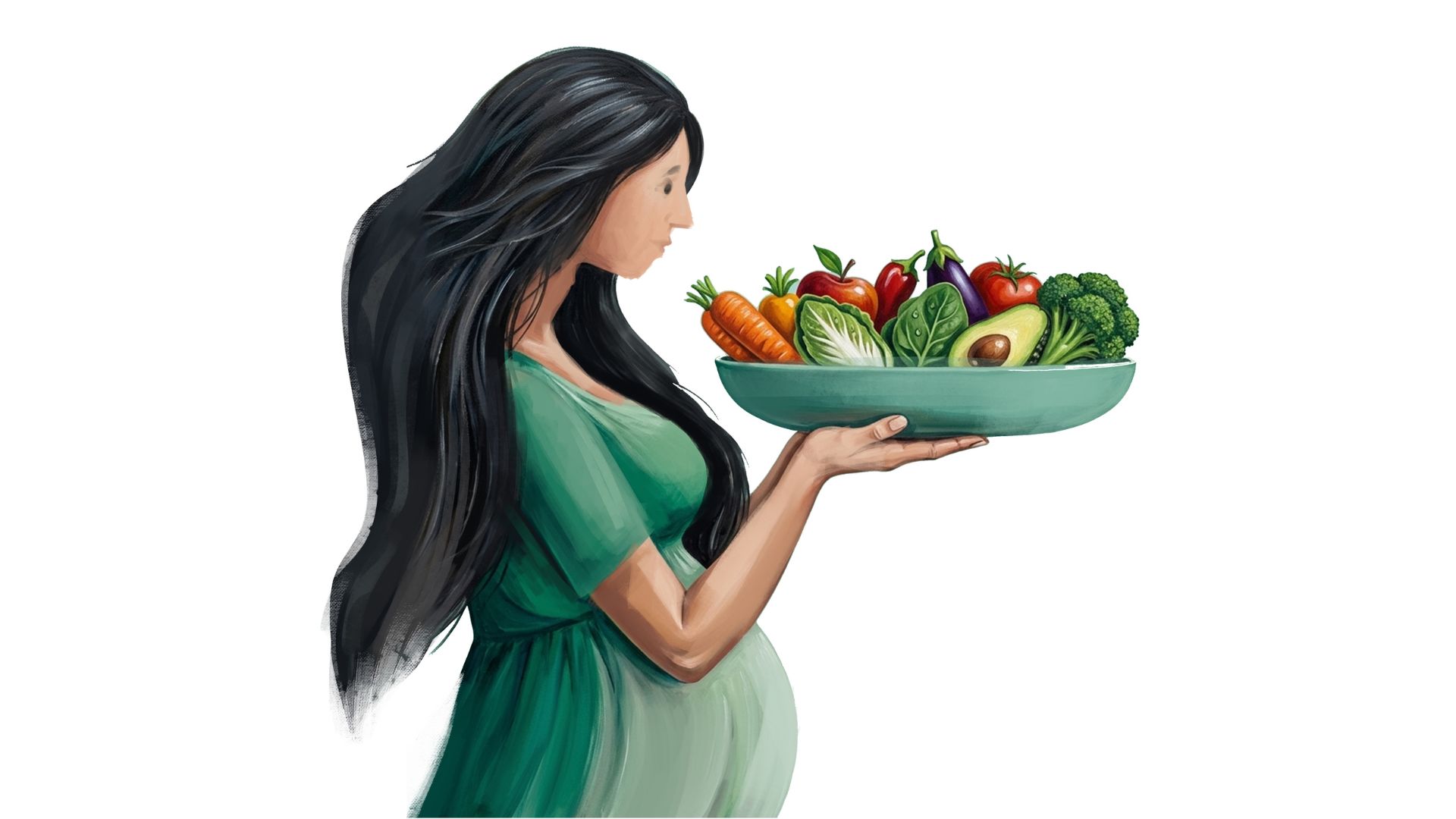



Nazma Begum, expecting her first child, has been told a dozen conflicting things about what to eat this trimester. Her mother-in-law warns her off duck egg, saying it will roughen the baby’s voice.
Her own mother insists she skip pineapple and green papaya altogether, for fear of miscarriage. Her doctor, meanwhile, wants to know why she is still eating less than before she got pregnant.
All three believe they are protecting her. The science, as it turns out, sides mostly with the doctor.
Anaemia in pregnancy has been recognised as a public health concern in Bangladesh for decades, but recent research suggests it may be more widespread, and more specifically iron-related, than earlier data implied. A 2024 study of 1,500 pregnant women in Narayanganj found that 38 per cent were anaemic and 48 per cent were iron deficient.

These figures challenged an older assumption, based on Bangladesh’s iron-rich groundwater, that iron deficiency itself was relatively rare here. Iron-deficient women in that study were nearly twice as likely to be anaemic, and more than four times as likely to have moderate-to-severe anaemia, compared with women whose iron stores were adequate.
Other hospital-based studies have found anaemia rates climbing even higher among poorer and less literate patients, underlining that this is as much a question of food access as food choice.



Pregnancy roughly doubles a woman’s iron requirement, to support both the expanding blood volume that carries oxygen to the foetus and the baby’s own iron stores at birth. Yet, researchers studying rural Bangladesh have repeatedly documented a pattern they call “eating down”, where pregnant women deliberately eat less than their pre-pregnancy intake, sometimes in the belief that a smaller baby means an easier, safer delivery.
One national survey found that roughly a third of women reported eating less during pregnancy than before it. The practice runs directly counter to what the body needs at exactly the moment it needs more.
Two everyday habits compound the problem. First, tea – a fixture of Bangladeshi meals and culture – contains tannins that inhibit iron absorption when taken with or soon after a meal; nutritionists generally advise separating tea from iron-rich meals by an hour or more.
Second, iron from plant sources such as lentils and leafy greens absorbs far less efficiently than iron from meat and fish unless paired with vitamin C. A squeeze of lemon or a side of guava can meaningfully improve uptake from an otherwise identical plate of dal and rice.
Some of the most persistent food taboos in Bangladeshi pregnancy culture concern papaya, pineapple, duck, and pigeon meat. Researchers working in both rural and hill-tract communities have documented widespread avoidance of these foods, driven by beliefs ranging from miscarriage risk to fears the baby will be born with a harsh voice or breathing trouble.
Public health researchers note that these beliefs are not backed by clinical evidence at typical dietary quantities, and that avoiding foods like duck egg and leafy greens on cultural grounds can strip an already-stretched diet of protein, iron and folate it badly needs. Not every tradition works against nutrition, however: The concept of eating nourishing foods – dairy, eggs, fruit, vegetables – remains a genuinely protective thread running through Bangladeshi food culture, even where specific taboos undercut it.
The 40-day postpartum rest period observed across much of Bangladesh, during which extended family typically takes over household duties, gives new mothers space to recover that many Western postpartum cultures do not formally provide. Traditional recovery foods such as bottle gourd, sago, and chicken liver bring genuine nutritional value – chicken liver, in particular, is exceptionally rich in iron and vitamin A, precisely what a postpartum body has been depleted of.
Nutrition counsellors working in Bangladesh increasingly frame the goal not as replacing tradition with medicine, but as separating the beliefs that protect mothers from the ones that quietly starve them of exactly what pregnancy demands most.